People seeking effective English language tools will find these flashcards useful for building vocabulary, pronunciation, and reading confidence. The selections below cover bilingual Spanish-English sets, core sight words, numbers, prepositions, and interactive talking cards, offering options for different age groups and learning goals. Each entry highlights practical features, durability, and classroom suitability to help educators and parents choose the right resource.
| Product | Brand |
|---|---|
| Everyday Words English/Spanish Flash Cards (EP62073) | Teacher Created Resources |
| 299 Vocabulary Builder Flash Cards | CreateFun |
| Flash Cards: Numbers 0 – 100 | Scholastic |
| Bilingual Talking Flash Cards (Airbition) | Airbition |
| 600 Spanish-English Flash Cards | Briston |
Everyday Words English/Spanish Flash Cards

These bilingual flash cards promote practical language learning by pairing everyday English words with correct Spanish pronunciations. They’re designed for individual study, group activities, or whole-class use, and include instructions and tips for teachers or parents. The set emphasizes vocabulary and pronunciation with a colorful, engaging format.
Key features include: full-color, high-interest student cards; teacher or parent guidance; suggested activities; and extra blank cards for customization. An integrated hole in the card corner allows simple organization with rings or strings, aiding portability and storage for busy educators and learners.
299 Vocabulary Builder Flash Cards
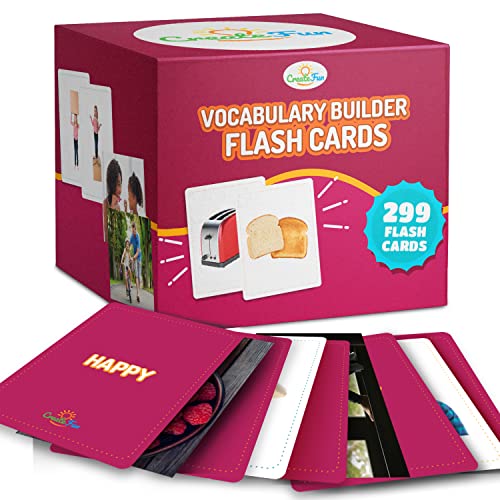
Designed for a broad range of learners—from early education to ESL/ELL and speech therapy—these cards cover six subjects and include pairing activities like Opposites and Go Togethers. They’re suitable for homeschoolers, classrooms, and pathology settings, aiming to support bilingual literacy, social-emotional development, and cognitive growth through visually engaging cards.
Highlights include the versatile usage across prek prep, senior care, ABA, and special education contexts, along with durable, teacher-friendly design crafted by educators and parents for long-term classroom use.
Flash Cards: Numbers 0 – 100

These double-sided flash cards are designed to support early math and language development by providing a durable, color-fast learning tool. Made from heavy-duty cardstock and plastic-coated for durability, the set helps children practice counting, number recognition, and basic arithmetic concepts in a visually engaging way.
Bilingual Talking Flash Cards (Airbition)

These talking flash cards support two-language learning with a clear American-accent voice. They switch between English, Spanish, or both, enabling bilingual practice for toddlers and young learners. The kit expands content across numbers, colors, animals, shapes, and transportation, aiming to boost cognitive abilities while fostering bilingual fluency.
Spanish Vocabulary Flash Cards – 600 Cards

This set provides 600 bilingual English-to-Spanish cards across 28 categories, including verbs, foods, and everyday objects. With water-resistant, glossy laminated cardstock and curved edges, the kit is built for long-term classroom or homeschool use. Color-coded layouts help with quick recognition and memorization of vocabulary for learners of all ages.
Buying Guide
Choosing the right flashcards involves weighing format, durability, content scope, and learning goals. Consider the following perspectives to ensure the best fit for your students or family.
- Language focus: If bilingual development is a priority, select cards that pair English with Spanish or another language and include pronunciation guides or audio features.
- Content scope: For comprehensive vocabulary, prefer cards with multiple themes (numbers, prepositions, verbs, emotions) and activities that support structure and retention.
- Durability and handling: Cards with laminated fronts, durable cardstock, or plastic coatings withstand classroom use and homeschooling environments.
- Active learning support: Look for sets with activities, instructions, or blank cards for customization to align with lesson plans or therapy goals.
- Classroom management: Features like corner holes for rings or strings facilitate organization and mobility, which is valuable for teachers moving between stations.
- Age appropriateness: Younger learners benefit from colorful images and simple terms, while older students may require advanced vocabulary, phrases, and real-world usage.
- Audio and accessibility: For learners needing audio support or pronunciation guidance, consider talking cards or sets that include clear voice playback and language options.
- Size and portability: Smaller, lightweight cards are easier for carry-around use, while larger sets may provide better visibility for whole-class demonstrations.
- Price and longevity: While not all combinations of features are budget-friendly, prioritize durability and content relevance to maximize long-term value.
In practice, educators may combine bilingual sets with sight-word flash cards and numeracy cards to create a balanced program that tackles vocabulary, reading fluency, and foundational math concepts. For homeschooling families, selecting a core set with expandable or customizable components can adapt to evolving language goals and progress tracking.