Finding the right workbook can help second graders build confidence in core subjects. This article highlights four well-regarded options that cover math fluency, reading comprehension, writing, and foundational skills. Each choice is designed to engage young learners with age-appropriate activities and clear, repeatable formats. Use the buying guide to compare features, formats, and focus areas to match your child’s learning goals.
| Product | Brand | Focus |
|---|---|---|
| School Zone Big Second Grade Workbook | School Zone | Reading Comprehension, Phonics, Math, Science |
| School Zone Addition & Subtraction Workbook | School Zone | Addition & Subtraction, Place Value |
| Channie’s One Page A Day Double Digit Math Workbook | Channie’s | Daily Math Practice, Addition & Subtraction |
| Spectrum Writing Workbook Grade 2 | Spectrum | Writing, Prompts, Projects |
School Zone Big Second Grade Workbook

This 320-page workbook from School Zone consolidates key second grader topics across reading, phonics, math, science, and word problems. The extensive content supports independent practice and in-class review, with activities geared toward ages 7 to 8. The material emphasizes high-quality reading comprehension and foundational math skills, making it a comprehensive resource for reinforcing classroom learning. The workbook’s broad scope helps students stay engaged with varied activities in a single volume.
School Zone Addition & Subtraction Workbook

Designed for grades 1 and 2, this 64-page workbook focuses on essential addition and subtraction concepts, place value, regrouping, and fact tables. It presents a variety of activities to help build fluency and accuracy. The concise format supports quick daily practice as well as longer problem-solving sessions. It is suitable for homeschool use or classroom centers, with a clear progression that aligns with common math standards for early elementary students.
Channie’s One Page A Day Double Digit Math Workbook

Channie’s offers a practical daily practice workbook featuring one page per day for consistent math repetition. The 50-page layout includes 25 double-digit addition and subtraction problems per page, with color-coded blocks to help students distinguish ones and tens. The tear-off format keeps exercises organized and easy to manage, promoting accuracy and routine without overwhelming learners. It supports solid arithmetic habits through regular, guided practice and visual cues that reduce cognitive load.
Spectrum Writing Workbook Grade 2
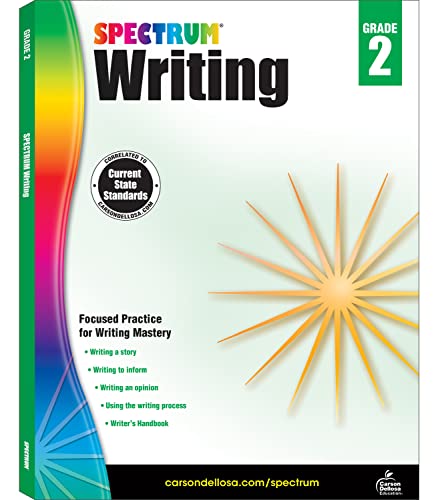
Spectrum’s Grade 2 Writing Workbook aligns with current state standards and focuses on developing writing skills across informative, opinion, and narrative prompts. The book guides students through structured writing projects while integrating standards-based learning. It emphasizes planning, drafting, and revision, with engaging prompts designed to spark creativity and critical thinking. This workbook complements reading practice by reinforcing language conventions, sentence structure, and organization.
Buying Guide
Key purchase considerations when selecting second grade workbooks include content scope, structure, and alignment with your child’s learning needs. Look for:
- Content coverage: Ensure the workbook includes core areas such as math fluency, reading comprehension, and writing. A combined resource can reduce fragmentation.
- Practice format: Daily pages, cumulative reviews, and varied question types help sustain engagement and monitor progress.
- Skill progression: Choose materials that gradually increase difficulty to build confidence and mastery without overwhelming the learner.
- Visual design: Clear layouts, legible fonts, and color-coding can aid focus and reduce cognitive load for young readers.
- Durability and format: Consider page count, binding, and whether a tear-off or reusable format better suits your routine.
- Supplemental alignment: If you’re following a school curriculum, select workbooks that align with similar standards to support classroom learning.
To balance breadth and depth, pairing a math-focused workbook with a language arts resource often yields the best outcomes. Evaluate each option’s strengths—comprehensive content, daily practice, or targeted skill work—and match them to your child’s current strengths and growth areas.