Discover engaging word-based games that help kids build vocabulary, improve spelling, and think quickly. This guide highlights five top picks, balancing educational value with family-friendly fun. Each game emphasizes word formation, reading confidence, and collaborative play, making them ideal for classrooms, homeschooling, and game nights alike.
| Product | Brand | Why It Stands Out |
|---|---|---|
| Wordplay for Kids | Game Development Group | Race-to-create-their-word excitement with timed rounds and category challenges. |
| Play On Words Card Game | Play On Words | All-ages creativity with flexible team play and award-winning design. |
| Think Tank Scholar Sight Words | Think Tank Scholar | Extensive sight-word set with educator-friendly methods and durable cards. |
| SHEEPLE | SHEEPLE | Fast-paced, humorous word association for large groups and family nights. |
| SpringFlower Sight Word Game | SpringFlower | Speed-driven sight words with hands-on play and portable components. |
Wordplay for Kids

Wordplay for Kids is an award-winning, fast-paced word game designed to sharpen spelling, vocabulary, and focus. Players spin to reveal two required letters, then roll dice to determine a category, racing against a timer. Ideal for ages 6 and up, the game emphasizes quick thinking and strategic word building. It engages kids in a competitive setting while reinforcing foundational language skills.
- Encourages vocabulary growth and spelling accuracy.
- Timed rounds create excitement and emphasis on quick recall.
- Categories include Food or Drink, Objects, Living Creatures, and more.
Play On Words Card Game

Play On Words invites players to craft words in a relaxed, creative setting. The card-based format supports diverse ages and group sizes, promoting vocabulary development and language fluency without pressure. Recognized with a Parents’ Choice Award, the game blends brain work with social interaction for a family-friendly experience.
- Versatile for 1–4 players or teams; suitable for all ages.
- Encourages spelling, word-making, and conversational skills.
- Award-winning design emphasizes engaging, replayable play.
Think Tank Scholar Sight Words

Think Tank Scholar Sight Words provides a substantial set of 520 high-frequency words drawn from Dolch and Fry lists. This classroom-friendly pack includes six teaching methods and six learning games to reinforce reading fluency. The jumbo, durable cards feature large print and practical layouts, with back-side answers for quick practice sessions.
- Extensive word collection aligned to common reading lists.
- Multiple teaching methods support varied learning styles.
- Durable, easy-to-handle cards suitable for group activities.
SHEEPLE

SHEEPLE centers on fast, humorous word association within a party-game framework. Suitable for 3–12 players, ages 8 and up, it emphasizes quick brainstorming and mimicry as players try to align their responses with the herd. The game is ideal for large groups seeking lively interaction, testing players’ ability to think in shared patterns.
- Great for social play and team-based interaction.
- High replay value with varied, category-driven rounds.
- Fun for mixed-age groups, from kids to adults.
SpringFlower Sight Word Game
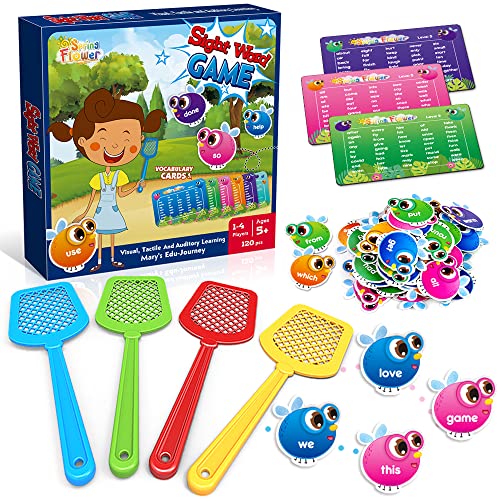
SpringFlower Sight Word Game combines fast-paced play with sight word recognition. It targets early readers by guiding students through the top Dolch words through a tactile, visual, and auditory approach. With up to four players and portable components, it supports classroom practice and homeschool routines alike.
- Built around Dolch sight words for foundational reading.
- Speed elements build reading confidence and fluency.
- Compact, travel-friendly design for learning on the go.
Buying Guide
Key purchase considerations when choosing word-based games for kids include age range, group size, and learning objectives. For younger players, look for clear visuals, large print, and supportive prompts that guide spelling and word recognition. For mixed-age families or classrooms, choose games that scale from solo play to large-group formats, such as card sets or party-style games. Consider durability and storage, especially for homeschooling kits or frequent travel.
How to compare options:
– Word-building focus: Choose games that actively require players to form or identify real words under time pressure or within constrained categories.
– Sight words emphasis: If early literacy is a priority, favor products that align with Dolch or Fry word lists and include reinforcement activities.
– Cognitive benefits: Some games strengthen memory, processing speed, and strategic thinking; others prioritize social interaction and cooperation.
– Reusability: Card games with replaceable components and adaptable rules offer longer-term value for evolving reading levels.
Best-fit recommendations by scenario:
– Family game night: Wordplay for Kids and Play On Words provide fast-paced competition with broad appeal.
– Classroom or homeschool: Think Tank Scholar Sight Words, SpringFlower Sight Word Game, and Learning Resources Word for Word Phonics offer structured learning pathways and teacher-friendly features.
– Social gatherings: SHEEPLE supports large groups and humor, helping to break the ice and encourage participation.