Exploring talking books can support early language development with engaging audio, interactive prompts, and independent play. This guide highlights five standout options that emphasize vocabulary growth, pronunciation, and interactive quizzing for toddlers. Each choice offers distinct benefits, from multisensory reading to built-in activities that encourage speech practice and listening skills.
| Brand | ||
|---|---|---|
| ZeenKind | ZeenKind English Learning Talking Book for Kids | 300+ words across 13 topics with American-accent audio |
| Twin Cities Speech Therapy Publishing | Imitation Book: Interactive & Fun Learn to Talk Board Book | Speech therapy-oriented, language development focus |
| KOKODI | KOKODI Talking Pen Books Sets | Tap-to-read with 500+ interactive games and 1500+ pronunciations |
| Cottage Door Press | ABC & 123 Learning Songs: Interactive Children’s Sound Book | Merges music with early literacy in a sturdy wooden book |
| Arnbz | Arnbz 2025 New My First English Words Sound Book | 470+ words across 21 themes with native American pronunciations |
The following sections give a deeper look at each product, including how the features support talking and language development in toddlers.
ZeenKind English Learning Talking Book

The ZeenKind talking book provides 300 English words across topics like Animals, Things, Scenes, Transportation, and Body Parts. It uses a touch button for listening to real voice audio with an American accent, helping children practice pronunciation and word recognition. The built-in Q&A mode adds a simple, interactive shape to independent learning, encouraging toddlers to speak and spell in a game-like format. This option is well-suited for early vocabulary building and self-guided exploration.
Imitation Book: Learn to Talk Board Book

Designed with speech therapy in mind, this board book emphasizes guided imitation and phrase repetition, aiding toddlers who are developing communication skills. It supports early conversational practice and can be a helpful resource for caregivers and therapists focused on encouraging expressive language and social communication in very young children.
KOKODI Talking Pen Books Sets
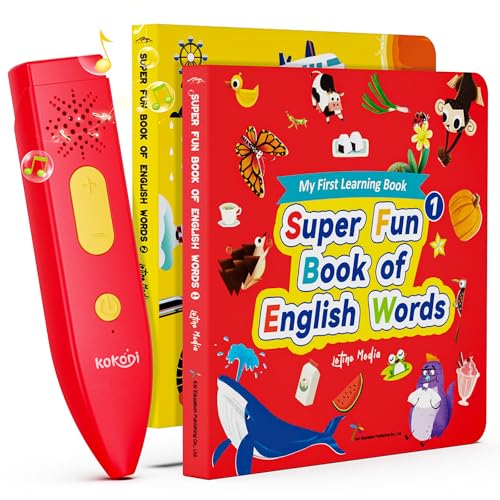
The KOKODI set pairs a talking reading pen with interactive books. Children simply tap a word or image to hear pronunciations and cues, which supports independent reading and vocabulary expansion. The set includes 22 themes, more than 450 words, and over 10,000 touch-read positions across 500+ sound effects. With built-in American English pronunciations, this option fosters listening and speaking skills and can be used during car rides, travel, or quiet time at home.
ABC & 123 Learning Songs: Interactive Book

Pairing music with early literacy, this wooden-inlay book invites kids to sing along to favorites like Apples and Bananas and If You’re Happy and You Know It. The sound buttons reinforce letter and number recognition while promoting rhythm and movement, making it an engaging option for group play or family reading time. Its sturdy construction adds durability for toddler use.
Arnbz My First English Words Sound Book

With over 470 essential words across 21 themes, the Arnbz sound book emphasizes phonics and vocabulary through native American English pronunciations. A Go button helps switch themes, and pressing word icons activates accurate audio playback. The interactive format supports both receptive and expressive language growth, offering a practical tool for curious toddlers learning everyday words.
Buying Guide: Key Considerations For Choosing Talking Books
- Age appropriateness: Look for books designed for toddlers (ages 1-5) with simple navigation, large buttons, and clear audio.
- Language and pronunciation: Prioritize books with native or clearly enunciated pronunciations to support accurate speech development.
- Interactivity: Consider whether the book uses touch, tap-to-read, or quiz modes. Interactive features can boost engagement and independent practice.
- Content variety: A mix of themes (animals, everyday objects, transportation, body parts) supports broad vocabulary growth and cognitive connections.
- Durability and materials: Sturdy construction and kid-friendly materials are important for everyday toddler use and handling.
- Battery and maintenance: Check for battery type and life, and whether batteries are easy to replace. Some devices require no downloads and are ready to use straight out of the box.
- Screen-free experience: For many families, non-screen-based audio books are preferred; choose products that focus on spoken content and tactile interaction rather than screens.
- Parental involvement: Some books offer guided activities or tips for adults to facilitate conversation and pronunciation practice.
- Portability: If you expect travel or car rides, consider compact, lightweight options with long battery life and quick activation.
- Value and content density: Compare word counts, available themes, and the breadth of pronunciations to estimate learning value per dollar.
Choosing a talking book can depend on whether the goal is vocabulary expansion, pronunciation practice, or guided speech therapy activities. For households prioritizing independent, interactive play, devices with tap-to-read and robust audio content can be especially effective. Families seeking a musical or rhythm-based approach may prefer books that combine songs with literacy activities. A combination of options—ranging from pen-based reading to storytime with songs—can provide a well-rounded early language-learning experience.