For American families introducing Tagalog to children, picture-based songs and bilingual adventures can make language learning joyful. This article highlights five kid-friendly Tagalog books that blend music, rhythm, and storytelling to support early vocabulary and cultural exposure. Each choice includes durable design, engaging audio, and reproducible reading moments for families.
Summary of Selected Products
| Product | Brand | Key Feature |
|---|---|---|
| Tin Tin Learns Tagalog Vol. 1 | Tin Tin Learns Tagalog | Music and Tagalog songs for babies and toddlers |
| Tin Tin Learns Tagalog Vol. 2 | Tin Tin Learns Tagalog | Non-tearing pages, built-in batteries, easy volume control |
| Tin Tin Learns Tagalog Vol. 3 | Tin Tin Learns Tagalog | Soothing voice, bilingual songs in Tagalog & English |
| Heritage Kids Press I Love to Sing in Tagalog: Nursery Rhymes | Heritage Kids Press | Interactive songs, play-along experience |
| Heritage Kids Press I Love to Sing in Tagalog: Animal Songs | Heritage Kids Press | Animal-themed Tagalog songs, interactive format |
Tin Tin Learns Tagalog: Songs Vol. 1
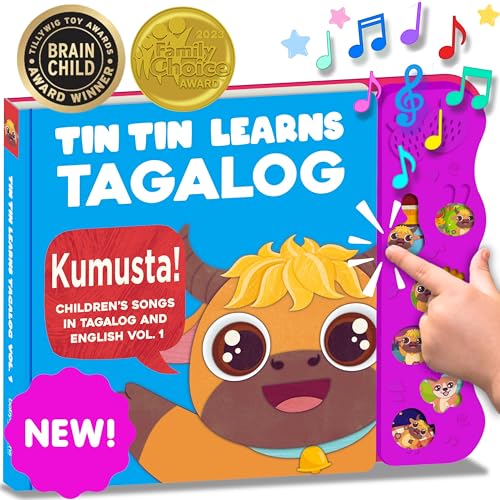
TIN TIN LEARNS TAGALOG, Vol. 1, introduces Tagalog through songs designed for babies, toddlers, and young children. The book is described as beautiful, durable, and safe for early learning, with music that helps families begin Tagalog vocabulary in a fun context. Built to withstand little hands, this volume emphasizes a gentle, natural voice and avoids robotic sounds, making it suitable for first exposure to Tagalog words and phrases. A thoughtful gift for newborns and toddlers, the volume integrates with a broader Tagalog learning sequence, including related words and phrases for everyday use.
Tin Tin Learns Tagalog: Songs Vol. 2

In Vol. 2, Tin Tin Learns Tagalog continues with a bilingual approach and non-tearing board pages suitable for younger readers. The description highlights batteries included, easy volume control, and mute options to tailor listening experiences. The content emphasizes warmth and natural voice, with songs sung twice to reinforce memory without synthetic tones. This volume remains ideal for families who want consistent Tagalog exposure during daily routines or playtime.
Tin Tin Learns Tagalog: Songs Vol. 3

Vol. 3 continues the patterned approach of singing in Tagalog with English support, offering a lasting, quality audio experience. The description stresses non-tearing pages, built-in audio, and reliable volume controls, making it suitable for daily read-aloud sessions. Like the other volumes, it emphasizes a warm maternal voice and culturally relevant Tagalog songs that can reinforce early language concepts while engaging kids with musical storytelling.
Heritage Kids Press I Love to Sing in Tagalog: Nursery Rhymes

This interactive songbook blends Tagalog vocabulary with nursery rhymes and playful sing-along elements. The language-focused approach aims to make Tagalog accessible through catchy rhymes and engaging visuals. The interactive format supports repeated listening and encourages participation from both adults and children, helping reinforce pronunciation, rhythm, and basic phrases in Tagalog within a home setting.
Heritage Kids Press I Love to Sing in Tagalog: Animal Songs

Animal Songs builds on the same interactive framework by focusing on animal-themed Tagalog songs. The format supports family engagement and fosters a natural relationship with Tagalog through melodic storytelling. The combination of visuals, simple lyrics, and responsive audio makes it a suitable option for young readers who respond to musical cues, animal themes, and sociocultural references that translate well in bilingual households.
Buying Guide: Key Purchase Considerations
When choosing Tagalog books for kids, consider these angles to ensure age-appropriateness, engagement, and long-term value:
- Age and development fit: Look for durable board pages for toddlers and interactive audio for early readers. Ensure the complexity of lyrics and phrases matches your child’s stage.
- Audio quality and voice: Prefer warm, natural-sounding narration or singing rather than robotic voices. Real-person vocals can improve retention and pronunciation.
- Durability and safety: Board books with sturdy pages and safe materials are essential for younger children who explore with hands and mouths.
- Language balance: Bilingual formats that clearly separate Tagalog and English can help parents model pronunciation and meaning.
- Musical variety: A mix of nursery rhymes, songs, and animal-themed tunes helps sustain interest and supports different learning contexts (mealtime, bedtime, play).
- Cultural relevance: Look for content that reflects Philippine culture, songs, and common phrases to build authentic exposure.
- Format flexibility: Consider whether the audio is standalone or embedded in the book, and whether batteries are replaceable for long-term use.
- Series continuity: If you like a style, Volumes 1–3 from Tin Tin Learns Tagalog provide a cohesive progression; Heritage titles offer different themes while maintaining an interactive approach.
Comparative Perspectives
- Pros of Tin Tin Learns Tagalog series: Consistent bilingual format, kid-friendly pacing, and durable construction. Good for establishing routine exposure across ages as children grow.
- Pros of Heritage Kids Press titles: Strong interactive elements, engaging songs, and a clear emphasis on pronunciation and playfulness. Useful for family sing-alongs and language reinforcement.
- Considerations: If you prefer purely read-aloud experiences, you may opt for non-audio picture books; if you want auditory immersion, the Tin Tin and Heritage audio formats excel.
- Best use scenarios: Daily routines (morning/bedtime), car rides, and quiet reading corners are ideal for integrating these titles.
These selections offer a practical mix of music, melody, and bilingual storytelling to support early Tagalog learning in American homes. Each product is designed to be engaging and durable for young readers, making Tagalog a natural, enjoyable pursuit rather than a formal lesson.