Summer learning loss is a common concern for parents seeking to keep skills fresh between school years. The following handpicked workbooks focus on short daily activities that reinforce core subjects—reading, writing, math, and science—while keeping kids engaged with short, targeted practice. Each option below is designed to fit a compact daily routine and support continued learning throughout the summer break.
| Product | Brand | Grade Range |
|---|---|---|
| Summer Bridge Activities Preschool to Kindergarten | Carson-Dellosa | PreK–K |
| Summer Bridge Activities 1st to 2nd Grade | Summer Bridge Activities | 1–2 |
| Summer Bridge Activities 2nd to 3rd Grade | Summer Bridge Activities | 2–3 |
| Summer Bridge Activities Kindergarten to 1st Grade | Summer Bridge Activities | K–1 |
| Summer Bridge Activities 3rd to 4th Grade | Summer Bridge Activities | 3–4 |
Summer Bridge Activities Preschool to Kindergarten Workbooks

This volume targets early learners with a balanced mix of language arts, math, and science activities designed to curb summer learning loss in brief daily sessions. It emphasizes review of prior skills from the previous school year and previews for the next grade, helping children maintain fluency in foundational concepts. The included activities promote handwriting practice and cognitive skills through age-appropriate tasks and flash cards. Ideal for families seeking a gentle, consistent summer routine that supports early literacy and numeracy development.
Summer Bridge Activities 1st to 2nd Grade Workbook
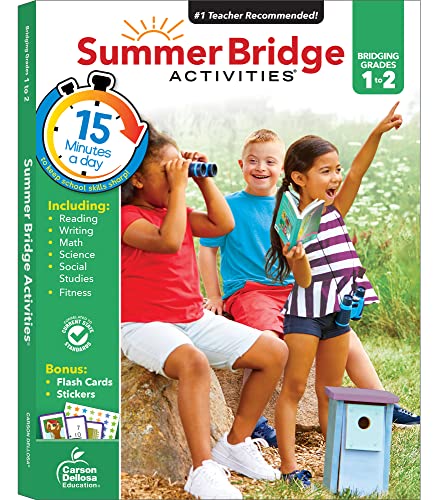
This activity book supports students transitioning from first to second grade with a concise daily practice routine focused on math, reading comprehension, science, fitness, social studies, and writing. The design encourages consistent short sessions (about 15 minutes) that reinforce skills from the previous year while introducing concepts for the upcoming grade. The included flash cards provide quick reinforcement, making it a practical pick for a structured summer learning plan that complements classroom curricula.
Summer Bridge Activities 2nd to 3rd Grade
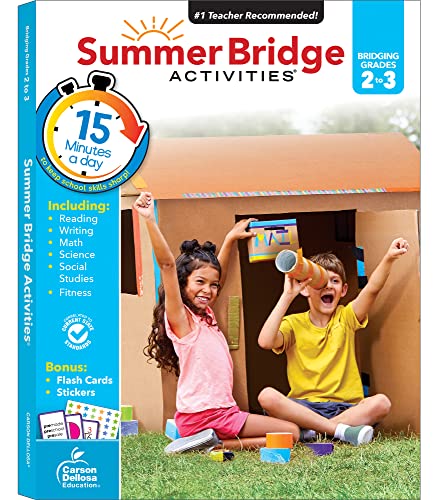
Designed for learners moving from second to third grade, this workbook emphasizes short, 15-minute daily sessions that cover math, reading comprehension, science, fitness, social studies, and writing practice. The format encourages independent work alongside guided tasks, helping students review past topics and preview upcoming standards. With flash cards and a layout that rewards steady practice, it serves as a reliable tool for maintaining academic momentum during summer.
Summer Bridge Activities Kindergarten to 1st Grade

This K-1 activity book aligns with Common Core standards and promotes continued learning through a mix of math, reading comprehension, science, fitness, social studies, and writing practice. It includes bonus extension activities that encourage outdoor exploration, experiments, and relevant social studies tasks. The interactive flash cards support independent learning, making it a robust option for at-home summer enrichment that complements classroom goals.
Summer Bridge Activities 3rd to 4th Grade

For students transitioning from third to fourth grade, this workbook offers a concise daily practice routine with emphasis on math, reading comprehension, science, fitness, social studies, and writing. The structure supports review of prior-year skills while introducing upcoming concepts through short, engaging activities. Flash cards reinforce memory and independence, providing a balanced approach to summer learning that aligns with typical curricula expectations.
Buying Guide
Key purchase considerations:
- Grade alignment: Choose books that match your child’s current and upcoming grade levels to ensure appropriate challenge without overwhelm.
- Subject balance: Look for sets that cover core areas (math, literacy, science) plus cross-curricular activities (fitness, social studies) to support well-rounded learning.
- Time commitment: Prefer titles designed for 10–15 minute daily sessions to fit into busy summer schedules.
- Format and accessibility: Consider workbooks with clear instructions, answer sections for self-check, and portability for travel or on-the-go practice.
- Engagement factors: Interactive elements like flash cards, short reading passages, and cross-curricular activities can boost motivation and attention.
- Independence vs. guidance: Some kids benefit from independent tasks, while others do better with light parental guidance; select products accordingly.
- Foundation vs. progression: Volumes that explicitly review previous skills and preview next-grade concepts help maintain continuous growth.
- Durability and print quality: Sturdy pages and durable binding are practical for summer use and repeated handling.
Comparison snapshot:
- Early-grade options emphasize preschool to first grade fundamentals and handwriting practice, ideal for younger children.
- Mid-grade options target transitions from 2nd–3rd and 3rd–4th, focusing on comprehension, math, and science skills.
- All selections highlight short daily practice with flash cards to support independent learning.