Discover engaging STEM-focused books and activities designed for preschoolers. The following selections blend science, technology, engineering, and math with age-appropriate experiments, tracing, and problem-solving. Each title supports early literacy and hands-on exploration, helping young learners build a strong foundation for school success. Use this guide to compare popular options and choose what best suits your child’s interests and learning style.
| Product | Brand | Focus | Format |
|---|---|---|---|
| LeapFrog LeapStart Pre-Kindergarten | LeapFrog | STEM skills, trial-and-error experiments, teamwork | Interactive book/player |
| Scholastic Storytime STEM Nursery Rhymes | Scholastic | Nurtures curiosity with STEM activities tied to nursery rhymes | Book with activities |
| Preschool Learning Activities Tracing Books | Momo & Nashi | Letter tracing, shapes, early writing readiness | Dry-erase tracing book set |
| School Zone Thinking Skills Workbook | School Zone | Problem-solving, logic, reasoning | Workbook |
| The Everything Kids’ Science Experiments Book | Simon & Schuster | Hands-on science experiments | Experiment book |
LeapFrog LeapStart Pre-Kindergarten Activity Book

Designed for preschoolers, this LeapFrog title blends STEM with reading, problem-solving, and teamwork. It introduces 16 pre-kindergarten STEM skills, including reading simple graphs and solving problems with tools. The content features 40+ replayable activities and 25+ reward stickers, making practice engaging and motivating for young learners who are guided by the LeapStart system. The kit emphasizes exploration and collaboration as kids experiment with cause and effect and develop early engineering concepts.
Scholastic Storytime STEM Nursery Rhymes Book

This title uses familiar nursery rhymes as a natural bridge to STEM concepts. Each rhyme is paired with three engaging STEM activities, reinforcing ideas through play and exploration. The format aligns with early learning standards and supports a gentle introduction to experimental thinking. Teachers and parents can leverage these inclusive activities to promote curiosity, measurement, patterns, and prediction in a fun, kid-friendly context.
Preschool Learning Activities – Tracing Books for Kids 3-5

This all-in-one tracing workbook supports handwriting readiness and fine motor development for ages 3-5. It includes 6 colorful markers, a dry-erase system, and a sturdy storage box for easy organization. The activities cover letter tracing, shapes, lines, and numbers 1-10, encouraging independent play and school prep in a device-free format. The flexible design suits homeschool, daycare, or classroom settings, promoting dexterity and focus through repeated practice.
School Zone Thinking Skills Workbook

This workbook emphasizes critical thinking for preschool and kindergarten learners. It includes a variety of problem-solving and logic exercises designed to develop reasoning abilities in young children. The compact pages allow brief, focused sessions that fit into busy mornings or quiet-time routines, supporting cognitive growth and readiness for more complex STEM activities later on.
The Everything Kids’ Science Experiments Book
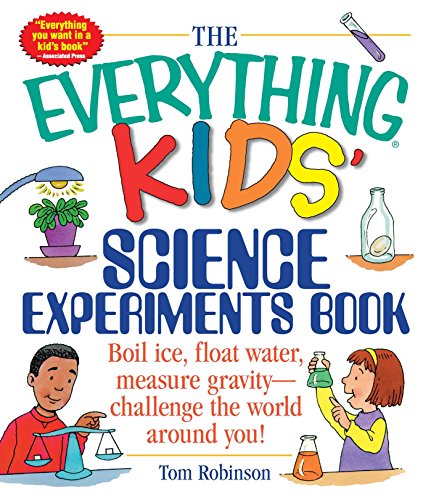
This expansive science book offers hundreds of kid-friendly experiments that explore gravity, states of matter, weather, and more. Each activity is designed to be safe and straightforward for preschoolers to participate in with adult supervision. The experiments foster curiosity, measurement, observation, and prediction skills, providing a broad foundation for scientific inquiry and early engineering thinking.
Buying Guide
- Learning objectives: Choose books aligned with core early learning goals—alphabet awareness, fine motor skills, problem-solving, and early science concepts.
- Hands-on emphasis: Prioritize titles with interactive activities, tracing, or experiments to encourage active participation and long-term engagement.
- Format and durability: Dry-erase or reusable formats work well for repeated practice and quick sessions, while sturdy bindings suit classroom use.
- Age suitability: Check age recommendations and skill progression to ensure materials match a preschooler’s developmental stage.
- Teacher and caregiver support: Look for resources with clear activity instructions and scalable challenges to involve adults in guiding exploration.
- Standards alignment: For school readiness, consider books that reference or support Next Generation Science Standards or general problem-solving skills.
- Versatility: Titles that blend reading with STEM, followed by simple experiments or activities, offer a balanced approach to literacy and sciences.
- Cost-per-use: Reusable or multi-activity books provide higher value when used across several weeks or months of learning.
These selections cover a spectrum of preschool STEM learning needs—from guided activities and tracing to open-ended experiments. When selecting titles, consider the child’s interests and the availability of adult guidance to maximize learning and enjoyment during early childhood.