Starting a Spanish journey requires clear structure, practical practice, and materials that build confidence. The following selection highlights beginner‑friendly textbooks and workbooks that emphasize grammar foundations, vocabulary, and essential speaking and reading skills. Each option below is designed for self‑paced learners, homeschool settings, or classroom use, with structured lessons and supportive exercises.
Summary of chosen products:
| Product | Brand |
|---|---|
| Madrigal’s Magic Key to Spanish: A Creative and Proven Approach | Three Rivers Press |
| Carson Dellosa Skills for Success Spanish Workbook, Parts of Speech | Carson Dellosa Education |
| Easy Spanish Step-By-Step | McGraw-Hill Education |
| Carson Dellosa Skill Builders Grades 6-8 Spanish Workbook | Carson Dellosa Education |
Madrigal’s Magic Key to Spanish: A Creative and Proven Approach
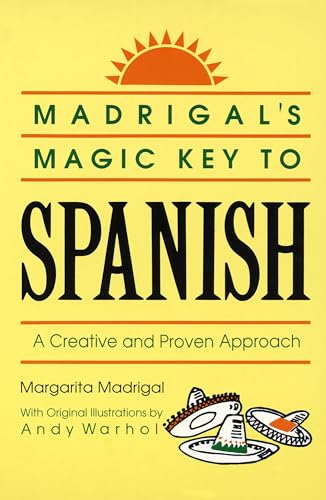
Madrigal’s Magic Key to Spanish offers a classic approach that emphasizes intuitive language patterns and memorable cues to accelerate acquisition. The book presents a creative framework for linking Spanish grammar to practical usage, helping beginners form a solid base in pronunciation, verb forms, and sentence structure. The text favors an approachable pace, with examples that illustrate how everyday phrases fit into real conversations. While focused on foundational knowledge, it also introduces key vocabulary in a natural context, supporting gradual fluency development.
This title is particularly valued for its historical effectiveness and accessibility for self‑paced learners. Portioning content into digestible lessons can complement more contemporary materials that emphasize drills or digital practice. If a learner prefers a beginner‑friendly, story‑driven entry into Spanish, this option presents a time‑tested pathway with clear anchors and practical takeaways.
Carson Dellosa Skills for Success Spanish Workbook
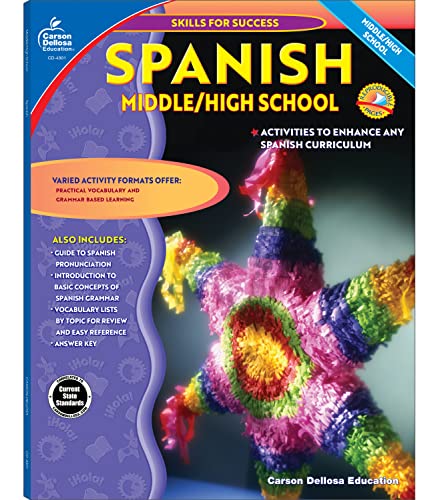
This workbook addresses parts of speech, grammar, and sentence building with activities suitable for classroom or home use. The material supports daily practice in vocabulary and basic sentence construction, with a pronunciation key and an answer key included. The 128 pages offer a compact, student‑friendly format that can be integrated into existing Spanish programs or used as a supplementary resource. The workbook is adaptable for learners who benefit from structured, repeatable drills to reinforce fundamentals.
Key strengths include practical exercises tied to everyday vocabulary and reproducible storybooks that reinforce reading skills. It serves as a supporting tool for teachers and homeschoolers seeking ready‑to‑use materials that align with core language outcomes. While not a standalone complete curriculum, it complements broader learning plans with targeted reinforcement.
Easy Spanish Step-By-Step

Easy Spanish Step-By-Step focuses on building grammar knowledge in a logical order, emphasizing fundamentals that support rapid progress in speaking and comprehension. The book presents grammatical rules and concepts by priority, guiding learners through essential verb forms, sentence construction, and core vocabulary. More than 300 verbs and key terms are introduced according to frequency, with exercises and readings designed to reinforce understanding and retention. The structured approach can help beginners gain confidence in forming sentences and expressing ideas early in the learning process.
Readers often appreciate the clear progression and practical practice that reinforce everyday conversational needs. The approach is well suited for learners who value a methodical grammar foundation as a springboard for speaking, listening, and reading tasks. The text balances explanation with application, supporting steady skill development across multiple language domains.
Carson Dellosa Skill Builders Grades 6-8 Spanish Workbook

This workbook targets middle school learners with a mix of vocabulary, sight words, and practical phrases. It aligns with national standards and presents passages and exercises suitable for grade‑level progression, helping students solidify basic skills before advancing. The varied activity types—reading passages, word banks, and structured tasks—support diverse learning preferences and can be used in classrooms or at home. It is particularly helpful for reinforcing continuity across a school year or bridging to higher‑level content.
Overall, the materials emphasize steady practice and incremental mastery, making them suitable for learners who need a predictable routine and clear milestones. The combination of vocabulary work, phrase practice, and context‑driven activities supports foundational language development that underpins higher‑level Spanish proficiency.
Buying Guide: Key Purchase Considerations For Beginner Spanish Textbooks
- Learning style fit: Choose materials that balance grammar, vocabulary, and communicative practice. Some learners prefer grammar‑first structures; others benefit from context‑driven, conversation‑based approaches.
- Structure and pacing: Look for clear progression, with manageable chapters, exercises, and review sections. A guided pace helps prevent overwhelm and supports consistent practice.
- Supplementary resources: Consider whether the book includes answer keys, audio components, or reproducible worksheets, which can enhance self‑study and classroom use.
- Skill balance: Ensure the resource supports speaking, listening, reading, and writing. Introductory verbs, essential phrases, and everyday vocabulary should be covered early on.
- Target audience alignment: Some titles are designed for homeschool use, while others are classroom or self‑study oriented. Confirm the intended setting matches your needs.
- Durability and format: For physical books, check binding and page quality for long‑term use. If digital options exist, verify accessibility and compatibility with devices.
- Teacher and parent guidance: Materials with clear instructions and answer keys help instructors monitor progress and provide timely feedback.
- Cost and value: Compare page count, coverage, and potential long‑term usefulness across a curriculum. A slightly higher upfront cost can yield broader applicability.
- Adaptability: Look for resources that can be paired with other programs or used for mixed‑ability groups, to accommodate different learner levels within the same household or classroom.
- Assessment support: Books that include practice tests or progress checks help track improvement and identify areas needing additional focus.