Finding a solid social studies program for 3rd graders means balancing map skills, world regions, U.S. geography, and early history with activities that keep young learners engaged. The following selections from reputable publishers offer reproducible worksheets, travel-style activities, and hands-on pockets of learning designed for classroom and homeschooling use. This article highlights five quality resources that align with common 3rd grade standards while providing diverse approaches—from map practice to cultural studies.
Below is a brief overview table of the chosen products, focusing on geography, map-reading, and early social studies skills to help you compare options quickly.
| Product | Brand | Focus |
|---|---|---|
| Evan-Moor Daily Geography Practice, Grade 3 | Evan-Moor Educational Publishers | World regions, continents, countries; maps and weather |
| School Zone Travel the Great States Workbook | School Zone | U.S. geography; map-reading; regional focus |
| Core Skills Social Studies, Grade 4 | HOUGHTON MIFFLIN HARCOURT | Foundational social studies concepts; broader scope |
| Spectrum Geography 4th Grade Workbook | Spectrum | U.S. regions; map skills; cultural and natural history |
| History Pockets: Native Americans, Grades 1-3 | Evan-Moor Educational Publishers | Early Native American cultures; engaging pockets |
Evan-Moor Daily Geography Practice, Grade 3

Evan-Moor’s Daily Geography Practice for Grade 3 offers reproducible worksheets that emphasize essential geography skills, including identifying continents, oceans, and major countries. The touring maps and weather-related activities support both US and world geography, making it suitable for mixed classroom or homeschool settings. The material can function as a daily warm-up or as a supplemental unit to reinforce map literacy and geographic vocabulary.
School Zone Travel the Great States Workbook

Travel the Great States Workbook presents a practical approach to U.S. geography and map-reading through activity-packed pages. With sixty-four pages of varied exercises, it supports skill development across multiple areas—directional geography, states and capitals, and regional comprehension. This resource is particularly useful for students building fluency in state locations and regional characteristics, and it complements broader social studies curricula with its hands-on activities and quick, reviewable tasks.
Core Skills Social Studies, Grade 4

Although labeled for Grade 4, Core Skills Social Studies provides foundational content that supports early 3rd grade learners transitioning into more complex social studies concepts. It covers basic civics, geography, culture, and communities, offering structured lessons and practice that help build the cognitive groundwork for later grades. The workbook format allows teachers and homeschool parents to assign concise activities that reinforce key ideas without overwhelming students.
Spectrum Geography 4th Grade Workbook
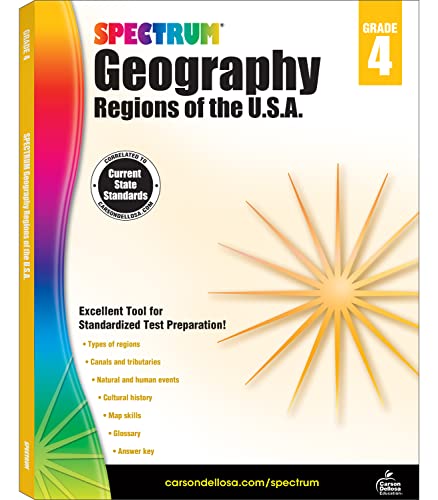
Spectrum Geography 4th Grade Workbook is designed to build U.S. regions knowledge, map skills, and cultural understanding through engaging activities. While it targets the 4th-grade level, the content aligns well with 3rd-grade standards by reinforcing spatial reasoning, map interpretation, and regional history. The workbook format supports independent practice and can be integrated into nightly homework or small-group centers for varied learners.
History Pockets: Native Americans, Grades 1-3

History Pockets introduces Native American cultures in an engaging, hands-on format designed for younger learners. The particular focus on “The Seminole of the Southeast” offers a concise historical lens suitable for 3rd grade, with interactive pockets that combine reading, writing, and crafts. This resource supports culturally responsive teaching and can serve as a core or complementary module within a broader social studies plan.
Buying Guide
- Grade alignment and progression: Pair resources from different levels (3rd and 4th grade) to build a bridge between foundational map skills and deeper historical understanding.
- Skill emphasis: Prioritize programs that balance geography (maps, continents, oceans) with civics and cultural studies to reflect common core social studies expectations for early elementary grades.
- Format and usability: Reproducible worksheets and pocket activities support both independent practice and guided instruction. Consider how many students can share a single workbook and whether digital or print formats fit your setting.
- Engagement and accessibility: Look for a mix of visual maps, hands-on activities, and short reading passages to accommodate diverse learning styles and attention spans.
- Supplemental value: Incorporate one resource that emphasizes U.S. states and regions, one that expands world geography, and one that introduces Native American cultures for a well-rounded curriculum.
- Teacher and homeschool suitability: Check for clear answer keys, reproducible pages, and lesson ideas that can be integrated into a weekly schedule without extensive planning.
- Assessment potential: Select materials that include review prompts or quick checks to measure progress, ensuring alignment with grade-level standards.
- Cross-curricular connections: Favor resources that connect geography with reading, writing, and science to reinforce integrated learning opportunities across subjects.
In sum, these five options provide a spectrum of approaches to 3rd-grade social studies—from geography-first practice with Evan-Moor Daily Geography Practice to U.S. geography workbooks by School Zone, plus broader civics and cultural contexts offered by History Pockets and Spectrum Geography. Using a mix of these resources can create a comprehensive, engaging curriculum that helps students build map literacy, geographic awareness, and early civics understanding over the course of the school year.