Finding age-appropriate sign language resources helps toddlers build early communication skills while engaging with fun visuals. This guide highlights four beginner-friendly sign language books and cards designed for toddlers and their families, with at-a-glance details to help you compare options.
| Product | Brand | Format | Key Focus |
|---|---|---|---|
| Carson Dellosa American Sign Language Flash Cards | Carson Dellosa Education | Flash Cards | 122 ASL signs, numbers 1-20, alphabet, sight words |
| Hubble Bubble Kids American Sign Language Cards | Hubble Bubble Kids | Flash Cards | 180 ASL signs, beginner vocabulary, durable cards |
| Little Farm Signs – My First ASL Book | Little Signs Collection | Board book | Animal farm signs, durable board pages |
| Baby Signs: A Baby-Sized Introduction to Speaking with Sign Language | DIAL | Board book | Essential signs for babies and toddlers, simple concepts |
Carson Dellosa American Sign Language Flash Cards

These ASL flash cards are designed for kids ages 4 and up, helping preschoolers and kindergarteners learn basic signing skills. The set emphasizes essential communication through engaging games and colorful illustrations. Cards feature rounded corners for easy handling and sorting, supporting quick review and practice. The comprehensive pack includes 122 signs across 105 total cards, with a resource card for easy reference. This option suits families seeking a broad introduction to American Sign Language in a classroom-friendly format.
Hubble Bubble Kids American Sign Language Cards for Toddlers

This set centers on beginners with 180 ASL flash cards, ideal for toddlers and young children. Each card presents a clear written description on one side and an illustrated sign on the other, making learning intuitive and visual. The cards are sized at 3 x 5 inches and laminated for durability, suitable for daily use at home, in classrooms, or during travel. The combination of starter signs, common words, and core vocabulary supports sustained practice and recognition of common signs.
Little Farm Signs – My First ASL Book
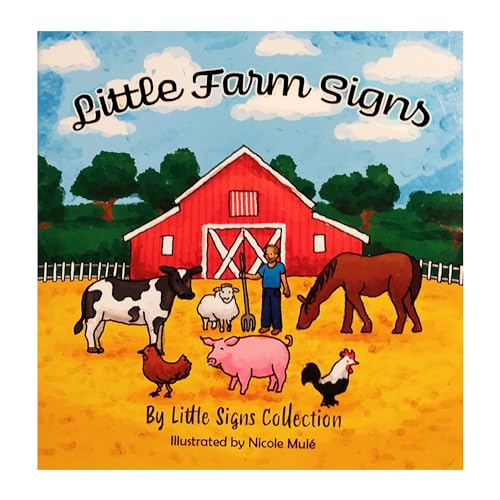
The Little Farm Signs book introduces ASL through animal farm imagery, making signs accessible for babies and toddlers. The board book format provides sturdy pages designed for little hands, making it a durable option for repeated read-aloud sessions. Clear ASL illustrations accompany corresponding words, enabling caregivers to model signs as children follow along. The farm theme supports early vocabulary development with practical, everyday terms.
Baby Signs: A Baby-Sized Introduction to Speaking with Sign Language

This board book offers a baby-friendly entry into sign language with 13 essential signs. Designed for little hands to grasp, it helps babies and toddlers communicate basic needs, wants, and feelings. The compact format supports on-the-go learning and simple daily practice, making sign language approachable for very young children and their caregivers who want a gentle introduction to signing.
Buying Guide
Key purchase considerations help you choose the best sign language resources for toddlers:
- Age appropriateness: Look for toddler-friendly formats like board books and sturdy flash cards, with clear signs and simple vocabulary.
- Durability: For young kids, choose cards with rounded corners and laminated pages, or board books that endure drooling, fingerprints, and rough handling.
- Visual clarity: Signs should be depicted clearly, preferably with both the sign illustration and written label to reinforce recognition.
- Vocabulary breadth: Decide whether you want a compact set of core signs or a broader catalog that includes numbers, colors, animals, and everyday words.
- Ease of use: Consider sets that are easy to sort, flip, and carry—great for travel, car time, and guided sessions with caregivers or teachers.
- Learning approach: Some resources emphasize visual demonstrations and illustrations, while others blend vocabulary with interactive activities or games.
- Caregiver support: Look for resource cards or guides that offer tips for teaching sign language to toddlers and extending learning beyond the pages.
Across these options, you’ll find a mix of comprehensive sign sets and beginner introductions. For families new to ASL, a combination approach—flash cards for daily practice paired with a simple board book for read-aloud sessions—often yields steady progress while keeping sessions engaging and age-appropriate.