Discover engaging, age-appropriate science kits that spark curiosity in eight-year-olds. The following selections emphasize hands-on experiments, clear instructions, and safe materials that can help young learners explore biology, chemistry, physics, and engineering. Each kit offers interactive activities designed to build critical thinking, problem-solving, and a love of science that lasts beyond the classroom.
| Product | Brand | Overview |
|---|---|---|
| National Geographic Gross Science Kit | Blue Marble | 40+ gross experiments with living curiosity and bonus hands-on activities |
| National Geographic Magic Chemistry Set | Blue Marble | Magic-themed science tricks plus real experiments and an illustrated guide |
| COBFDHA STEM Projects | COBFDHA | Solar-powered and battery-powered robot building with multiple configurations |
| Klutz Lego Gear Bots | Klutz | LEGO Technic-based kinetic creatures with a 64-page guide |
| Smartivity Robotic Hand Kit | Smartivity | DIY mechanical hand with step-by-step instructions and parts |
National Geographic Gross Science Kit

The National Geographic Gross Science Kit brings a high-activity approach to science learning. It includes 15 gross experiments with a playful “gross-out” twist—think boogers, slime, and test-tube vomit—that keeps kids engaged while exploring core concepts. An additional 30 experiments use common household items, expanding exploration without needing advanced equipment. The kid-friendly guide provides illustrated steps and explanations, helping young scientists connect curiosity with practical outcomes. This kit is well-suited for playful investigations during classroom-style sessions or at-home science parties.
National Geographic Magic Chemistry Set
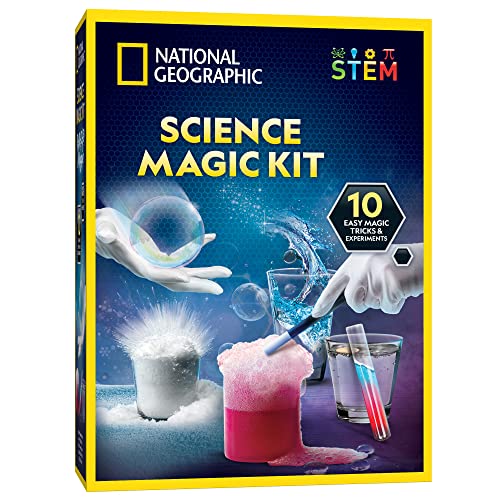
Magic science meets practical chemistry in this kit. It features 10 experiments designed as magic tricks, allowing kids to perform impressive feats like making a coin float or color-changing liquids while learning the science behind the effects. A magic wand and gloves add an immersive feel, helping children take on the role of a young scientist who can demonstrate experiments to friends and family. The illustrated guide covers the steps clearly, plus insights into the underlying science, making the experience educational and entertaining.
COBFDHA Solar Robot STEM Projects
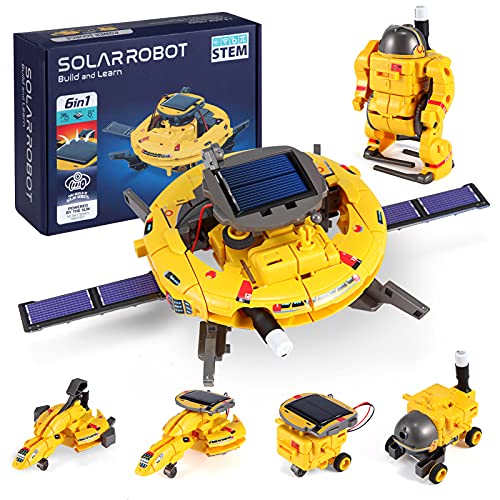
This kit provides several building robot activities designed for 8-12 year-olds. It includes six different robot configurations that can move on land, powered by solar energy or batteries, enabling outdoor play and experimentation with energy sources. The parts encourage hands-on construction, problem solving, and creative thinking as children design, test, and iterate their own machines. It’s suitable for independent play or guided projects in a STEM-focused classroom setting.
Klutz Lego Gear Bots

Klutz Lego Gear Bots combines LEGO Technic bricks with papercraft to build eight physics-driven, kinetic creatures. The included 64-page book blends hands-on building with STEM content about axles, cams, and cranks, explaining how gears power motion in everyday machines. The kit provides all necessary LEGO elements and guided instructions, making it accessible for eight-year-olds while offering deeper learning opportunities for curious minds who want to explore mechanical concepts through play.
Smartivity Robotic Hand Kit

The Smartivity Robotic Hand Kit focuses on engineering fundamentals through a constructive, screen-free experience. Kids assemble a mechanical hand, learn about joints and levers, and observe how simple machines translate into functional motion. The step-by-step guide supports independent building while the included instructional manual helps caregivers facilitate learning. The kit’s design emphasizes durability and hands-on experimentation, making it suitable for a quiet afternoon project or a longer, structured STEM activity.
Buying Guide: Key Purchase Considerations
- Age appropriateness: Look for kits labeled for 8-12 year-olds with clear, illustrated instructions to match developing reading and comprehension skills.
- Learning focus: Choose kits that blend entertainment with foundational science concepts such as chemistry, physics, robotics, and engineering to support well-rounded STEM learning.
- Hands-on engagement: Prefer kits that require active assembly and experimentation rather than passive observation to maximize critical thinking and problem-solving.
- Materials and safety: Ensure the kit uses non-toxic materials and includes enough safety guidance for home or classroom use. Consider the need for parental supervision for younger or more complex projects.
- Versatility and expansion: Some kits offer additional experiments or expandability (extra activities or future projects) to prolong engagement and learning.
- Instruction quality: Clear, kid-friendly instructions with diagrams accelerate independent exploration and reduce frustration during early STEM learning.
- Reusability: Kits that reuse parts or offer multiple configurations provide longer-term value and support iterative learning, as children test ideas and refine designs.
- Multiplayer or solo use: If you’re shopping for classroom or family use, select kits that accommodate multiple learners or groups to encourage collaboration and discussion.
- Storage and durability: Consider how easily parts can be stored and organized after sessions to prevent lost pieces and maintain ongoing interest.
- Budget alignment: Balance upfront cost with the breadth of activities offered. Some higher-priced kits may deliver more long-term value through numerous experiments and learning outcomes.