High school science students benefit from a mix of structured practice, hands-on activities, and real-world problem solving. This article highlights five accessible titles that align with core standards while encouraging inquiry, critical thinking, and scientific literacy. Each selection offers practical activities, vocabulary support, and extension ideas suitable for classroom or homeschool use.
| Product | Key Topic | Educational Value |
|---|---|---|
| Carson Dellosa The 100 Series: Biology Workbook | Biology basics, cells, genetics, bonds | Standard-aligned exercises, vocabulary focus |
| Mark Twain Forensic Investigations Workbook | Forensic science, evidence analysis | Critical thinking, real-world data interpretation |
| Exploring Creation With Physical Science 2nd Edition | Physical science foundations | Structured curriculum with hands-on activities |
| Evan-Moor Daily Science Book, Grade 1 | Foundational science concepts | Daily bite-sized lessons for foundational skills |
| The Everything Kids’ Science Experiments Book | General science experiments | Hands-on exploration across topics |
Biology Workbook: Core Concepts And Activities
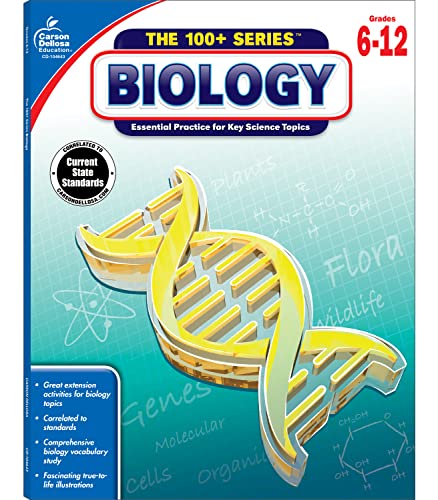
The Carson Dellosa Biology Workbook is designed to reinforce essential biology concepts for middle to high school learners. It covers matter, atoms, cells, genetics, elements, and bonds with a focus on vocabulary development and standards-aligned activities. Instructors can use it as a supplement to classroom instruction or as a homeschool resource to reinforce weekly topics. The workbook emphasizes practice problems and extension activities to deepen understanding of complex topics.
Forensic Investigations: Applying Science To Real-World Scenarios

The Mark Twain Forensic Investigations Workbook introduces students to investigative science through crime-scene scenarios and laboratory activities. It fosters deductive reasoning, interpretation of evidence, and problem-solving in a collaborative setting. With activities on handwriting analysis, fingerprinting, and other forensic techniques, this resource supports critical thinking and data-driven conclusions, while offering multiple plausible outcomes to broaden student discussion and analysis.
Exploring Creation With Physical Science 2nd Edition

Apologia’s Exploring Creation With Physical Science provides a structured approach to physical science, blending theoretical explanations with hands-on experiments. The second edition supports foundational concepts in physics and chemistry, enabling students to observe, measure, and analyze physical phenomena. While described as a used book in good condition, it remains a dependable resource for building a solid science framework and encouraging curiosity about how scientific principles apply to the real world.
Daily Science For First Grade: Foundational Concepts

The Evan-Moor Daily Science Book offers bite-sized lessons ideal for daily practice, reinforcing standards-based science concepts and vocabulary. Although oriented toward early learners, the daily structure can inspire routine study habits that upper-grade students can adapt for quick reviews or reinforcement of foundational knowledge. The program’s approach blends vocabulary with hands-on activities and comprehension questions to support reading and science literacy.
The Everything Kids’ Science Experiments Book
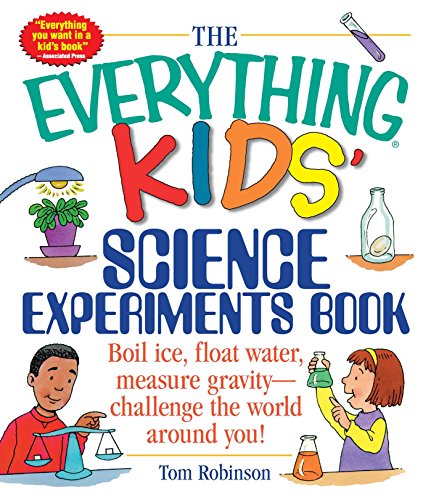
The Everything Kids’ Science Experiments Book compiles hundreds of experiments across a broad range of scientific topics. The book emphasizes hands-on exploration, safe experimentation, and clear explanations of the science behind each activity. It serves as a versatile companion for project ideas, science fairs, and extended inquiry, making it suitable for curious high school students needing extra practice or inspiration outside the standard curriculum.
Buying Guide
- Curriculum alignment: Look for resources that align with your state standards or common core expectations and complement your current course plan.
- Level and scope: Choose titles appropriate for high school learners, with options for both foundational content and more advanced inquiry.
- Hands-on opportunities: Prefer books that include experiments, activities, or data interpretation to build practical skills alongside theory.
- Vocabulary support: Materials with glossary or vocabulary exercises help students master discipline-specific language.
- Adaptability: Consider resources suitable for both classroom and homeschool settings, with clear teacher guides or answer keys when possible.
- Student engagement: Select texts that present real-world problems or crime-science contexts to maintain motivation and relevance.
- Cost-effectiveness: Evaluate bundles or workbooks as a way to cover multiple topics without excess spending, while ensuring durability for repeated use.
- Supplemental use: Use one or two core titles alongside experiment-focused books to create a balanced approach to learning and inquiry.
These selections offer a mix of structured practice, investigative science, and hands-on exploration designed to help high school students deepen their understanding of core topics while fostering scientific thinking. When selecting resources, consider the student’s interests, the course goals, and the desired balance between theory and practice.