Exploring science through engaging stories and hands-on activities helps young learners build curiosity and confidence. The following selection highlights kid-friendly science books and kits that suit six-year-olds, combining simple experiments, creative projects, and delightful tales. Each item below aligns with early science literacy, fostering observation, critical thinking, and a love of discovery.
| Product | Brand | Format | Key Benefit |
|---|---|---|---|
| The Everything Kids’ Science Experiments Book | Simon & Schuster | Book | Hands-on experiments about gravity, buoyancy, and more |
| The Klutz Book of Paper Airplanes | Klutz | Kit | Step-by-step folding, 40 sheets included |
| Butterfly EduFields 100+ Science Kits | Butterfly EduFields | Kit | 100+ experiments with safe tools for ages 4-8 |
| How to Catch a Star | Philomel Books | Book | Imaginative tale about reaching for the stars |
Below are five curated selections designed to engage six-year-olds with age-appropriate science topics, clear instructions, and exciting learning experiences.
Best Science Experiments For Curious Minds
From easy kitchen experiments to imaginative story-driven science, these resources invite children to observe, predict, and test ideas about space, gravity, and the natural world. The following sections provide a quick overview of each product, followed by practical tips to maximize learning and enjoyment at home or in a classroom setting.
The Everything Kids’ Science Experiments Book
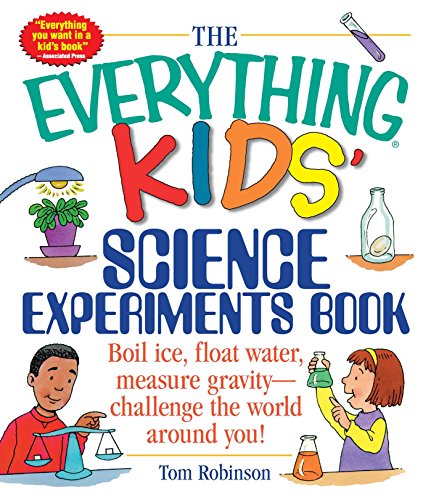
This classic activity book invites young readers to explore essential science concepts through approachable, hands-on experiments. Projects cover gravity, buoyancy, and measurement, offering clear steps and explanations that promote observation and scientific thinking. The content supports early literacy in science, with kid-friendly language and safety tips suitable for guided exploration at home or school. The book’s structured activities help children develop a sense of inquiry and the joy of discovery.
The Klutz Book of Paper Airplanes
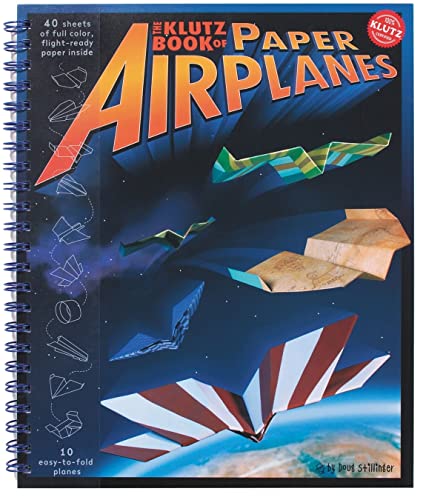
This activity kit provides a hands-on approach to physics and flight. With a step-by-step guide and 40 sheets of flight-tested paper printed in patterns, kids learn about aerodynamics, lift, and trajectory as they design and test different airplanes. The spiral-bound format keeps pages flat during experiments, making it practical for classroom demonstrations or at-home STEM play. It’s an engaging way to blend creativity with scientific reasoning.
Butterfly EduFields 100+ Science Kits

With over 100 experiments, this kit emphasizes safe, hands-on learning for early science learners. Activities cover various STEM concepts, helping children connect ideas through tangible experiments. The kit’s age range aligns with six-year-olds, offering engaging activities that foster curiosity without being overwhelming. Its bundled tools and clear instructions support independent exploration and guided instruction, ideal for parents seeking a structured yet flexible science experience at home.
How to Catch a Star

This charming picture book turns space exploration into a gentle fantasy, following a boy who loves stars and discovers friendship along the way. While it’s narrative-driven, the story sparks curiosity about the night sky, measurement, and the scale of the universe in a manner accessible to six-year-olds. The book’s rhythm and imagery provide a springboard for conversations about astronomy and science as a collaborative pursuit.
Buying Guide: Key Considerations For Selecting Science Books For 6-Year-Olds
- Age appropriateness: Look for activities and stories designed for ages 4-8 or specifically labeled for 5-7 years old to match a six-year-old’s developmental stage.
- Hands-on learning: Kits and books that encourage experiments, building projects, and interactive tasks tend to reinforce concepts more effectively at this age.
- Safety and materials: Choose products with non-toxic materials and clearly labeled safety guidelines suitable for supervised activities.
- Balance of reading and doing: A mix of narrative elements and practical activities helps sustain engagement and support comprehension.
- Skill development: Focus on foundational science topics such as gravity, weather, space, simple machines, and the scientific method to build a broad base for future learning.
- Durability and reuse: Look for durable paper, ink, and reusable components in kits to maximize value for multiple sessions.
- Instruction clarity: Clear steps, visuals, and simple explanations help young readers follow along and perform experiments with confidence.
- Guided exploration options: Materials that offer both independent play and guided teacher or parent involvement can accommodate different learning environments.
- Story integration: Books with engaging stories or characters can deepen interest and provide context for scientific ideas.
- Expansion potential: Consider items that offer additional activities or extension ideas to grow with the child’s curiosity over time.