Parents increasingly turn to structured reading programs to foster early literacy in toddlers, blending phonics, sight words, and interactive activities. The following selections emphasize multisensory learning, engaging visuals, and progressive challenges designed to support beginners as they move from letters to fluent reading. Each option below is designed for home use or small group settings, with age-appropriate activities that align with foundational reading skills.
Purchasing Snapshot
This table highlights five top toddler reading programs, their primary focus, and what you can expect from each. Use it to compare approach, materials, and learning styles at a glance.
| Product | Focus | Key Benefit |
|---|---|---|
| Little Champion Reader 9 DVD Kit | Alphabet, phonics, sight words | Structured progression through levels with visual and audio reinforcement |
| First Little Readers Parent Pack | Guided reading levels | Level-appropriate books to build confidence and fluency |
| CVC Word Magic | Montessori phonics, CVC words | Hands-on flash cards and wooden letters for tactile learning |
| Gojmzo Wooden CVC Word Set | Wooden letters, flash cards | Durable, classroom-ready tools for early decoding |
| Other Notable Options | Multi-sensory play & reading | Broad exposure to phonics and word building |
Best Early Reading Program With Alphabet and Sight Words

The Little Champion Reader kit emphasizes learning through repetition and varied formats. It covers the alphabet, vowel phonics, and more than 200 sight words, aiming to reach over 800 words and 250 high-frequency phrases. Nine educational DVDs pair with flashcards and books, using animation, nursery rhymes, and classic stories to reinforce decoding and reading comprehension. The program advances through three levels, starting with word recognition and culminating in independent sentence reading, making it suitable for parents seeking a clear, multi-modal path toward early literacy.
The kit’s design supports incremental mastery: words become phrases and then sentences. This scaffolding aligns with evidence-based reading approaches that emphasize phonemic awareness and decoding before fluency. While engaging visuals sustain attention, the core objective remains reading independence, making it a practical option for families aiming to cultivate confident early readers at home.
First Little Readers Parent Pack: Guided Reading Level B

Scholastic’s First Little Readers Parent Pack provides a curated set of 25 short, engaging books designed for beginning readers at Guided Reading Level B. The collection pairs age-appropriate stories with simple sentence structures, along with parent tips to support daily reading routines. The format emphasizes repetition and predictable patterns, helping new readers recognize common word shapes and develop confidence with short, decodable texts. This approach is well-suited for caregivers who want a structured, yet relaxed, at-home reading program.
As a companion resource, these titles encourage consistent practice and increase exposure to basic sight words. The books balance appealing narratives with manageable text density, which can translate into quicker progression to higher-level materials. While not a heavy emphasis on phonics in one product, the curated set supports word recognition and reading fluency through repeated reading experiences.
CVC Word Magic: Montessori Reading Game

Gently blending Montessori principles with modern phonics, CVC Word Magic focuses on consonant-vowel-consonant word families and sight word acquisition. The kit includes 26 wooden letters and 50 double-sided phonics flash cards, presented with hand-painted, realistic illustrations. Children trace, slide, and blend to form and decode CVC words like “fox” and “bat,” reinforcing phonemic awareness while building decoding skills. The durable, eco-friendly design supports daily use in homes and classrooms, making it a long-lasting literacy tool.
The set’s progression—from letter recognition to sound blending—aligns with the science-of-reading consensus that strong phonemic awareness is foundational. The tactile elements—wooden letters and laminated cards—provide multisensory reinforcement, helping kids connect sounds to symbols. This tangible approach is particularly beneficial for kinesthetic learners who benefit from movement and manipulation during practice.
Gojmzo Wooden CVC Word Set for Early Readers
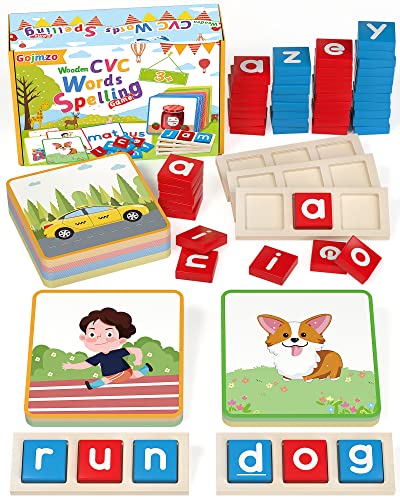
The Gojmzo set focuses on wooden CVC word flash cards, a set of 50 double-sided cards and 53 wooden lowercase letter blocks, along with five sturdy spelling boards. The design is intended for preschool and kindergarten activities, with a storage box for portability. The system enables teachers and parents to guide children through initial decoding tasks, word-building drills, and quick sight-word recognition. Its classroom-grade durability makes it suitable for repeated practice in both home and school settings.
Educational value comes from the tangible, hands-on experience of matching letters to sounds and forming basic words. The inclusion of a storage solution helps keep materials organized for ongoing use. The approach is well-suited for small-group instruction or individual practice, offering clear steps from letter sounds to simple word construction and reading rewards.
Buying Guide: Key Considerations for Toddler Reading Programs
- Progression and pacing: Look for programs with clear levels that gradually increase complexity (letters → sounds → sight words → short sentences). This supports a structured path without overwhelming a beginner.
- Multi-sensory learning: Pairs of visual, auditory, and tactile activities (videos, cards, and wooden blocks) help reinforce phonics and word recognition across learning styles.
- Durability and age-appropriateness: Materials should be robust for daily use and sized for toddler hands, with content appropriate for early readers (pre-K to early elementary).
- Parental involvement: Programs that offer simple guidance for at-home practice, daily routines, and progress tracking help families stay consistent.
- Evidence-based foundations: Favor approaches emphasizing phonemic awareness, decoding, and guided reading practices rather than single-skill drills.
- Media mix: Balancing screen-based content with tactile activities can sustain interest while ensuring active engagement with letters and words.
- Durability and safety: For wooden and card-based tools, ensure non-toxic materials and durable construction suitable for rough handling.
When selecting a program, consider your child’s temperament and learning pace. Some toddlers respond well to narrative-driven materials, while others benefit from game-like activities that emphasize repetition and decoding. A blended approach—combining books, flash cards, and interactive games—often yields the best long-term literacy outcomes. Always monitor progress and adjust intensity to maintain curiosity and avoid fatigue.