Daily question prompts help kids practice speaking clearly, listening, and expressing thoughts. This guide highlights five engaging products that turn everyday moments into meaningful conversations at home or in the classroom. Each option is designed to build vocabulary, social awareness, and confidence through fun, structured prompts that invite participation from all learners.
| Product | Purpose | Ideal For |
|---|---|---|
| KMLIFE 100 Morning Meeting Chips | Conversation starters and vocabulary practice | Classrooms, group activities |
| One Question a Day: A Five-Year Journal | Structured daily prompts over time | Home, personal reflection |
| TableTopics Kids to Go | Short, fun questions for family and classrooms | Dinner, car rides, small groups |
| TableTopics Kids Conversation Pack | Expanded topics for varied conversations | Family time, classrooms, gatherings |
KMLIFE Morning Meeting Chips: 100 Conversation Cards

The KMLIFE set provides 100 morning meeting chips with unique prompts designed to reveal how students are thinking and feeling. Each chip measures about 6 cm in diameter and features a double-sided laminated design that is waterproof and tear resistant, suitable for daily classroom use. These chips encourage public speaking and the introduction of new vocabulary, helping students articulate thoughts with confidence.
Key benefits include improved communication skills through 100 distinct questions, facilitating meaningful discussions that develop emotional insight, phrasing, listening, and vocabulary. The chips promote classroom cohesion, closer student relationships, and opportunities for social-emotional growth. They support life-building skills such as happiness, integrity, cooperation, and goal-setting through engaging activities and whole-group interactions.
One Question a Day: A Five-Year Journal

This five-year journal offers a simple, consistent format: a single question each day to capture evolving thoughts over time. While focused on personal reflection, its structured approach makes it adaptable for kids to respond with short, thoughtful entries. The journal’s English-language content supports long-term engagement, encouraging regular practice in writing and self-expression as children grow and their perspectives evolve.
Users can leverage the format for classroom or home routines, pairing questions with brief conversations to deepen listening and comprehension. It provides a chronological record that can be revisited for growth, storytelling, and memory sharing, making it a versatile tool for daily inquiry and conversation practice.
TableTopics Kids To Go Conversation Cards

TableTopics Kids To Go offers 40 quick questions designed for family meals, car trips, classrooms, and other activities. The questions aim to spark fun and connection, encouraging children to share experiences and think creatively. This set is ideal for younger learners and is adaptable to various group sizes, making it a reliable tool for everyday conversation starters during busy days.
Sample prompts such as “Who’s the funniest person you know?” and “If you could be one character from a movie, which one would you choose?” promote imagination and social interaction. The format supports group play, pair work, and whole-class discussions, helping kids build communication skills in everyday contexts.
TableTopics Kids Conversation Pack: 120 Questions
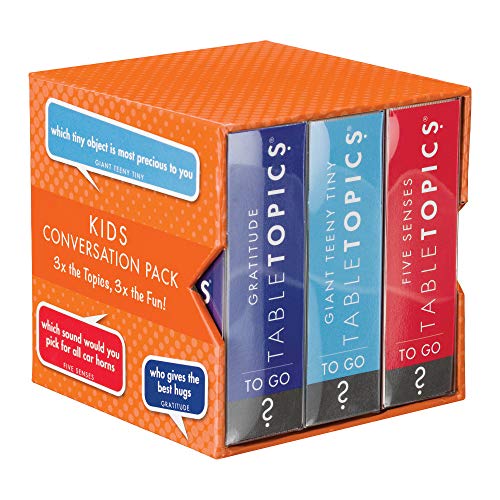
This boxed set delivers 120 engaging question cards across three topics, designed to stimulate dialogue at dinner tables and in classrooms. The cards cover a range of themes—from daily routines to personal preferences—facilitating inclusive discussions that accommodate different speaking levels. Suitable for families with children aged 6-12 and groups of two or more, this pack supports consistent use in daily routines, classroom icebreakers, and social gatherings.
Prompts encourage kids to articulate what they enjoy, what matters to them, and why, which helps develop listening skills, empathy, and reasoning. The variety of questions makes it a versatile resource for sustaining interest and participation in conversations over time.
Buying Guide: How to Choose Great Question-Of-The-Day Prompts For Kids
When selecting prompt tools for children, consider the balance between simplicity and depth. Look for prompts that are age-appropriate, encourage reflection without pressure, and promote inclusive participation. A mix of personal, imaginative, and practical questions helps maintain engagement and broadens vocabulary use. The format matters: laminated chips, cards, or a journal all have benefits, including durability, portability, and ease of use in different settings.
Durability and design are important for classroom applications. Double-sided, waterproof cards or chips withstand daily handling and provide long-term value. For younger children, prompts should be concise and easily understood, with follow-up ideas to extend conversation. For older kids, consider prompts that prompt critical thinking, problem-solving, and perspective-taking.
Practical considerations include group size compatibility, ease of use during routines (e.g., morning meetings, dinner time, car rides), and whether the tool supports quiet reflection or robust discussion. Publishers often tailor sets for specific contexts—home use, classroom activities, or family gatherings—so match the product to your typical environment and time constraints.
To maximize impact, pair prompts with listening activities, such as paraphrasing responses or asking clarifying questions. This fosters active listening and respectful dialogue, helping children articulate thoughts clearly while valuing others’ contributions. Finally, consider cultural relevance and inclusivity to ensure prompts resonate with diverse learners and communities.