Developing early reading skills lays a strong foundation for literacy success. The following five phonics-focused books are selected for preschoolers and early readers, offering screen-free activities, engaging rhymes, and structured phonics practice. Each title supports letter-sound correspondence, word building, and foundational reading strategies, helping caregivers choose effective tools for home learning and classroom use. The table below highlights key details for quick comparison.
| Product | Brand | Key Benefit | Age Range |
|---|---|---|---|
| LEARNING BUGS Phonics Songs Book | LEARNING BUGS | Letter sounds through music; screen-free | 2+ |
| Bob Books – Set 1: Beginning Readers | Scholastic | Simple, phonics-based early readers | 4+ |
| Sinoome Word Family Build Book | Sinoome | Word families and digraphs with flash cards | 4-8 |
| SkilLify Word Family Build Book | SkilLify | Phonics patterns with flip books and sight words | 4-8 |
| Carson Dellosa Phonics for Kindergarten Workbook | Carson Dellosa Education | Structured practice with games and puzzles | Kindergarten |
LEARNING BUGS Phonics Songs Book

This screen-free phonics book uses 26 letter sound songs to help preschoolers connect letters with their sounds. It emphasizes listening and vocalization, supporting focus on auditory patterns rather than visual motion. The approach aligns with early education best practices by reinforcing phonemic awareness, a key predictor of later reading success. The book also weaves nursery rhyme melodies into letter sounds, aiding memory retention through familiar tunes. Ideal for family reading time and small-group activities in classrooms or homeschool settings.
Bob Books Set 1: Beginning Readers

Bob Books Set 1 is designed for young readers who are starting to decode. The collection emphasizes short, decodable sentences with straightforward phonics patterns, making it easier for beginners to practice sounding out words and build confidence. The packaging and format are kid-friendly, and the text remains simple to align with initial reading goals. This set supports independent reading time and guided practice for teachers and parents.
Sinoome Word Family Build Book

This expansive kit covers 40 Read & Rhyme Flip Books, focusing on short vowels, long vowels, Magic E, R-vowels, digraphs, and blends through rhyming patterns. Each word is paired with bright illustrations to support pattern recognition. The package also includes phonics flash cards and sight word cards, enabling interactive practice and rapid word recognition. It’s designed for preschool through lower elementary learners and adaptable for homeschool or classroom activities.
SkilLify Word Family Build Book

SkilLify’s set mirrors the word-family concept with 40 Read and Rhyme Flip Books, complemented by sight word flash cards. The books group words by phonics features such as blends, digraphs, and vowel patterns, encouraging learners to connect letters, sounds, and words. The combination of flip books and printable or reusable flash cards supports varied practice formats—individual, partner, and small-group activities in both classroom and home environments.
Carson Dellosa Phonics for Kindergarten Workbook
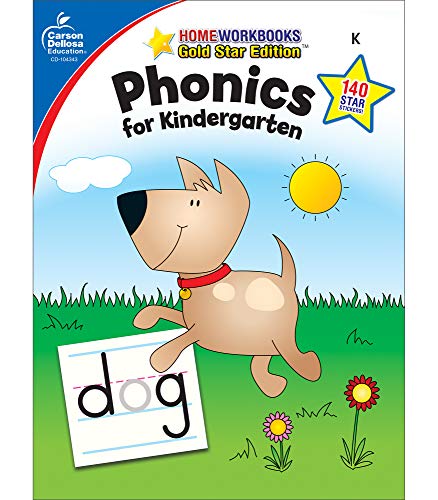
The Carson Dellosa workbook combines phonics practice with beginning consonant and short vowel sounds in a fun, engaging format. Activities include educational games and puzzles aligned with early language arts standards, making it suitable for both homeschool use and classroom centers. An incentive chart and stickers are included to reinforce progress and motivate consistent practice. The workbook emphasizes skill-building through varied activities that target reading readiness and word decoding.
Buying Guide
- Audience and skill level: Choose titles that align with your child’s current reading stage—pre-reading phonemic awareness, initial decoding, or word-family fluency. Some books emphasize musical or visual learning, others focus on structured practice.
- Phoneme-to-grapheme focus: Look for resources that prioritize letter sounds, digraphs, blends, and vowel patterns. A mix of short-term decodable text and long-term foundational skills supports progression.
- Format variety: A combination of flip books, flash cards, workbooks, and story-based readers can accommodate different learning styles and settings (home, daycare, or classroom).
- Engagement and age-appropriateness: Bright illustrations, rhymes, and interactive activities help sustain attention. Ensure content is suitable for ages 2–8 to cover preschool through early elementary.
- Durability and practicality: For busy families, screen-free options and durable print formats are advantageous for repeated use and travel.
- Teacher and caregiver needs: If used in a group, consider titles with easy-to-follow guided activities and companion materials, such as flash cards and printable exercises.
- Assessment potential: Some resources offer built-in progress markers (sticker charts, checklists) to track growth over time and adjust practice intensity accordingly.