Introducing the top kid-friendly books that build a solid foundation in music theory while keeping learning engaging. From piano-focused theory workbooks to color-coded note systems and beginner guitar theory, these selections help young learners read music, understand rhythms, and develop ear training. The list below highlights five highly regarded options that suit beginners and early learners, with different formats to fit home practice, lessons, or homeschool setups.
| Product | Format | Best For |
|---|---|---|
| Piano Adventures Theory Book Level 1 | Workbook | Piano students who want structured theory aligned with lessons |
| QMG Color Piano and Keyboard Stickers | Stickers + Lesson Book | Visual learners and beginners who benefit from color-coding |
| Essential Elements Piano Theory Level 1 | Sheet Music Theory Book | Beginner piano players needing concise theory integrated with method books |
| Music Theory – Hal Leonard Guitar Method | Guide with Audio Tracks | Young guitarists expanding theory, scales, and chords |
These five picks cover a spectrum of approaches—structured workbooks, visual aids, beginner-friendly theory integrated with a method, and cross-instrument options—so families can choose what best fits their child’s learning style and instrument of focus.
Piano Adventures Theory Book Level 1

The Theory Book is designed to be used in conjunction with the other Level 1 titles in the Faber Piano Adventures series and focuses on standard notation and early theory concepts. It supports students who are starting to read notes, understand key signatures, rhythms, and basic ear training in a structured, stepwise format. This workbook pairs well with regular piano lessons and at-home practice sessions, helping kids consolidate theoretical knowledge as they learn to play.
QMG Color Piano and Keyboard Stickers
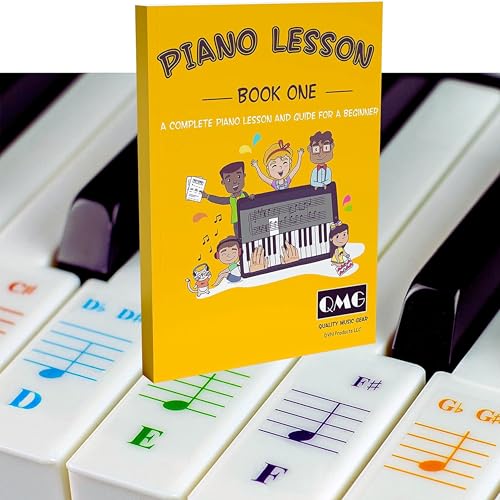
This package combines a beginner-friendly lesson book with color-coded note stickers and supportive video links. It teaches basic reading of staves, ledger lines, time signatures, and note durations, laying a practical groundwork for sight reading. The color-coding aligns with a kid’s visual learning style, helping players memorize note locations and relationships quickly. QR-coded videos provide interactive demonstrations to reinforce concepts outside of practice time.
Essential Elements Piano Theory Level 1

Essential Elements Piano Theory Level 1 presents concise theory content suitable for beginners. With 40 pages of content tailored to piano study, it helps students connect theoretical ideas with practical playing. This book complements Hal Leonard’s broader curriculum by providing a focused look at topics such as rhythm, melody, and chord structure, while remaining accessible to early learners.
Music Theory – Hal Leonard Guitar Method

For aspiring guitarists, this Hal Leonard guide offers step-by-step theory coverage appropriate for beginners and intermediate players. It includes practical topics like scales, chords, modes, and ear training, complemented by audio tracks that aid in listening and memory. Although guitar-focused, the concepts translate well to general music theory, making it a versatile choice for kids exploring multiple instruments or seeking a broader theoretical foundation.
Buying Guide
Key considerations help families pick the right book or combination for a child’s needs:
- Instrument alignment: Choose materials that match the child’s primary instrument to reinforce reading and playing skills in tandem.
- Learning style: If a child benefits from visuals, color-coded notes or sticker systems can improve engagement and recall.
- Level of abstraction: Beginners may prefer short, clear explanations with lots of practice, while advanced novices can handle more challenging exercises later in the year.
- Supplemental resources: Some books include audio tracks, videos, or online components that deepen understanding and motivation.
- Curriculum fit: For families following a formal method, select theory resources that align with the chosen method to ensure cohesive progress.
- Flexibility: Consider whether the child will practice daily at home, or needs a light-touch, hobby-friendly approach to sustain interest.
- Cross-instrument value: If the child studies multiple instruments, look for resources with transferable concepts like rhythm, key signatures, and ear training.
- Assessments and pacing: Look for materials that offer quick reviews or periodic checks so progress feels tangible and rewarding.
Choosing a mix of a structured workbook, a visual aid, and an optional guitar theory guide allows households to tailor learning to a child’s curiosity and progress pace. Parents and educators can rotate focus between reading, playing, and listening tasks to maintain engagement while building a robust music theory foundation.