Choosing the right foundational music textbooks helps young students build readers, rhythm, and ensemble skills. This guide highlights five beginner-friendly options across strings, piano, and general music education, emphasizing pedagogy, accessibility, and classroom applicability for elementary settings. Each pick aligns with common core music goals: notation, listening, and practicalPerformance opportunities.
Overview of featured products:
| Product | Brand | Format | Notes |
|---|---|---|---|
| Rubank Elementary Method: Saxophone | Rubank Publications | Softcover | Beginner Saxophone method with solos and duets |
| Essential Elements for Strings – Violin Book 1 | Hal Leonard | Book | Violin method with online resources and play-along |
| Kodály Approach: Method Book One | Hal Leonard | Textbook | Choral-focused foundational text |
| Hal Leonard Student Piano Library – Wide Staff Manuscript Paper | Hal Leonard | Notebook | Manuscript paper for piano students and composers |
Rubank Elementary Method: Saxophone
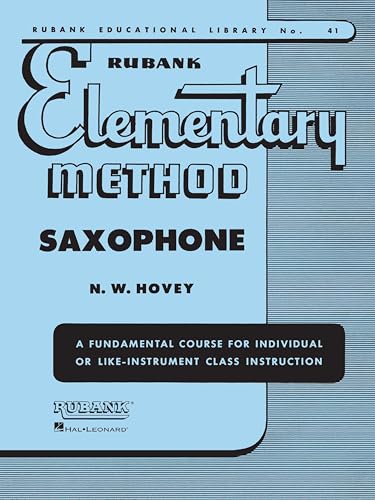
The Rubank Elementary Method offers a practical start for elementary saxophone learners. This softcover book provides a concise 48-page introduction designed for beginners, with simple exercises and accessible notation. The format supports individual practice and small-group ensembles in music classrooms. The clear layout helps teachers guide students through essential tone production, note recognition, and early repertoire. Although targeted to saxophonists, the approach models fundamental musical literacy that translates well to other wind instruments.
- Softcover, 48 pages
- Size: 12″ x 9″
- Editor: N.W. Hovey
- ISBN: 1423444817
Essential Elements for Strings – Violin Book 1

Essential Elements for Strings Book 1 builds a solid foundation for violin learners, offering a structured approach with online resources. The edition includes play-along tracks and a comprehensive method that supports teachers and students working together. While primarily for violin, the instructional strategies emphasize rhythm, posture, bowing technique, and ensemble readiness that are transferable to other string instruments in elementary programs.
- Newer 2025 edition available
- Includes online resources and play-along tracks
- Progressive sequence for beginner violinists
Kodály Approach: Method Book One

The Kodály Method Book One emphasizes a humanistic, ear-centered approach to music education. This textbook offers a choral-centric foundation that supports group singing, rhythmic development, and musical literacy from an early age. It is well-suited for elementary classrooms looking to integrate vocal work with basic theory, solfege, and rhythmic activities. The 214-page book provides structured lessons suitable for music specialists or classroom teachers implementing Kodály-inspired curricula.
- Book 1 – Textbook
- Pages: 214
- Instrumentation: Choral
Hal Leonard Student Piano Library – Wide Staff Manuscript Paper

The Wide Staff Manuscript Paper from Hal Leonard provides a practical notebook for piano students and budding composers. Its generous 32-page layout (8 1/2″ x 8 1/2″) accommodates worksheets, melodic drafting, and writing exercises essential for early notation practice. While not a method in the traditional sense, having a dedicated manuscript book in a classroom supports independent practice, composition projects, and music theory activities for elementary learners.
- Wide staff manuscript paper
- Ideal for piano students and composers
- 32 pages, compact and portable
Buying Guide: Key Purchase Considerations
When selecting music textbooks for elementary students, consider the following factors to match classroom goals and student needs:
- Learning style compatibility: Choose resources that balance auditory, visual, and kinesthetic activities. Kodály-based materials work well for ear training, while method books support notation and technique.
- Instrument focus vs. general music literacy: If your program spans multiple instruments, pick materials that reinforce core musical concepts—rhythm, pitch, and notation—across genres.
- Teacher resources: Look for editions that include online components, teacher guides, and supplementary activities to support lesson planning and differentiation.
- Student accessibility: Consider page layout, font size, and exercise progression to ensure students remain engaged without frustration.
- Durability and format: For classroom use, choose sturdy bindings or consider digital alternatives to withstand routine handling.
- Long-term progression: Select books that map to a clear sequence from beginner to more advanced levels, enabling smooth transition between grade levels.
Comparative Perspectives
Different textbooks serve distinct pedagogical goals. For wind and brass settings, the Rubank Elementary Method offers concrete beginner exercises and ensemble-ready solos, supporting early performance opportunities. For strings, Essential Elements for Strings provides a modern, teacher-friendly approach with online resources, benefiting both students and instructors. Kodály’s approach emphasizes singing and ear training, which builds a strong auditory foundation before formal reading. Piano-focused resources like the Wide Staff Manuscript Paper complement keyboard instruction by strengthening notation practice, a universal skill across music disciplines.
Overall, a well-rounded elementary program benefits from a mix of method books, repertoire, and supplementary notation tools. Prioritize materials that align with your curriculum goals, classroom size, and available instructor time. Regularly rotating between technique-focused books and literacy-centered texts can help sustain student interest and measure progress over the school year.