Starting a journey into medical terminology and personal health records can be overwhelming for beginners. This guide highlights five beginner-friendly books and tools that cover medical language, herbs, and practical health journaling. Each pick is chosen for clarity, usability, and relevance to those new to medicine. Read on to compare essentials, learn what each offers, and discover a practical approach to building foundational health knowledge at home.
| Product | Brand | Type |
|---|---|---|
| Merriam-Webster’s Medical Dictionary | Merriam-Webster | Medical Dictionary |
| Rosemary Gladstar’s Medicinal Herbs | Storey Publishing | Herbal Guide |
| H&P notebook | Medical Basics | Medical History & Physical Notebook |
| BookFactory Medical Journal (Daily Medications) | BookFactory | Medical Journal |
| BookFactory Medical History Journal | BookFactory | Medical History & Tracking Journal |
Merriam-Webster’s Medical Dictionary, Newest Edition
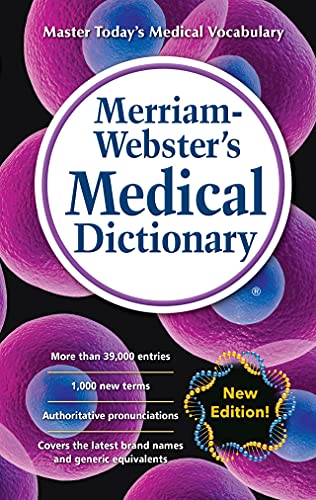
The Merriam-Webster Medical Dictionary presents essential medical terminology in a concise, accessible format. It is designed as a quick reference for beginners, offering clear definitions and coverage of new terms, brand names, and drug equivalents. The latest edition expands with up-to-date words and senses, making it a practical first dictionary for students, caregivers, or anyone starting medical literacy. Its mass-market size supports easy handling and frequent consultation during study sessions or clinical visits.
Rosemary Gladstar’s Medicinal Herbs: A Beginner’s Guide

This beginner-friendly herbal guide introduces 33 healing herbs with practical guidance on growing, preparing, and using them. Written in accessible English, it helps readers understand the core roles of common herbs in everyday wellness. While rooted in traditional herbalism, the book emphasizes safety, sourcing, and practical everyday applications, making it a useful companion for those curious about natural remedies and basic pharmacology concepts in a simple, approachable format.
H&P notebook – Medical History And Physical Notebook
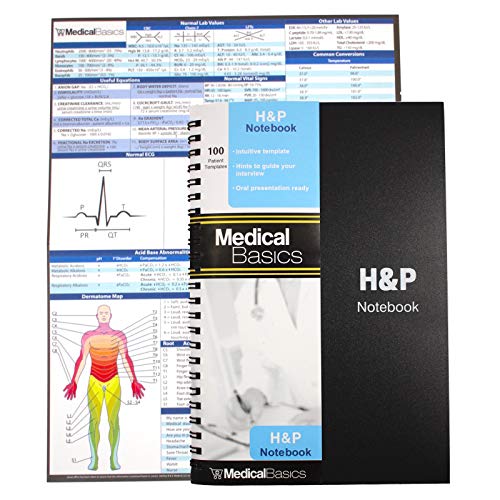
This notebook provides 100 complete H&P templates designed with medical student input. It optimizes the data fields for efficient charting, and each template presents a two-page view to mirror real-life patient encounters. Durable materials and perforated pages support long-term use, making it a practical tool for learning patient history-taking, physical exams, and systematic note-taking in clinical contexts.
BookFactory Personal Medical Journal History Logbook
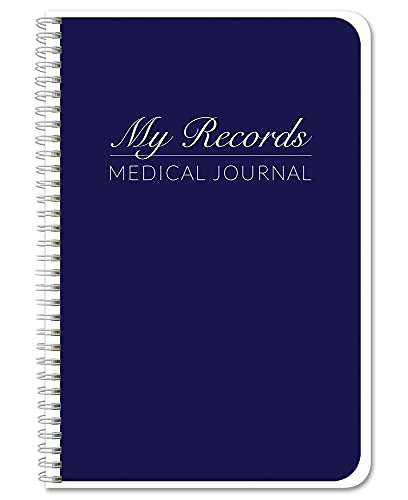
This history logbook is designed for daily health tracking, with sections for well-being, symptoms, and lifestyle factors like diet and activity. It emphasizes day-by-day recording, making it easier to identify trends and discuss changes with healthcare providers. The inclusion of contact information spaces helps keep essential details organized for medical appointments and ongoing care.
BookFactory Medical Journal / Daily Medications

This journal focuses on daily well-being with prompts to log symptoms, medications, and health stats such as blood pressure, heart rate, and other metrics. It also includes spaces to record insurer and physician information, creating a centralized resource that can help individuals coordinate care and communicate more effectively with medical professionals.
Buying Guide
- Goal alignment: Choose a resource that matches your current needs—terminology (dictionary), practical health management (journals), or holistic approaches (herbal guide).
- Usability: For beginners, books with clear language, indexed terms, and structured templates improve retention and daily use.
- Format and durability: Consider size, binding, and materials. Durable notebooks suit frequent handling, while pocket-sized dictionaries support on-the-go study.
- Scope and up-to-date content: A medical dictionary should cover current terms and drug names; a herbal guide should present safety and sourcing guidance for beginners.
- Safety and scope boundaries: While herbal guides are informative, always consult healthcare professionals for medical advice and medication interactions.
- Complementary use: Pair a dictionary with a journaling system to reinforce learning and track real-world health observations.
- Accessibility: Look for resources that present content in plain language and offer examples relevant to everyday health tasks and patient interactions.
- Maintenance: Some tools require ongoing updates or editions; consider how you’ll refresh materials as your knowledge grows.
- Digital vs. print: Print books are tactile and reliable offline; digital formats can offer quick search and note-taking.
- Educational value: For students, combine reference terms with practical templates and logbooks to build a well-rounded foundation.