Finding the right math workbook helps kids build confidence with addition, subtraction, place value, and basic problem solving. The following five titles cover early numeracy, daily practice, and core standards to support classroom or homeschool learning. Each pick features structured lessons, approachable activities, and age-appropriate content.
| Product | Grade Level | Focus Areas | Pages |
|---|---|---|---|
| School Zone Addition & Subtraction Workbook (I Know It! Series) | 1st–2nd | Addition, Subtraction, Place Value, Regrouping | 64 |
| School Zone Big Second Grade Workbook | 2nd | Word Problems, Reading, Phonics, Math, Science | 320 |
| School Zone Big First Grade Workbook | 1st | Math, Time, Money, Fractions, Reading Skills | 320 |
| Carson Dellosa Common Core Math 4 Today (3rd Grade) | 3rd | Common Core Math, Fractions, Time, Operations | ~ |
| School Zone Big Preschool Workbook | Pre-K | Alphabet, Early Math, Writing, Colors & Shapes | 320 |
These selections come from trusted brands and cover a range from prescriptive daily practice to broader skill-building activities. They are suitable for independent work, teacher-led centers, or homeschool routines. Consider your child’s current grade, math focus, and attention span when choosing a workbook.
School Zone Addition & Subtraction Workbook: I Know It! Series

The workbook contains a 64-page collection of activities designed to help children develop addition and subtraction skills. It emphasizes place value, regrouping, and fact tables, with age-appropriate tasks suitable for ages 6–8. The format supports progressive practice and reinforces core math concepts through varied exercises.
School Zone Big Second Grade Workbook

This 320-page workbook provides a broad scope of second-grade content, including word problems, reading comprehension, phonics, math, and science. It is designed to support a full curriculum in a single resource and emphasizes comprehension alongside procedural fluency, making it a versatile choice for daily practice.
School Zone Big First Grade Workbook

Designed for first graders, this 320-page workbook covers reading, phonics, spelling, basic math, time, money, and fractions. Sections are clearly organized with color-coded lessons and bottom-page notes to guide beginners through essential skills. It aligns with a typical early elementary curriculum in a structured, kid-friendly format.
Carson Dellosa Common Core Math 4 Today (3rd Grade)
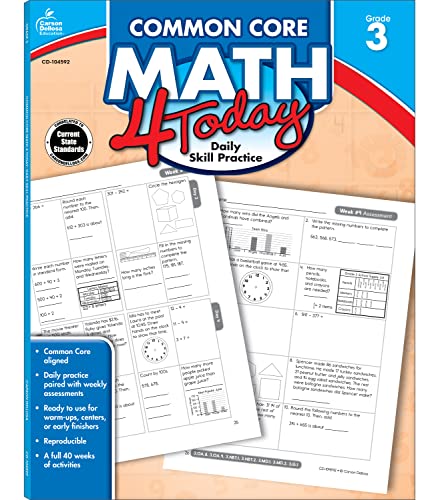
Volume 6 offers daily practice aligned with Common Core standards for third grade. It pairs short daily activities with weekly assessments, making it suitable for warm-ups, early finishers, or quick centers. This workbook emphasizes consistent practice to reinforce core arithmetic concepts and problem-solving strategies.
School Zone Big Preschool Workbook

Although aimed at preschoolers, this 320-page workbook builds a foundation in ABCs, phonics, early math, writing, and shapes. It includes a wide range of activities designed to develop early literacy and numeracy skills, helping prepare children for kindergarten and first grade through engaging exercises.
Buying Guide: Key Purchase Considerations
- Age and grade alignment: Choose workbooks that align with your child’s current grade level or provide a gentle next-step progression to avoid frustration or boredom.
- Skill focus: If your child needs targeted practice, select titles emphasizing a specific area (e.g., addition/subtraction, time, money, fractions) before broad skill coverage.
- Content structure: Look for clearly labeled sections, color coding, and short, manageable lessons that fit short attention spans and daily routines.
- Practice variety: A mix of drills, word problems, and real-world applications helps maintain engagement and reinforces transfer of skills.
- Teacher or homeschool suitability: Consider whether the workbook supports classroom use, centers, or independent study with answer keys or parent guidance.
- Durability and size: Check page quality, print layout, and binding to ensure the workbook withstands frequent handling by energetic learners.
- Progress tracking: Some books include assessment pages or progress indicators to monitor improvements over time.
- Supplemental resources: For broader learning, pair workbooks with digital or hands-on activities that reinforce concepts in different formats.
- Standards alignment: If following educational standards, verify alignment with Common Core or state standards to ensure consistency with curriculum goals.
Choosing the right workbook often hinges on how it fits into a learner’s routine and the level of guidance a child prefers. For some, daily practice with concise, focused pages works best. For others, a larger workbook that covers multiple subjects offers a one-stop solution. Balancing structure with flexibility helps maintain motivation while building essential math fluency.