Discover engaging flashcards designed to boost early literacy, counting, and language skills. This guide highlights five high-quality options for kids ages 1-8, offering durable designs, vibrant illustrations, and interactive activities that support classroom and home learning. Each product is evaluated for age suitability, educational value, and user-friendly features to help caregivers choose the right set.
| Product | Brand | Key Focus | Age Range |
|---|---|---|---|
| QUOKKA ABC Learning Flash Cards | QUOKKA | Alphabet, numbers, colors, animals, first words | 1-4 |
| Torlam Toddler Flash Cards | Torlam | Alphabet, numbers, shapes, colors, animals, first words | 1-4 |
| THE BAMBINO TREE Phonics Flash Cards | THE BAMBINO TREE | Phonics, reading progression, word families | 4-8 |
| LearnWorx 101 Baby Flash Cards | learnworx | First words, objects, numbers, play games | 1-3 |
| Carson Dellosa ASL Flash Cards | Carson Dellosa Education | American Sign Language signs | 4+ |
QUOKKA ABC Learning Flash Cards for Toddlers

QUOKKA’s 60 double-sided flash cards cover ABCs, numbers, colors, shapes, and a variety of common nouns such as animals and fruits. The large fonts and clear illustrations are designed for easy viewing from a distance, aiding visual development and communication. The kit functions as a versatile tool for home learning, preschool, and early classroom activities. Each card includes a simple prompt or word on the back to reinforce vocabulary and early sentence formation. The materials emphasize bright visuals and engaging, age-appropriate content to support speech and language development.
Torlam Toddler Flash Cards — Learning Essentials
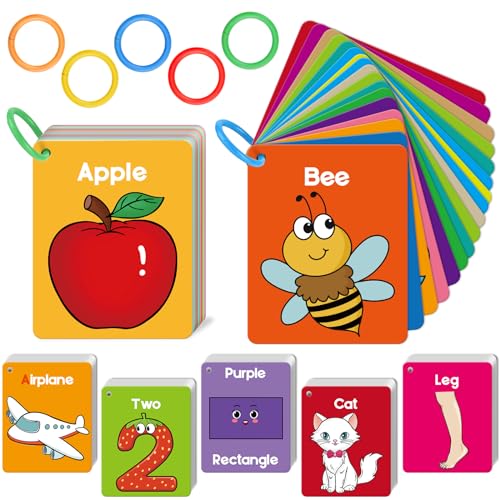
Torlam offers 60 double-sided flash cards plus five colored rings, designed for foundational skill building. The set covers the alphabet, counting to 10, shapes, colors, animals, body parts, foods, and first words. The illustrations use vibrant colors and easy-to-read fonts to capture attention and support curiosity, helping children build vocabulary, memory, and early kindergarten readiness. The card design focuses on clear labeling and accessible wording to support independent exploration and guided learning sessions.
THE BAMBINO TREE Phonics Flash Cards

This set emphasizes phonics progression across four levels, with 62 cards, 480 words and pictures, and 120 sentences. It includes phonogram families, blends, digraphs, long vowels, and silent letters, making it suitable for children in kindergarten through early primary grades. The kit is teacher-designed, offering engaging activities that blend play with structured practice. The included sorting rings aid organization, enabling hands-on, interactive phonics practice that builds reading confidence and fluency over time.
LearnWorx 101 Baby Flash Cards

LearnWorx presents 101 first-words flash cards featuring animals, foods, household items, outdoor objects, and places. The reverse side includes simple games to practice color recognition and basic associative tasks. The bright, large illustrations support visual development and non-screen learning, making these cards suitable for infants through preschoolers. The design targets speech development and vocabulary growth, with award-winning branding that emphasizes practical, classroom-friendly usability and portable play.
Carson Dellosa ASL Flash Cards

Carson Dellosa’s ASL flash cards provide 122 signs across 105 cards with rounded corners for easy handling. The set targets beginners and toddlers, offering numbers, alphabet letters, sight words, and people and animals signs. The bilingual and signing focus supports early communication, motor planning, and social interaction. The design emphasizes durable construction, simple navigation, and a balance between visual cues and sign demonstrations that can be used in preschool and home learning contexts.
Buying Guide
Key purchase considerations help tailor choices to a child’s age, learning style, and goals:
- Age appropriateness: Younger toddlers benefit from larger, simpler images and basic vocabulary; older children can handle phonics and sign language cards with more complex content.
- Content focus: Decide whether you want foundational literacy (letters, sounds, word recognition), numeracy (numbers, counting), or language support (ASL or bilingual content).
- Card design and durability: Look for large fonts, high-contrast illustrations, rounded corners, and sturdy card stock for frequent handling.
- Interactivity: Cards with back-facing questions, prompts, or games increase engagement and reinforce learning through play.
- Organization: Sets with rings, binders, or color-coded categories help keep flash cards organized and accessible for parents or teachers.
- Multisensory potential: Some sets pair with dry-erase markers or include signs and actions, enabling hands-on practice beyond static images.
- Teacher and caregiver alignment: Content designed with educational standards or teacher input can ease integration into lessons and routines.
Comparison considerations include targeted outcomes (reading readiness vs. sign language), progression level, and the balance between visual cues and text. For families seeking screen-free learning, choose cards that emphasize repetition, conversation prompts, and tactile interaction. Always assess the child’s interest and attention span to ensure consistent usage and progressive skill development.