Discover hands-on ways for children to explore the human body with colorful, interactive books and kits. This guide highlights five engaging options that blend learning with play, helping kids ages 4–8 understand anatomy, organs, bones, and the sense of the human body through activities, models, and stories. Each pick is designed for home learning or classroom use and aims to spark curiosity while building foundational science skills.
| Product | Brand | Type | Key Benefit |
|---|---|---|---|
| QUOKKA Human Body Busy Books | QUOKKA | Busy book with pre-attached elements | High engagement with 15 themes |
| Freebear Montessori Busy Book | Freebear | Interactive body-themed activity book | Supports cognition and interaction |
| National Geographic Human Body Model | Blue Marble | Glow-in-the-dark 32-piece kit | Hands-on anatomy with organs, bones, muscles |
| BEMAXYE Human Body Anatomy Busy Book | BEMAXYE | 63-page interactive book | Removable activity cards for memory |
QUOKKA Human Body Busy Books

QUOKKA’s busy books ship fully assembled, offering immediate access to nearly 200 pre-attached elements. This eliminates setup time and makes it easy for young learners to dive into human anatomy. The book features 15 exciting themes—covering the brain, organs, senses, skin, teeth, bones, and more—designed to spark curiosity and sustain engagement. Each page is crafted to be easy to understand, encouraging repeated exploration and play as a learning tool.
Freebear Montessori Busy Book: Human Body
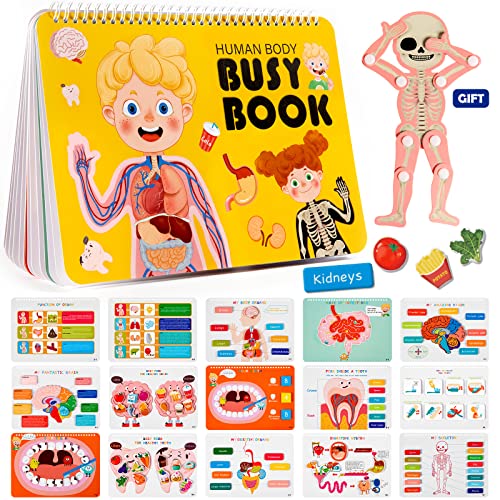
This Busy Book blends body-themed learning with cognitive development. It includes 15 pages across five major body themes, plus a skeleton toy for hands-on play. The design supports exploration of body structure and fosters interaction during homeschool activities. The book emphasizes deeper cognitive understanding and language skills, encouraging kids to discuss and explore how the body works while building fine motor and observational abilities.
National Geographic Human Body Model (Glow in the Dark)
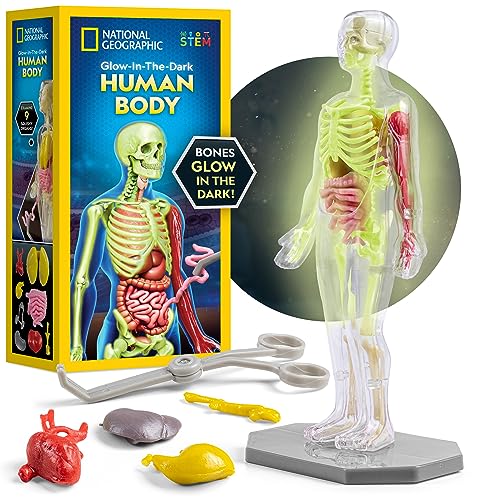
This 32-piece model lets kids study anatomy by removing and examining nine organs plus 18 glow-in-the-dark bones. The 9″ shell, display stand, and included forceps aid hands-on exploration. The kit also comes with a comprehensive learning guide that offers detailed facts about the body, helping students connect structure with function in an engaging, visually striking way.
Human Body Anatomy Busy Book for Kids (BEMAXYE)

This Montessori-inspired busy book uses 63 pages of illustrations and interactive activities that promote critical thinking, reading comprehension, and fine motor skills. Removable activity cards offer reusable learning material, making it easy to revisit concepts and reinforce memory through hands-on tasks.
Buying Guide: Key Purchase Considerations
- Age-appropriateness: Look for materials designed for ages 4–8 to ensure content is accessible yet challenging without frustration.
- Hands-on vs. passive learning: Busy books versus model kits offer tactile engagement; consider a mix to maintain interest.
- Durability and materials: Thick pages, laminated cards, and sturdy shells support longer use in classrooms or busy homes.
- Content breadth: A balanced selection should cover organs, bones, muscles, senses, and general physiology to build a comprehensive understanding.
- Reusability: Removable cards or reusable elements maximize ongoing practice and value.
- Accessibility: Bright visuals, large print, and clear labels support early readers and English learners.
- Storage and cleanup: Pre-attached pieces and organized components reduce setup time and mess.
- Supplemental learning: Consider pairing with simple experiments or anatomy-themed stories to reinforce concepts.
Choosing the right tools depends on a child’s curiosity, attention span, and learning style. Busy books emphasize sequencing, matching, and memory, while model kits encourage spatial reasoning and deeper anatomical knowledge. A combination approach can provide both immediate engagement and lasting educational value, helping kids build a foundational understanding of how the human body functions in everyday life.