Exploring the human body can be fun and educational for toddlers. The right hands-on tools help young children visualize organs, systems, and how the body works. This guide highlights five toddler-friendly anatomy products that support early science learning through play, with a quick overview table to compare core features.
| Product | Brand | Key Benefit | Age Range |
|---|---|---|---|
| Melissa & Doug Magnetic Human Body Anatomy Play Set | Melissa & Doug | Hands-on magnet-based anatomy with a wooden stand | 3+ years |
| QUOKKA Human Body Busy Books | QUOKKA | Fully assembled, multi-theme early learning book with anatomy focus | 3-8 years |
| Gemileo 90-Piece Magnetic Body Puzzle | Gemileo | Layered body parts with magnets for easy building and learning | 3+ years |
| June Garden Little Patient Lucas Plush Anatomy Doll | June Garden | Removable organs with Velcro for interactive anatomy play | 3+ years |
| Kidzlane 29 Piece Wooden Puzzle for Toddlers | Kidzlane | Layered anatomy puzzle with skeletal, muscular, and digestive systems | 3+ years |
Melissa & Doug Magnetic Human Body Anatomy Play Set

The Melissa & Doug Magnetic Human Body Anatomy Play Set combines a wooden magnetic figure with 24 anatomically accurate magnets. A wooden stand supports the figure, and a guide on the package helps kids identify organs and organ systems. This set emphasizes visual recognition and hands-on manipulation, supporting early science curiosity and vocabulary development in a safe, durable format.
QUOKKA Human Body Busy Books

QUOKKA offers a fully assembled busy book focused on human anatomy. With nearly 200 pre-attached elements and 15 engaging themes, this preschool workbook brings anatomy to life through hook-and-loop fasteners, making it easy for little hands to explore bones, organs, senses, and more. The pages are designed to captivate curiosity and encourage repeated, independent play that reinforces foundational knowledge.
Gemileo 90-Piece Magnetic Body Puzzle
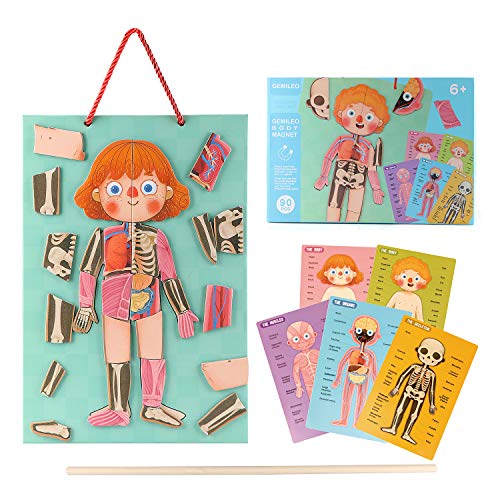
The Gemileo wooden body puzzle presents a layered view of the human body with male and female variants and 90 magnetized pieces. Kids assemble the skeleton, organs, and muscles while learning key body parts. The magnetic design helps prevent pieces from easily falling, supporting focused play and early cognitive development as children connect visuals to real anatomy concepts.
June Garden Little Patient Lucas Plush Anatomy Doll
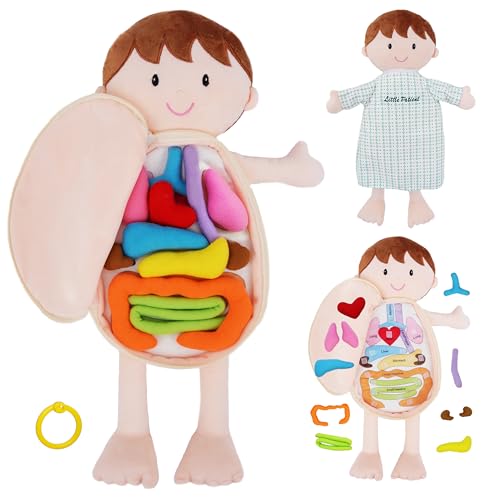
The Little Patient Lucas plush anatomy doll introduces basic human anatomy through an interactive plush design. Each organ is labeled and removable with Velcro, allowing children to explore the body in a tactile way. Zipping the belly and dressing the gown support fine motor skills while reinforcing organ names and positions in a child-friendly context.
Kidzlane 29 Piece Wooden Puzzle for Toddlers

This five-layer kids anatomy puzzle exposes the skeletal system, muscles, and digestive parts. Sized for little hands, it builds fine motor skills and cognitive abilities as children identify body parts while following the layered design. Its sturdy wooden construction is durable for early learners and classroom use alike, promoting hands-on exploration of human anatomy.
Buying Guide: Key Purchase Considerations
- Age appropriateness: Look for age ranges that align with your child’s development and safety needs. Younger toddlers benefit from large pieces and simple layouts, while older preschoolers can handle layered or multi-part puzzles.
- Hands-on vs. visual learning: Magnetic and plush options support tactile exploration, while book-based activities emphasize reading and vocabulary. A mix helps reinforce memory through multiple senses.
- Durability and materials: Wooden components tend to endure frequent play, while fabric or soft toys offer safe, calming interactions for younger children. Check for non-toxic finishes and durable stitching.
- Educational scope: Consider whether the product covers systems (skeletal, muscular, digestive) or focuses on specific organs. Some sets integrate broader science concepts like senses or circulation.
- Portability and cleanup: Busy books and magnetic sets usually travel well and clean up quickly, making them suitable for travel or classroom use.
- Progression and open-ended play: Choose tools that grow with a child’s knowledge, enabling exploration beyond initial facts and supporting curiosity-driven learning.
- Language support: Visual aids paired with labels or simple explanations help early readers and bilingual households develop scientific vocabulary.
The selected products provide a spectrum of approaches—from magnetic puzzles and layered boards to plush anatomy dolls and themed busy books. Each option facilitates early science literacy by engaging children in hands-on activities that connect body parts to overall function, while preserving safety and accessibility for toddlers and preschoolers.