Exploring how the human body works can be both educational and fun for children. The following carefully chosen books and kits turn anatomy into interactive adventures, helping kids 4–8 build foundational science literacy through hands-on activities, visuals, and age-appropriate explanations. Each option emphasizes exploration, skills development, and curiosity in a safe, classroom-friendly format.
| Product | Brand | Key Feature |
|---|---|---|
| Human Body Anatomy Busy Book for Kids Ages 4-8 | BEMAXYE | Interactive pages with removable activity cards and waterproof pages for durable hands-on learning |
| Freebear Montessori Busy Book for Kids | Freebear | Five themes that deepen cognition of the body and include a skeleton toy for play |
| QUOKKA Human Body Busy Books | QUOKKA | Fully assembled with nearly 200 elements and 15 themes for engaging, repeatable play |
| National Geographic Human Body Model for Kids | Blue Marble | Glow-in-the-dark bones, removable organs, and a comprehensive learning guide |
Human Body Busy Book For Kids

The Human Body Anatomy Busy Book by BEMAXYE offers a colorful, child-friendly approach to anatomy. It uses illustrations and simple text to introduce body parts and systems in an interactive format, supporting early literacy and science curiosity. The book includes 15 interactive pages with removable activity cards designed to boost memory, coordination, and cognitive skills through hands-on exercises. The pages are made from thickened waterproof paper, enabling reuse and long-term engagement. This setup supports independent exploration and guided learning, ideal for preschool and early elementary settings.
Freebear Montessori Busy Book: Human Body
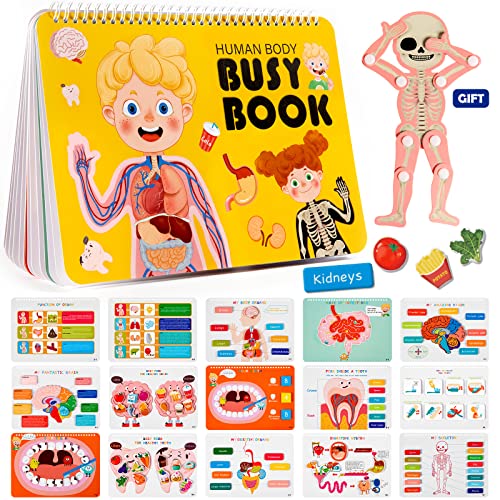
The Freebear Busy Book combines play with learning about the human body through five major themes across 15 pages. It emphasizes deeper bodily cognition and the social aspects of learning, encouraging interaction and communication during homeschool activities. A included skeleton toy provides tangible, cooperative play, helping children connect anatomical concepts with real-world movement. This resource supports motor skills, vocabulary growth, and practical understanding of body structure in a relatable, game-like format.
QUOKKA Human Body Busy Book

QUOKKA’s Busy Book is designed to be ready out of the box, with nearly 200 pre-attached elements. It features 15 themes that cover the brain, organs, senses, skin, bones, and more, making it a comprehensive early-learning tool. The book uses hook-and-loop fasteners to facilitate active exploration and engagement. It is crafted to keep kids interested and to support repeat play, which reinforces memory and understanding. The structure makes it suitable for classroom or home use, with intuitive layouts that suit young learners.
National Geographic Glow-In-The-Dark Body Model
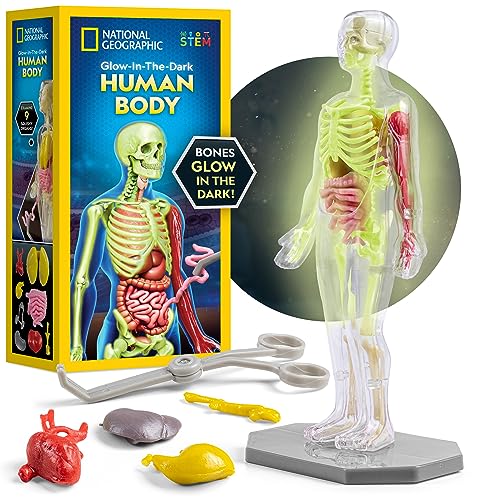
Blue Marble’s National Geographic Human Body Model offers an immersive anatomy experience. Students can disassemble 9 squishy organs and 18 glow-in-the-dark bones inside a 9-inch shell using provided forceps. The model includes a display stand, an organization/identification chart, and a comprehensive Learning Guide full of biology facts. The glow-in-the-dark feature adds an engaging visual element that enhances retention, especially in dimmer learning environments. This kit supports hands-on science exploration and is suitable for older children and early science classrooms.
Buying Guide: Key Purchase Considerations
- Age appropriateness: Choose materials calibrated for 4–8-year-olds, with simple language, large visuals, and sturdy construction.
- Hands-on vs. book-based learning: Consider the balance between interactive components (cards, felt pieces, models) and text-driven explanations to match your child’s learning style.
- Durability and materials: Waterproof pages and sturdy binding help longevity, a practical feature for younger kids who may handle items roughly.
- Skill development focus: Decide whether to emphasize memory and cognition, motor skills, or foundational science concepts like organs and senses.
- Reusability: Removable cards and reusable components extend the life of the product, maximizing value and ongoing engagement.
- Classroom vs. home use: Some kits are ideal for group activities with clear teacher or parent prompts; others are better for solo exploration.
- Visual appeal: Bright illustrations and glow-in-the-dark elements can boost attention and curiosity, aiding recall and enthusiasm for learning.
- Expandable content: If your child enjoys one resource, look for options that offer related themes or additional kits to grow with them.
- Safety considerations: Check for non-toxic materials and age-appropriate small parts to ensure safe handling by young children.
- Supplementary resources: Some products come with learning guides or charts that align with school standards, aiding integration with curricula.
Across these options, the common aim is to transform anatomy into a tangible, enjoyable exploration. Whether through interactive pages, fully assembled busy books, or glow-in-the-dark models, each choice provides a distinct learning pathway. Parents and educators can mix and match to suit a child’s curiosity, cognitive pace, and preferred learning style, ensuring a solid foundation in human biology from an early age.