For parents and educators seeking solid handwriting practice for early readers, the following books offer structured manuscript work, letter formation guidance, and varied activities suitable for first grade. This selection covers printable workbooks, composition journals, and targeted handwriting practice to help young students develop legible handwriting skills while reinforcing early math and language arts concepts.
Summary of chosen products:
- Learning Without Tears My Printing Book Student Workbook – Age 6+, first grade readiness, handwriting practice and fine motor development.
- Mead Primary Composition Book – K-2, primary ruled pages ideal for handwriting and writing practice.
- School Zone Addition & Subtraction Workbook – 64 pages, early math with written practice that supports handwriting fluency.
- School Zone Big First Grade Workbook – 320 pages, comprehensive first grade writing, reading, and math activities.
- Evan-Moor Daily Handwriting Practice Traditional Manuscript – classroom and homeschool resource for handwriting across grade levels.
Learning Without Tears My Printing Book Student Workbook

Brand: Learning Without Tears. Features include expanded writing space, new digital instruction opportunities, and a focus on correct lowercase letter formation within words and sentences. The workbook supports both school and home use, with practical handwriting practice designed for early readers.
Mead Primary Composition Book
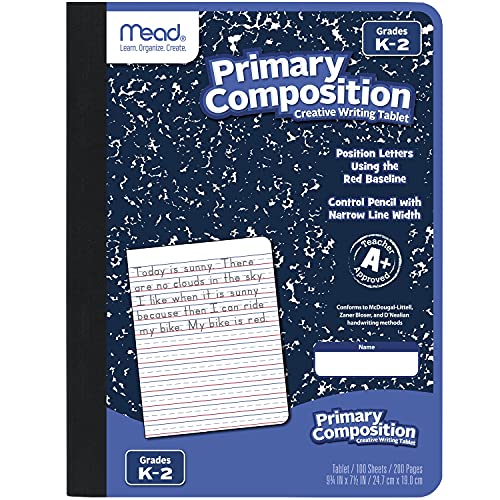
Brand: Mead. This composition book is designed for grades K-2 with 100 double-sided, primary ruled sheets (7-1/2″ x 9-3/4″). Primary ruling features solid and dotted lines to guide letter formation and spacing, making it a staple for handwriting practice and early writing assignments.
School Zone Addition & Subtraction Workbook

Brand: School Zone. This 64-page workbook blends math practice with handwriting-friendly activities. It supports early-grade learners (grades 1-2) with exercises on sums, differences, place value, and regrouping, reinforcing neat written work in math context.
School Zone Big First Grade Workbook

Brand: School Zone. A comprehensive 320-page workbook covering Phonics, Reading Skills, Spelling, Vocabulary, Math basics, Time, Money, Fractions, and Story Problems. Color-coded sections and clear, guided lessons help first graders develop consistent handwriting across subjects.
Evan-Moor Daily Handwriting Practice Traditional Manuscript

Brand: Evan-Moor Educational Publishers. This traditional manuscript handwriting workbook supports daily practice from Kindergarten through Grade 6, making it suitable for ongoing handwriting development in diverse learning environments. The resource emphasizes letter placement, spacing, and consistent penmanship throughout a school year.
Buying Guide
- Letter formation guidance: Look for books with explicit instruction on lowercase letters, spacing, and proper penmanship to promote legibility from the start.
- Structured progression: Choose resources that progress from tracing and letter formation to independent writing and short sentences to build confidence.
- Cross-curricular integration: Handwriting practice that blends with reading, math, or writing activities can reinforce skills without redundancy.
- Paper format and ruling: Primary ruled sheets with solid and dotted lines help early writers maintain uniform letter height and alignment.
- Home vs. classroom use: Consider whether the book has teacher-friendly features (reproducible pages, answer sections) or is more suitable for independent practice at home.
- Durability and portability: For daily practice, a sturdy workbook or composition book that withstands frequent use is advantageous.
- Digital offerings: Some titles now include digital instruction components or printable resources; evaluate whether these align with your teaching approach.
- Age and grade alignment: Ensure the selected titles align with first-grade expectations while allowing room for individual pacing.
- Comprehensive coverage: A mix of handwriting-focused workbooks and cross-curricular activity books can provide a balanced approach to literacy and math.
In selecting handwriting materials for first grade, consider how each book supports consistent practice, clear letter formation, and the development of neat handwriting within broader literacy and early math activities. The combination of structured handwriting work, supportive ruled pages, and age-appropriate activities can help learners build confidence and legibility across genres.