Finding the right beginner flute book can make a big difference in tone, posture, and overall confidence. This guide highlights five carefully chosen titles that align with standard beginner curricula and supportive practice habits. Each entry includes the official product page, a quick summary of features, and how it can help new flutists build fundamentals—from posture to breath control to reading music.
| Product | Brand | Notes |
|---|---|---|
| W21FL – Standard of Excellence Book 1 – Flute | Kjos Music Company | Classic ensemble method, essential for early technique? |
| Trevor Wye: Beginners Book for the Flute – Part One | Novello | Illustrated lessons focusing on tone, breathing, posture |
| G-10161 – Habits Of A Successful Beginner Band Musician – Flute | GIA Publications | Short songbook emphasizing practice habits |
| Method Flute Elementary | Rubank Publications | Standard elementary method with Hal Leonard benchmarks |
W21FL Standard Of Excellence Book 1 – Flute

The W21FL Standard of Excellence Book 1 serves as a foundational method for beginner flutists, integrating method book content with ensemble experiences. The included KJOS Model#W21FL indicates alignment with established progression in many school programs. Students typically encounter simple scales, tone exercises, and early repertoire that reinforce breath control and finger technique. Teachers often pair this with everyday practice routines to establish consistent habits and musical phrasing. This edition sets the stage for reading fluently while developing tone-quality and intonation during the first year.
Trevor Wye: Beginners Book for the Flute Part One

This classic beginner resource by Trevor Wye emphasizes tone development, breathing, and posture in approachable lessons. The Illustrated Flute Lessons provide visual guidance that helps new players internalize correct embouchure and air support. The Part One edition is widely used in private lessons and school programs to establish a solid tonal foundation before moving into more technical repertoire. It complements method books by offering practical articulations and phrasing ideas in simple, digestible chunks.
G-10161 Habits Of A Successful Beginner Band Musician

Habits Of A Successful Beginner Band Musician combines practical tips with a focus on daily practice routines. Although concise, the softcover songbook format supports in-school and at-home study. Students can expect guidance on setting goals, organizing practice time, and approaching band repertoire with confidence. This book works well as a companion to more technical method texts, bridging technique with performance readiness through approachable song material and clear goals.
Rubank Method Flute Elementary
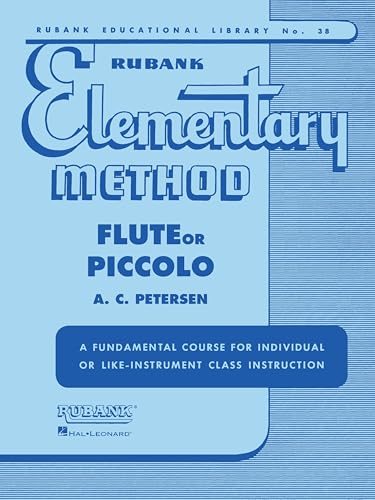
Method Flute Elementary from Rubank Publications provides a structured elementary approach aligned with Hal Leonard benchmarks. This title is designed to support students as they transition from introductory material to more independent practice. It presents progressive exercises, simple melodies, and fundamental technical patterns that aid in building long-term proficiency, tone consistency, and accurate articulation. The format is well-suited for independent study or integrated classroom use.
Buying Guide: Key Purchase Considerations for Beginner Flute Books
- Learning goals: Determine whether you prioritize tone development, reading ability, or ensemble readiness. Some books emphasize tone and posture, while others focus on technique and rhythm.
- Progression compatibility: Choose titles that align with common school curricula (such as Standard of Excellence or Rubank Elementary) to ease transitions between lessons and band rehearsals.
- Visual guidance: Illustrated guides and clear diagrams help new players establish embouchure, air support, and fingerings more quickly.
- Supplemental material: Consider books that pair with audio accompaniments, flashcards, or teacher guides to reinforce daily practice and assessment.
- Practice habits: Books that emphasize consistent practice routines, goal setting, and short daily sessions tend to yield steady improvement for beginners.
- Size and format: Paperback or compact formats suit practice at home and in school; ensure readability and ease of use for young players or adults new to the instrument.
- Repertoire variety: A mix of scales, exercises, and songs strengthens both technique and musical expression, keeping motivation high during early learning.
The five selections above cover essential aspects for beginners: tone production, posture, breathing, fingering, and daily practice discipline. Each title can serve as a practical starting point depending on the learner’s goals, whether that’s early ensemble experience, private lesson support, or structured self-study. For informed decisions, align your choice with the student’s current level, learning style, and available instructional support.