Finding effective flash cards can support early literacy, math readiness, and cognitive development. This guide highlights five child-friendly options that balance durable design with engaging visuals. Each pick offers topic variety, age suitability, and teacher-approved activities to reinforce daily learning—from alphabet practice to basic math drills. The selections cover toddlers through early elementary ages, ensuring versatile use at home, in daycare, or in preschool settings.
| Product | Key Benefit | Age Range |
|---|---|---|
| QUOKKA 260 Flash Cards | 260 cards with 30 activities and vivid, real-life images | 3-5 years |
| ZazzyKid Flash Cards for Toddlers | 54 double-sided cards covering alphabet, numbers, colors, shapes | 2-5 years |
| QUOKKA ABC Learning Flash Cards | 60 large, realistic cards for early literacy and vocabulary | 1-4 years |
| Torlam Toddler Flash Cards | 60 double-sided cards plus rings; broad foundational skills | 1-5 years |
| Carson Dellosa Toddler Flash Cards 4 Pack | Four packs covering alphabet, sight words, colors/shapes, numbers | 2-5+ years |
QUOKKA 260 Flash Cards For Kids

QUOKKA’s 260-card set covers themes such as Alphabet, Numbers, Shapes, and Animals, designed for toddlers and preschoolers ages 3-5. The jumbo-size cards feature lifelike images on one side and learning tasks on the other, enabling hands-on learning through visual cues and interactive play. The package includes 30 educational activities tailored to each category, helping to improve vocabulary, counting, reading, and problem-solving skills. A practical option for both home learning and small-group activities, these flash cards encourage sustained engagement with colorful, realistic illustrations.
ZazzyKid Flash Cards For Toddlers

This set includes 54 double-sided cards encompassing alphabets (lowercase and uppercase), numbers, colors, and shapes. Vibrant pictures accompany clear word labels, designed for early learners around ages 2-5. Cards are laminated for durability, supporting repeated use at home and in classrooms. The versatile format supports diverse activities—from memory games to color and shape sorting—making it suitable for preschoolers and kindergartners beginning literacy and numeracy basics.
QUOKKA ABC Learning Flash Cards

QUOKKA’s ABC Learning Flash Cards focus on early literacy with 60 large, realistic double-sided cards. The cards cover letters, basic words, and related visuals to support vocabulary building and phonemic awareness. The large fonts and vivid illustrations help with readability and visual development for toddlers and preschoolers, supporting home learning and daycare activities. These cards pair well with quick daily drills, storytime prompts, and letter-sound exploration to build foundational reading skills.
Torlam Toddler Flash Cards
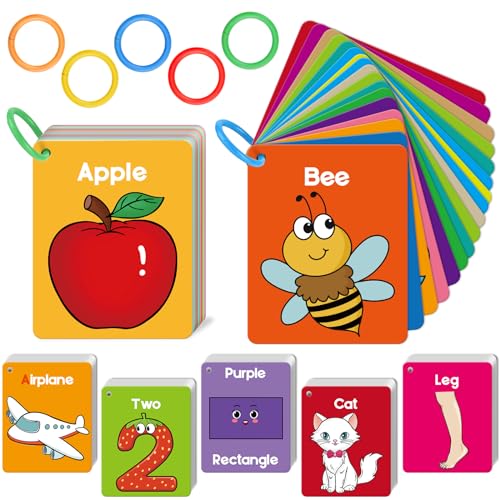
Torlam offers 60 double-sided toddler flash cards plus five color rings for organized use. The deck covers the alphabet, counting from 1 to 10, shapes and colors, animals, first words, body parts, and foods. Illustrated cards and accessible fonts support early vocabulary, memory, and recognition skills. The rings enable easy rotation of topics, making it convenient for travel or structured classroom activities that reinforce kindergarten readiness through visual associations.
Carson Dellosa Toddler Flash Cards 4 Pack
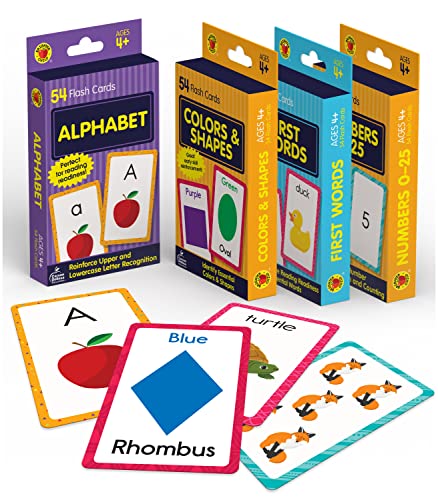
This four-pack bundle includes alphabet flash cards, first words sight words, colors and shapes, and number cards from 0-25. The kit combines essential early literacy and math fundamentals into a compact, portable set. It also includes bonus resource cards with phonics and math activities, making it a practical choice for caregivers seeking a broad, ready-to-use early learning toolkit in a single purchase.
Buying Guide: Key Purchase Considerations
Choosing flash cards for kids involves balancing durability, content, and age-appropriateness. Consider the following aspects to select the best option for your household.
- Age and skill alignment: Match the card set to the child’s developmental stage. Toddlers benefit from large images and simple words, while early learners appreciate larger type, more words, and basic math problems.
- Card quality and durability: Laminated or thick cardstock cards resist wear from frequent handling. For younger children, rounded corners reduce sharp edges and enhance safety.
- Content variety: A broad range of topics (alphabet, numbers, shapes, colors, animals) helps sustain interest and covers multiple foundational areas. Sets that include activity ideas add structured learning opportunities.
- Ease of use: Consider whether the cards are double-sided, color-coded, or ring-bound. Features like rings or perforations aid organization and on-the-go use.
- Visual design: Clear illustrations and high-contrast text support recognition and memory. Realistic imagery tends to improve word association and vocabulary growth.
- Supplemental learning value: Some packs offer additional games or printable activities to expand learning beyond flash card drills, which can boost engagement and retention.
- Storage and portability: Compact sets or ring-bound decks travel well for car trips or classroom rotations, allowing consistent practice anywhere.
- Safety and materials: Look for non-toxic inks and child-safe coatings, especially for younger children who may mouth cards.
When choosing, consider a mix of core literacy and numeracy cards with a few supplementary topics (colors, shapes, emotions, or early science concepts). This diversity helps prevent routine fatigue and supports a well-rounded early learning routine.
Across these options, the best fit will depend on your child’s interests and learning pace. If you want a robust, all-in-one set with activities, QUOKKA’s 260-flash-card bundle provides extensive topic coverage. For quick daily practice with sturdy, double-sided designs, ZazzyKid and Torlam offer strong value. For a focused introduction to letters, the QUOKKA ABC set shines, while Carson Dellosa’s four-pack delivers a broad, classroom-ready mix of core skills.
Additional Considerations and Comparisons
- Quantity vs. depth: Large sets offer wide topic coverage but can be overwhelming. Smaller, themed packs work well for targeted practice.
- Reusability: Durable, laminated cards enable repeated use with dry-erase markers or simple drills, extending the life of each pack.
- Interactivity: Cards that pair with suggested activities, games, or lesson plans can deliver deeper learning than isolated flash card drills.
- Storage options: Some sets include rings or organizers, which simplify rotation and reduce clutter during study sessions.
- Age-appropriate progressions: Look for cards that scale from recognition to recall, from single-letter sounds to simple word-building, to support gradual advancement.