Choosing effective flash cards can help nonverbal children and individuals with autism express needs, feelings, and routines. This guide reviews five well-regarded options, highlighting how they support communication, learning, and daily interaction. Each product emphasizes simple visuals, clear cues, and portability for on‑the‑go use. Whether for speech therapy sessions, school activities, or home practice, these tools are designed to facilitate engagement and independence.
| Product | Brand | Key Benefit |
|---|---|---|
| Special Needs Communication Cards for Non Verbal Children and Adults with Autism | Hidaya Prints | 60 picture words in a portable ring binder |
| Aullsaty Toddler Talking Flash Cards (248 Sight Words) | Aullsaty | Comprehensive vocabulary with sounds in a cat reader |
| Carson Dellosa Toddler Flash Cards 4 Pack | Carson Dellosa Education | Four bundles covering alphabet, colors, shapes, numbers |
| Special Needs My Communication Cards (27 flash cards) | Amonev | Simple, illustrated cues to reduce anxiety and build language |
| CHEFAN 120 PCS Autism Communication Cards | CHEFAN | Three themes with flip rings for easy access |
Special Needs Communication Cards for Non Verbal Students

The Special Needs Communication Cards by Hidaya Prints offer 30 double‑sided picture cards in a compact ring binder, totaling 60 picture words for everyday needs and feelings. These cards are designed for easy nonverbal communication, with visuals that support clarity during interactions. Sized at 75 x 75 mm, they fit neatly in pockets or bags, making on‑the‑go communication practical. Ideal for individuals with autism, speech delays, or toddlers beginning to communicate, the set emphasizes quick access and intuitive cues to reduce frustration in daily routines.
Aullsaty 248 Sight Words Talking Flash Cards

The Aullsaty talking flash cards feature 248 sight words across 14 subjects, including animals, vehicles, numbers, foods, and daily necessities. The set uses a cute cat card reader that pronounces words in a standard American accent to support auditory learning. It is positioned as a Montessori‑style learning tool with engaging sounds to reinforce recognition and interaction, making it suitable for autism therapy sessions and family learning. An easy‑to‑use design with a repeat function and adjustable volume supports varied needs and environments.
Carson Dellosa Toddler Flash Cards 4 Pack
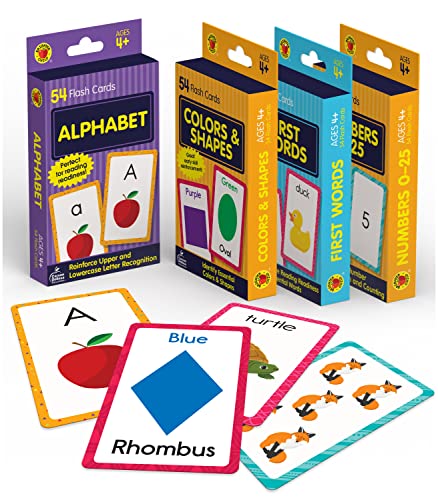
Carson Dellosa’s 4‑pack Toddler Flash Cards cover foundational learning areas such as alphabet, first words, colors and shapes, and numbers 0‑25. This bundle emphasizes easy sorting with rounded corners and double‑sided designs for repeated practice. Included resources offer additional phonics and math games for extended engagement. The variety supports early literacy, number sense, and shape recognition, helping young learners build confidence as they progress through core preschool skills.
Special Needs My Communication Cards
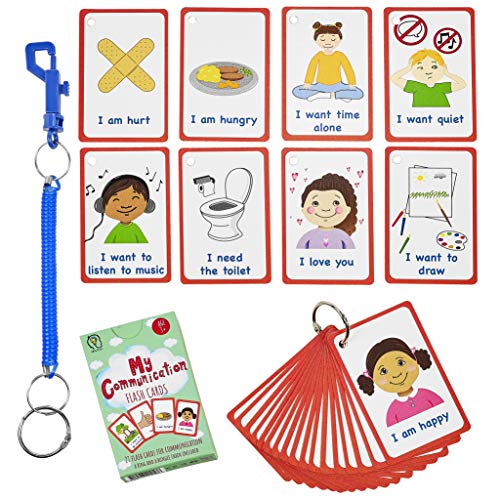
My Communication Cards from Amonev focus on developing language through simple, illustrated cues. The set aims to reduce anxiety by providing clear prompts that guide speech and recognition. By offering consistent visuals for common needs, routines, and responses, these cards support gradual language development and independence in both classroom and home settings. They are positioned as a practical aid for families and educators working with nonverbal or speech-delayed individuals seeking reliable, easy-to-use cue tools.
CHEFAN 120 Autism Communication Cards

The CHEFAN set provides 120 communication cards across three themes, designed as a visual learning aid for autism and speech delay. Each card features vivid imagery and clear text, with the cards bound in sturdy flip rings for quick access and organization. The package includes a retractable buckle for easy transport and to prevent loss. This extensive collection supports expressive language development, social interaction, and routine communication across various environments.
Carson Dellosa 104 American Sign Language Flash Cards

Carson Dellosa’s ASL Flash Cards introduce beginners to American Sign Language with 105 cards covering 122 signs, including numbers, alphabet letters, sight words, people, and animals. The set emphasizes practical signing through visual cues and concise illustrations, making it suitable for preschool and early elementary learners beginning ASL. Durable design and a concise sign range support structured sign language practice and classroom activities.
Buying Guide
- Communication scope: Choose cards that cover daily needs, feelings, and common questions to ensure practical utility at home and school.
- Format and durability: Look for flip rings, ring binders, or durable card stock with rounded corners to endure frequent handling by young learners.
- Visual consistency: Cards with simple, high-contrast images and short phrases reduce cognitive load and support quicker recognition.
- Auditory support: Some sets offer spoken words or sounds; consider whether an audio feature helps your child or if plain visuals suffice.
- Portability: Smaller cards or ringed kits are easier to carry to therapy sessions, school, or while traveling.
- Expandable options: Sets with additional themes or subject areas allow growth from basic needs to more advanced language use.
- Caregiver and educator compatibility: Cards should align with therapy goals and be easy for both parents and teachers to implement consistently.
- Access and inclusion: Consider tools that support a range of abilities, including nonverbal learners and those with speech delays.
- Cost vs value: Larger sets may provide more content, but check if the materials match your child’s needs and your usage patterns.
Across these options, the common aim is to provide clear, accessible cues that empower communication, reduce anxiety, and encourage interactive learning. When selecting a set, consider your child’s current communication level, preferred learning style, and the contexts in which the cards will be used most often. Pairing cards with guided practice and caregiver prompts can maximize effectiveness and build lasting language skills in everyday life.