Parents and educators look for engaging, evidence-based tools to help kids recognize, name, and manage their emotions. Feelings charts and calming corner posters provide visual cues that reinforce social-emotional learning in classrooms, clinics, and homes. This article highlights top-rated options and offers practical guidance on choosing formats, sizes, and features that support emotional regulation, resilience, and friendly communication among children.
The following table summarizes five selected products, their brands, and key purposes. It’s designed to help you compare at a glance before diving into full product details below.
| Product | Brand | Primary Use | Notes |
|---|---|---|---|
| 9 Calming Corner Posters Classroom | Distasio | Calm down corner, feelings chart, coping skills | 9 posters, 8×10 inches each; bright, classroom-friendly |
| Feelings Chart for Kids — Coping Skills | HAMIEW | Emotion awareness, coping skills, classroom decor | Two 11×17″ posters; laminated |
| FLYAB Feelings Chart for Kids | FLYAB | Classroom decorations, emotion identification | 11.2″ x 16.5″; includes glue points |
| Hadley Designs Feelings Chart | Hadley Designs | Emotional regulation, zones of regulation | Four laminated 11×17″ posters |
| Thought-Spot Flipbook — Emotions Wheel | Thought-Spot | Emotional vocabulary, coping ideas | Flipbook format; 20 moods; tabs |
9 Calming Corner Posters Classroom
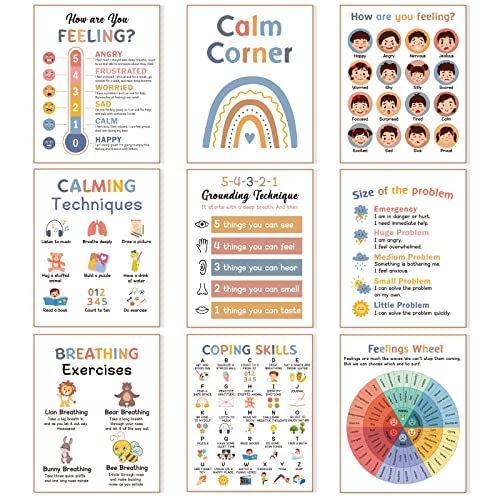
The Calming Corner Poster Kit from Distasio includes nine 8×10 inch posters that form a complete calm-down workflow. With a dedicated calming corner title, a feelings chart, calming techniques, a feelings wheel, coping skills, and breathing exercises, this set supports both self-regulation and emotional literacy. The kit is designed for classrooms, homes, and therapy spaces, enabling quick visual prompts for students to reference when feeling overwhelmed. Frames are not included, so you can choose options that fit existing decor.
Features emphasize expressive learning, with bright, kid-friendly visuals that help children articulate emotions even when caregivers aren’t present. The set aims to encourage a calm mindset and consistent use of coping strategies, fostering independence in emotional regulation. The visual language is suitable for preschool through early elementary settings and can be integrated with routine classroom practices or counseling activities.
Consider this kit if you want a comprehensive, ready-to-hang display that supports multiple aspects of emotional learning in one cohesive set. It pairs well with a dedicated calm-down space where students practice breathing, labeling feelings, and applying coping strategies during transitions or after stressful events.
Feelings Chart for Kids — Coping Skills Poster

HAMIEW’s Feelings Chart for Kids emphasizes emotional self-awareness and coping skills through a pair of double-sided laminated posters. The 11×17 inch size offers a larger canvas for classroom displays, counseling offices, or shared spaces. The posters are designed for resilience-building, helping children recognize, name, and discuss their feelings with improved clarity and confidence. The set is suitable for homeschooling, school environments, and counseling sessions, supporting a friendly learning climate.
The design focuses on facilitating positive social interactions, enabling children to articulate emotions and foster empathy. Laminated durability supports frequent handling, while the large format improves readability from a distance. This makes it a practical addition to bulletin boards, walls near seating areas, or therapy corners where conversations about emotions commonly occur.
Possible considerations include ensuring you have wall space for two large posters and evaluating whether the content aligns with your existing SEL (social-emotional learning) framework. Laminated posters are easy to wipe clean and can be used year after year with minimal maintenance.
FLYAB Feelings Chart for Kids

FLYAB’s classroom-friendly poster focuses on 16 emotions with inviting, colorful characters. The “All Feelings Are Welcome Here” title reinforces an inclusive atmosphere, encouraging kids to identify and discuss a broad range of emotions. The package includes an 11.2″ x 16.5″ poster and ten glue points for quick display, making it suitable for bulletin boards, centers, or classroom walls. The visual approach aims to capture attention and support ongoing emotional literacy as part of daily learning.
Key strengths include its clear labeling, relatable illustrations, and straightforward installation. The poster is designed to integrate with back-to-school activities, routine mood checks, or counseling corners. Teachers and parents may appreciate the simple setup and the ability to pair it with related calming strategies and referenced coping ideas.
When selecting this option, consider how the color palette and characters align with your classroom theme and whether you need a single large poster or a pair for broader coverage in a space used by multiple students.
Hadley Designs Feelings Chart
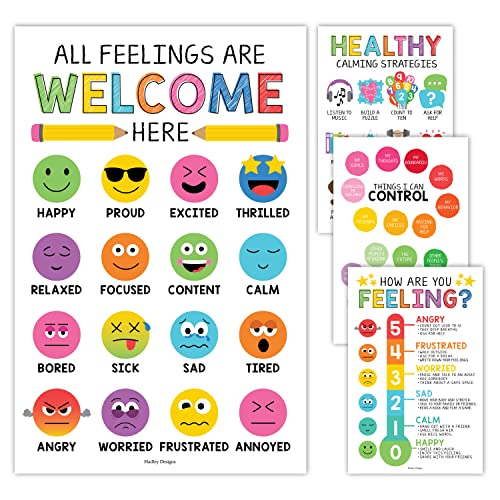
Hadley Designs offers a set of four laminated 11×17 inch posters focused on emotional regulation. The collection is designed to help children feel understood by decoding emotions, which supports communication and self-expression. The posters are laminated for durability and intended for use in classrooms or therapy spaces where ongoing conversations about feelings occur. The color-coded visuals aid in quick recognition during transitions, group activities, or calm-down routines.
The kit’s emphasis on lifelong coping skills makes it a practical addition for SEL curricula, counseling offices, or family rooms. Teachers can reference the zones of regulation approach to guide students toward appropriate strategies when overwhelmed. The large format supports visibility from across a room, which can be beneficial in collaborative learning settings.
As with any poster set, consider whether four posters cover your space adequately or if you need supplementary materials like a feelings wheel or breathing activity cards to complement the display.
Thought-Spot Flipbook — Emotions Wheel

The Thought-Spot Flipbook provides a portable, user-friendly tool for recognizing and naming emotions. The format emphasizes 3–5 year olds’ visual learning and includes an emotions wheel plus a compact chart with coping ideas for each mood. Parents and teachers can use it at home, in the classroom, or in calm-down corners to build emotional vocabulary and self-regulation skills. The flipbook design supports independent exploration and personal reflection, with space to add one’s own coping strategies.
Key benefits include ease of use, a tangible sequence for emotional discussion, and an inclusive approach to everyday feelings. The large tabs help children locate feelings quickly, which is especially helpful during transitions or during guided SEL activities. Consider whether a flipbook suits your space constraints or if a wall-mounted chart would serve larger groups.
BEAWART Calming Corner Posters

BEAWART’s 12-poster set supports calm-down spaces through a mix of mood meters, feelings charts, and calming accents. The posters are laminated for durability and designed to promote self-regulation in preschool settings, therapy offices, or homes where calm corners are used for brief mindfulness practices. The content emphasizes emotional awareness, coping strategies, and the ongoing practice of recognizing emotions in everyday moments.
This collection helps teachers and caregivers create a cohesive visual environment that encourages discussion about feelings. With a broad assortment, it’s possible to tailor the display to different classrooms or therapy spaces. Laminated materials aid cleaning and reuse, making it a practical long-term choice for busy environments.
Kasfalci Feelings Chart for Kids
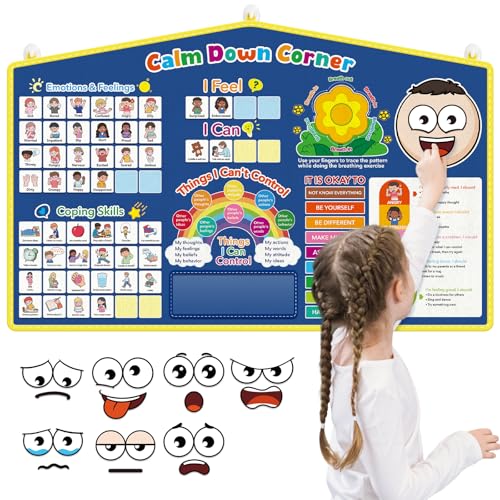
Kasfalci’s comprehensive calm corner kit includes a felt board, 24 emotions cards, 24 coping cards, 8 emoticon matches, a guide, dot stickers, and hooks. The robust set supports identification, expression, and social-emotional learning through structured activities. It provides a tactile, hands-on approach to recognizing feelings and practicing coping strategies, which can be particularly engaging for children with diverse learning needs.
Beyond charts, this kit facilitates interactive activities suitable for classrooms and therapy rooms. The included materials enable guided breathing exercises and structured SEL tasks, helping children develop self-awareness, self-management, and social awareness. As with similar tools, assess your space and whether a reusable, multisensory approach aligns with your goals for emotional development.
FaCraft Feelings Chart Poster

FaCraft’s emotions poster combines broad accessibility with durable construction. The 11.5×16.5 inch layout offers clear labeling and color-coded emotion levels across six tiers, making it easy for children to identify and articulate their feelings. The kit includes glue dots for simple display in therapy rooms, classrooms, or home learning spaces. It’s designed to be a practical, reusable addition to ongoing social-emotional learning efforts.
The color-coding and illustrated emotions support quick recognition and can be integrated with coping strategies to reinforce calm-down techniques. Teachers and caregivers may find this poster helpful for structured SEL activities, mood checks, and small-group discussions about emotional regulation.
Buying Guide: Key Purchase Considerations
- Age and developmental fit: Choose posters and tools aligned with your students’ age range and SEL level, from early preschool to elementary grade levels.
- Format and durability: Laminated posters, large formats, or interactive flipbooks influence visibility, handling, and longevity in busy spaces.
- Space and placement: Plan wall areas or calm corners to accommodate the number of pieces, ensuring easy access for students during transitions or lessons.
- Content and inclusivity: Look for diverse characters, inclusive language, and content that supports emotional literacy across a spectrum of feelings.
- Maintenance: Consider whether you prefer reusable materials (lamination, dry-erase-ready surfaces) or more temporary displays that can be refreshed routinely.
- Complementary resources: Use feelings charts in combination with coping strategy cards, breathing exercises, or guided activities for practical application.
- Assessment alignment: Integrate tools with your SEL curriculum goals, tracking progress in language use, self-regulation, and peer interactions over time.
When selecting among the options, weigh how each product supports consistent mood checks, classroom routines, and counseling practices. For shared spaces, consider a cohesive set that offers a unified theme and multiple media (posters, wheels, and flipbooks) to engage children with different learning styles. Durability, ease of installation, and alignment with your SEL framework will influence long-term value and classroom impact.