Exploring feelings with young readers helps build emotional intelligence, empathy, and self-regulation. This collection highlights engaging flip books and stories that invite kids to identify moods, explore coping strategies, and connect thoughts with actions. Each title offers interactive elements—flip charts, laminated pages, and kid-friendly illustrations—that make learning about emotions a fun, memorable experience for toddlers, preschoolers, and early elementary students. Readers will discover practical ways to recognize emotions in themselves and others, supporting classroom and home environments with social-emotional skills.
| Product | Brand | Key Feature |
|---|---|---|
| Torlam Feelings and Emotions Flipbook | Torlam | 20 moods with scenes and positive action cues |
| The Original Mood Flipbook for Kids | My Moods, My Choices | 20 moods; laminated pages; built-in stand |
| Alexander and the Terrible, Horrible, No Good, Very Bad Day | Atheneum Books for Young Readers | Classic children’s story about difficult emotions |
| Maitys Feelings and Emotions Flip Book | Maitys | Compact, laminated, stand-up design for easy display |
Torlam Feelings Flipbook for Kids

This Torlam flipbook helps children identify 20 distinct feelings, including tired, silly, happy, nervous, and angry. It offers 10 scenes to analyze how characters feel, fostering emotional cue recognition and empathy. The format connects thoughts, feelings, and actions, providing a practical framework for managing emotions in everyday moments. The interactive flip design supports self-expression and social-emotional development in classroom or home settings.
The Original Mood Flipbook for Kids
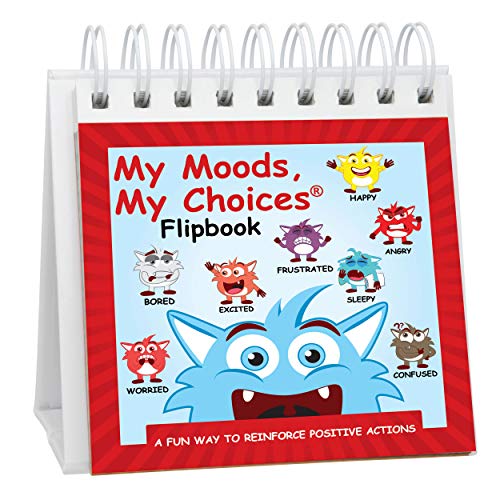
This laminated flipbook introduces 20 moods, with positive actions linked to each emotion. It includes a built-in stand and multiple sizes for easy display in car rides, backpacks, or calm-down corners. The designs emphasize recognizing moods and choosing constructive responses, helping kids build emotional vocabulary and self-regulation skills during daily activities.
Alexander and the Terrible, Horrible, No Good, Very Bad Day

Classic children’s literature that explores a day filled with disappointing moments and the emotions that accompany them. While not a flipbook, it provides a narrative framework for discussing frustration, disappointment, and resilience. Educators and parents can use the story to validate feelings, model coping strategies, and prompt conversations about perspective-taking and problem-solving in the face of challenges.
Maitys Feelings and Emotions Flip Book

This compact flip book provides laminated pages with vibrant illustrations to help children identify moods and learn positive responses. Its portable, stand-up design makes it suitable for car rides, calm-down corners, or classroom displays. The tool supports social skills and emotional regulation through a visual, interactive approach that educators and parents can use to guide discussions about appropriate reactions and self-control.
Buying Guide
- Age-appropriateness: Choose formats with simple language and visuals aligned to your child’s developmental stage, especially for toddlers and preschoolers.
- Interactivity: Flipbooks, laminated pages, and stand-up designs promote hands-on learning and repeated practice—key for building emotional literacy.
- Scope of emotions: Look for a range of moods (positive, negative, neutral) to cover everyday experiences and transitions in school and home life.
- Durability: Laminated pages and wipe-clean surfaces reduce wear with frequent use, useful for busy families and classrooms.
- Portability: Compact sizes support learning on the go, car rides, and quick calming activities in busy environments.
- Supplementary lessons: Pair these tools with guided conversations, role-play, or journaling to deepen understanding and coping strategies.
- Accessibility: Visuals with clear expressions help children interpret facial cues, benefiting nonverbal learners and children with autism or ADHD.