Developing expressive violin playing for orchestras requires a blend of technique, tone control, and reliable study material. This article highlights five foundational books that are widely used to cultivate bowing, shifting, intonation, and phrasing across stages from beginner to advanced. Each selection emphasizes practical exercises and musicality, helping players bring character and precision to orchestral performances.
| Product | Author/Publisher | Focus |
|---|---|---|
| Otakar Sevcik School of Bowing Technics, Op. 2 Book 1 | G. Schirmer, Inc. | Bowing technique, beginners and beyond |
| Hrimaly – Scale Studies for Violin | G. Schirmer, Inc. | Scale and finger dexterity |
| Galamian/Neumann – Contemporary Violin Technique, Book 1 | Galaxy Music Corporation | Advanced scales and technique |
| School for Violin Technics – Henry Schradieck | G. Schirmer, Inc. | Foundational studies and scales |
| 101 Classical Themes for Violin | Hal Leonard | Musical repertoire and phrasing |
Introduction to Expressive Violin Technique
For orchestral players, expressive technique combines precise bowing, accurate shifts, and nuanced musical expression. The five selected titles cover bowing fundamentals, scale fluency, and musical phrasing across levels. They are commonly used in studio and orchestra settings to build a solid foundation and advance to more complex repertoire.
Otakar Sevcik School of Bowing Technics, Op. 2 Book 1

Sevcik Op. 2 Book 1 provides essential bowing studies designed for beginners and progressing players. The book focuses on bow distribution, control, and stroke variety, forming a core base for expressive phrasing in orchestral contexts. It supports gradual development of tone quality and consistent bow weight across phrases. Pages: 32; Instrumentation: Violin.
Hrimaly – Scale Studies for Violin

Hrimaly Scale Studies emphasize major and minor scales with moderate complexity to build finger dexterity and intonation accuracy. This edition supports systematic practice across positions and helps violinists develop even tone across scales, contributing to expressive phrasing in orchestras. Pages: 40; Instrumentation: Violin.
Galamian/Neumann – Contemporary Violin Technique, Book 1
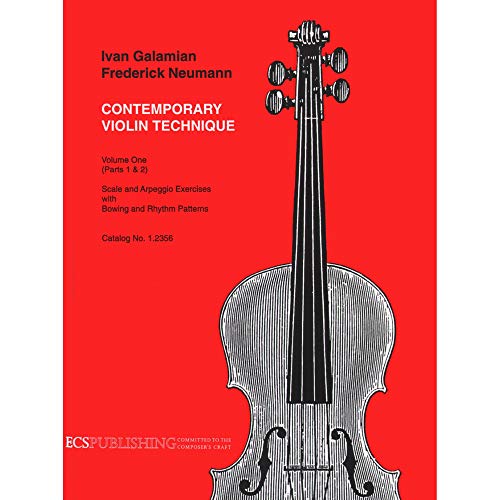
This Galaxy Edition presents a thorough approach to contemporary technique, with a dedicated bowing and rhythm section that can be pulled out for focused practice. The sections help players refine articulation, rhythm, and bowing coordination—key for expressive orchestral performance. The book is often used alongside other method texts to broaden technical vocabulary.
School for Violin Technics – Henry Schradieck

Schradieck’s School of Violin Technics is a classic collection of exercises and scales designed to develop fundamental technique and tone production. The combined Books 1–3 and Scale Studies offer progressive material ideal for routine practice, ensuring consistent bow control and fingering accuracy—vital for orchestral stability and expressiveness. Pages: 128; Instrumentation: Violin.
101 Classical Themes for Violin

This Hal Leonard collection provides accessible classical themes suitable for developing musicality, phrasing, and stylistic awareness. It supports practical application of technique learned in studies, helping players sustain expressive lines and musicality in orchestral settings. Pages: 88; Instrumentation: Violin.
Buying Guide: Key Purchase Considerations for Expressive Violin Technique
- Skill level alignment: Choose materials that match current proficiency while offering room to progress without duplication.
- Foundational versus advanced emphasis: Combine bowing and shifting studies with scale and repertoire to build balanced technique.
- Examination of tempo and articulation: Look for exercises with varied bow speeds, articulation marks, and rhythmic patterns to strengthen orchestral readiness.
- Notation and edition quality: Prefer clearly printed editions with editorial notes that aid understanding of bowing and phrasing in ensemble contexts.
- Practical application: Ensure materials complement repertoire you perform with orchestras and chamber groups for immediate transfer of skills.
- Resource variety: A mix of method texts, scales, and thematic pieces helps address tone production, intonation, and musicality from multiple angles.
- Durability and format: Books with compact layouts and durable bindings suit frequent use during long practice sessions.
Comparative Perspectives
Orienting study toward orchestral performance typically benefits from pairing a foundational bowing book (Sevcik Op. 2 or Schradieck) with a comprehensive technique guide (Galamian/Neumann). Scale studies (Hrimaly) reinforce intonation and finger flexibility, while repertoire collections (101 Classical Themes) cultivate musical phrasing and stylistic awareness. The right combination depends on the player’s position in their development and their orchestral repertoire goals.