Raising emotionally aware preschoolers starts with visuals that are friendly, engaging, and easy to reference. This guide highlights top-rated feelings charts and emotion wheels designed for classrooms, homes, and therapy spaces. Each option helps young children name their feelings, communicate more clearly, and build self-regulation with practical activities.
The following summary table showcases five standout products, their brands, and one core benefit to help you compare quickly before reading deeper into each option.
| Product | Brand | Key Benefit |
|---|---|---|
| Kids Emotion Wheel, Feelings Wheel, Feelings Kid Charts | HarvMax | Hands-on emotion expression with colorful, plush design |
| BIZIBAFF Feelings Chart Poster for Kids Toddlers | BIZIBAFF | Durable, classroom-ready with 16 emotions |
| BEAWART 12 Calming Corner Classroom Posters | BEAWART | Calm-down zones and self-regulation visuals |
| Decorably 15 Social Emotions Poster for Classroom | Decorably | Clear, large visuals for quick recognition |
| Circle Up Emoji Emotions Chart 3-Pack | Circle Up | Double-sided cards for basic and advanced emotion words |
Kids Emotion Wheel By HarvMax

The Kids Emotion Wheel from HarvMax helps children identify and express a range of feelings through a plush, round wheel. The design emphasizes color-coded emotion patterns and approachable illustrations, enabling kids to turn the wheel and point to feelings such as happy, sad, or angry. This tactile approach supports emotional communication between children and caregivers and is easy to hang or carry, thanks to a included lanyard. The plush material prioritizes safety with soft edges and durable construction.
BIZIBAFF Feelings Chart Poster For Kids

The BIZIBAFF Feelings Chart Poster features 16 common emotions in a bright 11.8″ x 16.5″ format, ideal for classrooms, daycare, or home use. It is designed to be durable with thick laminated paper, resisting tears and spills while remaining easy to hang on walls or bulletin boards. This chart supports social-emotional learning by giving children a quick reference to identify and express their feelings, boosting communication with teachers and caregivers.
BEAWART Calming Corner Posters Set

BEAWART offers a 12-poster calming corner set designed to promote self-regulation in busy classrooms. The laminated materials are durable for daily use and provide clear visuals for recognizing and managing emotions. These posters help create a safe space for discussing feelings, offering visual cues for calming strategies, zones of regulation, and mood awareness. They’re suitable for classrooms, therapy spaces, and home learning corners that focus on emotional health.
Decorably 15 Social Emotions Poster

Decorably’s 15-emotion classroom posters aim to enhance emotional awareness with bold, readable text and vibrant images. Measuring 11×17 inches, these posters are printed on premium 250gsm paper, offering durability for repeated use across school years. Teachers and parents can reference these visuals during circle time, calming corners, or lessons focused on recognizing how others feel, supporting empathy and social skills development.
Circle Up Emoji Emotions Chart 3-Pack

The Circle Up Emoji Emotions Chart comes as a 3-pack of laminated 8.5×11 cards. Each card is double-sided, with emoji visuals and core emotions on the front and expanded vocabulary on the back. This setup supports both basic and more advanced emotional literacy, making it suitable for SEL check-ins, counseling sessions, and classroom discussions. The durable lamination ensures longevity in busy school environments.
Eamay Emotions Pocket Chart Kit

The EAMAY Emotions and Feelings Pocket Chart includes 31 cards and 21 feeling cards plus organization tools. The nylon pocket chart features sturdy stitching and secure grommets, with dry-erase compatible cards for ongoing customization. This setup allows teachers and caregivers to tailor emotional vocabulary to individual children, making mood tracking and communication more flexible in homes and classrooms.
Teacher Created Resources Colorful Emotions Chart

This Teacher Created Resources chart presents a standard 17″ x 22″ size with related lessons and activities printed on the back. The straightforward layout supports classroom use for daily mood checks, SEL activities, and emotion vocabulary building. The chart’s approachable design makes it easy to reference during morning meetings or circle time discussions with preschool students.
9 Calming Corner Posters By Distasio
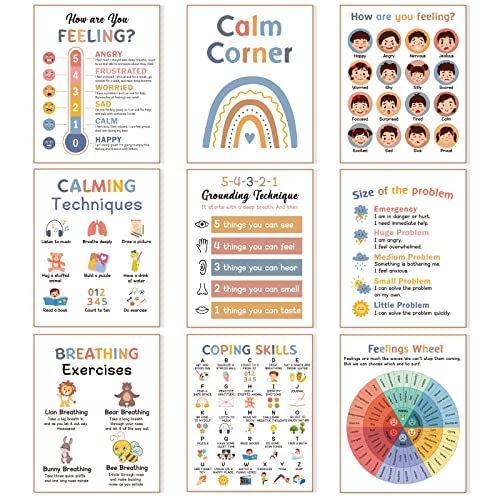
The Calming Corner Poster Kit by Distasio includes nine 8×10 posters designed to decorate classrooms, homes, and therapy centers. These visuals cover calming techniques, feelings charts, breathing exercises, and coping skills. The collection aims to create a welcoming space for discussing emotions, supporting self-regulation, and fostering a calm, focused learning environment for preschoolers.
Buying Guide: Key Purchase Considerations For Emotion Charts
When selecting emotion charts for preschoolers, consider the following perspectives to ensure impact across diverse settings:
- Age appropriateness: Look for visuals and language that match preschoolers’ cognitive levels, with simple words and clear illustrations.
- Durability: Classroom use demands laminated or sturdy materials that resist tearing and spills and are easy to wipe clean.
- Format variety: A mix of wheels, posters, and pocket charts accommodates different spaces and teaching styles, from circle time to cozy corners.
- Color and accessibility: High-contrast colors and large text improve readability for early learners and children with diverse needs.
- Curriculum alignment: Choose tools that complement SEL objectives, such as recognizing emotions, labeling feelings, and coping strategies.
- Ease of integration: Consider whether you need wall posters, portable cards, or both to support routines like daily check-ins and calming corners.
- Maintenance: Reusability (dry-erase or laminated) reduces long-term costs and supports ongoing practice as vocabulary expands.
- Multi-user suitability: For classrooms with multiple teachers or therapists, ensure the set is scalable and inclusive for all learners.
- Storage and accessibility: Quick access to cards and charts helps teachers reference emotions during transitions and activities.
- Culture and inclusivity: Select visuals that reflect diverse expressions and backgrounds to foster empathy and belonging.
In practice, combine at least one interactive tool (like a wheel) with static posters or charts to reinforce language and behavior. For homes, a pocket chart and a small wall poster can support everyday mood checks and family conversations. In therapy or counseling settings, double-sided or laminated charts allow for deeper vocabulary work and reflective conversations that extend beyond basic emotions.