For parents, teachers, and caregivers seeking effective starting points for early reading, decodable books align with phonics-first instruction and the science of reading. This guide highlights five highly regarded decodable sets that help children practice phoneme-grapheme connections, build confidence, and reduce guessing. Each selection presents structured levels, predictable text, and images that support comprehension after decoding. The following sections summarize the most relevant options and explain how they fit into classroom or home reading routines.
| Product | Brand | Format | Key Focus |
|---|---|---|---|
| Hand2mind Guided Phonics + Beyond Decodable Books Unit 2 | hand2mind | Unit 2 Decodable Readers | Phonics practice, 10 fiction + 10 nonfiction stories |
| Bob Books Set 1: Beginning Readers Box Set | Scholastic | Box Set | Easy start-to-read texts |
| Hand2mind Guided Phonics + Beyond Decodable Books Unit 4 | hand2mind | Unit 4 Decodable Readers | Phonics practice, structured progression |
| Hand2mind Guided Phonics + Beyond Decodable Books Unit 3 | hand2mind | Unit 3 Decodable Readers | Phonics practice, guided progression |
| Junior Learning The Pods Phase 2 | Junior Learning | Series Phase 2 | First 21 letter sounds, science of reading |
The selections below are organized to help you compare text complexity, decodability, and instructional support. Each entry includes a brief description, recommended use, and how it supports beginning readers in developing accuracy and reading fluency.
Hand2mind Guided Phonics + Beyond Decodable Books Unit 2

This unit emphasizes phonics readers designed to engage students while practicing essential skills. Each book includes a balance of fiction and nonfiction stories, crafted to prompt learners to apply phonics knowledge before looking at pictures. Visuals then support comprehension after decoding, helping students build confidence with text that matches their growing abilities.
Key features include decodable content that avoids irregular high-frequency words until instructed, and structured activities that align with Guided Phonics + Beyond Focus Lessons. This approach supports systematic phonemic awareness and gradual progression through decodable text, making it suitable for small-group instruction or independent practice.
Bob Books Set 1: Beginning Readers Box Set

Bob Books Set 1 is a classic starter kit for emerging readers, featuring simple, short sentences designed to be easy to decode. The set is noted for its clear, progressive progression and beginner-friendly text, making it a practical option for home readers and early literacy centers. The sturdy packaging helps caregivers manage rotated sets and consistent practice across sessions.
While primarily text-focused, the program supports independent reading with accessible word patterns. It pairs well with teacher-guided phonics lessons or parent-led daily practice, reinforcing early decoding skills through repetition and incremental challenge.
Hand2mind Guided Phonics + Beyond Decodable Books Unit 4

Unit 4 offers decodable readers that continue the structured phonics approach with a mix of fiction and nonfiction. The content is designed to prompt learners to apply phonics strategies before relying on pictures, reducing cueing and encouraging independent decoding. The progression mirrors Unit 2 but advances the complexity to support ongoing growth.
Phonemic awareness activities remain central, with a careful introduction of decodable words and targeted practice that aligns with classroom lessons. This makes Unit 4 a solid option for teachers implementing a tiered phonics program or for families building a steady reading routine at home.
Hand2mind Guided Phonics + Beyond Decodable Books Unit 3

Unit 3 continues the decodable reader series with a well-defined progression in reading skills. The materials emphasize applying phonics knowledge before relying on supportive visuals, reinforcing decoding accuracy and fluency. The paired stories—both fiction and nonfiction—help diversify practice while maintaining decodability to support steady growth.
In addition to reader texts, the unit’s design supports teacher-led instruction and independent practice, making it adaptable for small groups, literacy centers, and home use. The consistent structure across units helps learners anticipate task formats and build confidence over time.
Junior Learning The Pods Phase 2

The Pods Phase 2 introduces the first 21 letter sounds with dedicated practice to help beginning readers connect sounds to letters. This set aligns with the science of reading principles, offering a structured progression that aids memory and supports accurate decoding. It includes 12 fiction titles with bright illustrations and a progression guide at the front to help teachers plan lessons effectively.
Designed for early elementary learners, Phase 2 supports classroom use and homeschooling alike. The emphasis on sound-letter correspondence, combined with supportive visuals, helps students generalize decoding skills to new words and contexts.
Decodable Readers Book Set: Short Vowels, Consonant Blends, and Digraphs

This Newmark Education set focuses on short vowels, common blends, and digraphs. It serves as a practical resource for practicing decoding patterns in context, with a clear emphasis on building word-attack strategies. The collection supports both parents and teachers in guiding practice and monitoring progress as learners move from simple to more complex decodable text.
The materials are described as a teaching tool, designed to facilitate meaningful reading practice while reinforcing phonics concepts. It’s suitable for small-group instruction, literacy centers, or at-home reading routines that pair decoding with comprehension checks.
Junior Learning The Pods Phase 3 Phonics
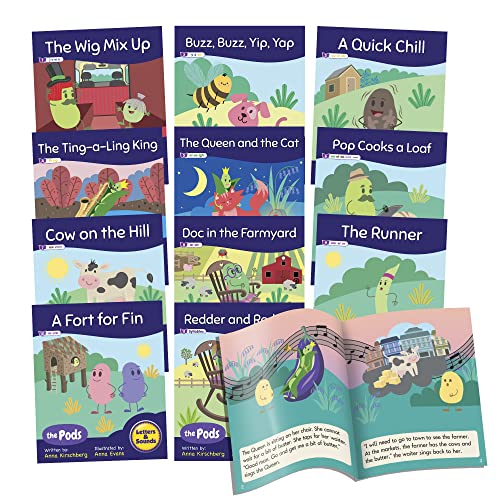
Phase 3 expands the decodable content to introduce the next round of letter sounds. It remains grounded in the science of reading, with a clear progression and a focus on independent decoding. The included 12 fiction titles build a familiar pattern for readers, providing a reliable route from simple to more complex decodable texts while maintaining engagement through visuals and color.
Educators can use Phase 3 to extend phonics instruction into early guided reading sessions and to support independent practice. The consistent layout across the pods enables smooth transitions between lessons and targeted skill reinforcement.
Buying Guide: Key Considerations For Selecting Decodable Books
- Phonics alignment: Look for decodable texts that align with explicit phonics instruction, with controlled word lists and predictable sentence structures that reinforce decoding rather than guessing.
- Progression and pacing: Choose sets with a clear sequence—from simple to more complex decodables—and a consistent instructional framework across units or phases to support steady growth.
- Text variety: Include a mix of fiction and nonfiction to build decoding fluency while broadening vocabulary and background knowledge. Nonfiction can strengthen concept understanding alongside phonics skills.
- Teacher support: Consider resources that offer lesson guidance, activities, or focus lessons to complement instruction and provide actionable steps for small groups.
- Durability and format: For classroom use or frequent home practice, select durable books or boxed sets, with clear print, adequate spacing, and legible fonts to reduce visual fatigue.
- Assessment potential: Prefer decodables that allow quick formative checks—tracking errors, decoding speed, and consistency of pronunciation—to tailor ongoing instruction.
- Adaptability: Ensure materials can be integrated into both structured classrooms and independent practice at home, with scalable challenges as students advance.
- Illustrations and design: Balanced visuals should support decoding without overreliance on images for comprehension; visuals should aid, not distract.
In selecting decodable books, educators and caregivers should balance decodability with engaging content and practical classroom use. The options above provide varied approaches—from unit-based guided phonics packs to broader decodable readers—each supporting early readers’ transition from letter sounds to fluent, confident reading. Implementing a mix of these resources can help address diverse learner needs while maintaining a consistent, science-backed framework for building literacy skills.