When navigating aphasia, choosing the right communication tool can make daily interactions easier and more meaningful. This guide highlights five highly relevant products designed to help nonverbal or speech-impaired individuals express needs, feelings, and preferences. Each item focuses on visual symbols, large text, and intuitive layouts to reduce frustration and bolster confidence in communication across home, therapy, and care settings.
style=”display:none;”>Summary Table of Selected Products
| Product | Brand | Type | Key Benefit |
|---|---|---|---|
| 10Pcs Nonverbal Communication Board | SADIKALO | Multi-page boards | Large text, diverse topics, durable |
| 6Pcs Communication Board Set | party greeting | Plastic placemats with symbols | Varied themes, vivid designs |
| Large PECS Communication Book (Black) | PECS | Visual sentence-building book | Sentence strip access, reliable visual aids |
| Say it with Symbols Album | Say it with Symbols | Picture communication album | Extensive image library, customizable cards |
| Aphasia Medical Alert Wallet Card (Red) | Hit Director Aphasia | Wallet card | Education and quick cues for responders |
Note: This article adheres to a balanced, evidence-based presentation of tools. Product details reflect listed features and typical use cases in aphasia therapy and care settings.
Best Nonverbal Communication Boards For Aphasia

The 10Pcs Nonverbal Communication Board by SADIKALO offers a wide, user-friendly canvas for adults and kids with aphasia. With two-sided boards measuring 27 by 35 cm, the set emphasizes readability through large fonts and clear visuals. The green matt background minimizes glare, aiding sustained viewing during conversations. Content covers common questions, actions, emotions, and pain descriptors, enabling users to effectively convey preferences and feelings in various contexts. Durable material supports frequent handling in clinics, homes, and care facilities.
Six Themed Communication Cards For Daily Use

This 6Pcs Communication Board Set from party greeting presents six themed boards with corresponding picture symbol cards. Themes include “HOW DOES IT FEEL,” “COMMUNICATION BOARD,” “FEELING & EMOTIONS,” “PERSONAL NEEDS,” “ITEMS I WANT,” and “FOOD PLACES.” The colorful visuals pair with labeled words to support quick comprehension and expressive choices during therapy or at home. Plastic construction ensures durability for ongoing use in hospital rooms, care homes, or classroom settings.
Large PECS Book (Black) For Sentence Building

The Large PECS® Communication Book (Black) by PECS provides a reliable visual aid for individuals relying on picture-based augmentative and alternative communication (AAC). It supports autism, aphasia, speech delays, and other communication challenges. The design enables intuitive sentence construction using Sentence Strips, allowing quick commenting or requesting. Its sturdy build and familiar PECS framework make it a staple in therapy sessions, classrooms, and home practice.
Large PECS Book (Any) For Flexible AAC

The Large PECS Book (Any) from PECS expands accessibility with a versatile visual aid designed for diverse user needs. Like other PECS tools, it supports sentence-building via easily accessible placement and storage of Sentence Strips, enabling immediate expression of requests or comments. Its universal design makes it suitable for individuals across age groups and communication challenges, including aphasia and autism, in varied environments.
Plastic Communication Board For Non Verbal Adults

The Plastic Communication Board set from Albidaya Islamic Store includes four specialized boards designed for expressing needs in hospitals, care homes, and daily life. Its simple, intuitive layout supports ease of use for nonverbal adults and those undergoing speech therapy. Durable plastic construction guarantees longevity in frequent-use settings, helping therapists and caregivers facilitate clearer, faster communication during routines and medical care.
Say It With Symbols Album For Nonspeaking Adults

The Say it with Symbols Picture Communication Album is designed for non-speaking adults to express thoughts, needs, and preferences. It features 28 topical communication cards and a premium vinyl album with space for over 330 pictures. The kit includes blank cards for customization, enabling personal relevance. Its compact, discreet size makes it suitable for purses or wheelchairs, supporting communication beyond clinical settings.
Aphasia Medical Alert Wallet Card (Red)
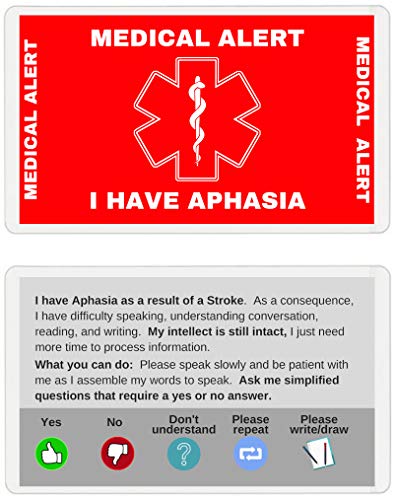
This Aphasia Medical Alert Wallet Card in red helps educate responders and caregivers about aphasia. Laminated for durability, it provides quick, self-explanatory cues to facilitate communication during emergencies or stressful situations. The card supports reducing misunderstandings and easing interactions when directions or information must be conveyed clearly to someone with aphasia after a stroke or other brain events.
Buying Guide: Key Purchase Considerations For Aphasia Communication Tools
- Audience and setting: Consider whether the user is a child, adult, patient in care facilities, or at home. Choose tools tailored to daily routines, with content relevant to typical conversations (meals, feelings, needs, safety).
- Symbol clarity and readability: Opt for products with large text, high-contrast visuals, and simple, universal symbols to reduce cognitive load and accelerate communication.
- Durability and care: Select boards and books made from sturdy materials that withstand frequent usage, cleansing, and transport between home, clinic, or hospital environments.
- Portability and discreteness: For on-the-go communication, compact albums or wallet cards provide discreet options that fit into purses or wheelchairs without drawing attention.
- Customizability: Some kits offer blank cards or adaptable content, allowing personalization for individual needs, routines, and cultural contexts.
- Therapy integration: Align the tool with existing speech-language therapy goals. Tools that facilitate sentence construction, expressive range, and consistent practice tend to support recovery and everyday communication.
- Caregiver training: Effectiveness increases when caregivers understand how to use the tool, set expectations, and model usage during interactions.
- Maintenance: Review cleaning requirements and replaceable parts (cards, boards) to ensure long-term usability in clinical settings and at home.
- Cost and accessibility: Compare sets by content breadth, durability, and ease of use. Consider multi-item packs for broader coverage of daily needs without overwhelming the user.
In selecting aphasia communication tools, priority should be given to readability, ease of use, and real-world applicability. The products above represent a spectrum of approaches—from large, durable boards to customizable albums and wallet cards—designed to support meaningful conversations and reduce communication barriers across multiple environments.