Discover top picks that make chemistry engaging and safe for curious young minds. This guide highlights kid-friendly kits and books that blend hands-on experiments with simple explanations, helping children build a strong foundation in science while having fun.
The following selections are chosen for their age-appropriate activities, clear instructions, and engaging presentation. Use the buying guide at the end to compare features, materials, and learning outcomes to find the best fit for your child.
| Product | Brand | Key Focus |
|---|---|---|
| National Geographic Junior Chemistry Set — Complete Early Learning Lab Kit | Blue Marble | Hands-on chemistry with everyday items; 50 experiments |
| The Everything Kids’ Science Experiments Book | Simon & Schuster | Broad science experiments; accessible for beginners |
| NATIONAL GEOGRAPHIC Science Magic Kit | Blue Marble | Science with magic tricks; 100+ experiments |
| Physical Science Grade 5: 5-Book Set | Shell Education | Structured, curriculum-aligned science content |
National Geographic Junior Chemistry Set

Designed for young scientists aged four and up, this kit provides a complete chemistry lab experience using common household items like baking soda and vinegar. It comes with a wide array of lab tools and materials to support independent exploration as children learn basic chemical reactions.
Key features include 50 interactive experiments that spark curiosity and engage kids in hands-on discovery. The illustrated, step-by-step instructions are tailored for early learning, helping children achieve successful results with minimal adult assistance. The kit emphasizes safety and introduces foundational concepts such as mixing, measuring, and observing changes.
Educational value is enhanced by a guided approach that encourages curiosity, hypothesis testing, and pattern recognition. Parents and educators can adapt activities to suit different skill levels, making this kit suitable for both classroom demonstrations and at-home science fun.
The Everything Kids’ Science Experiments Book
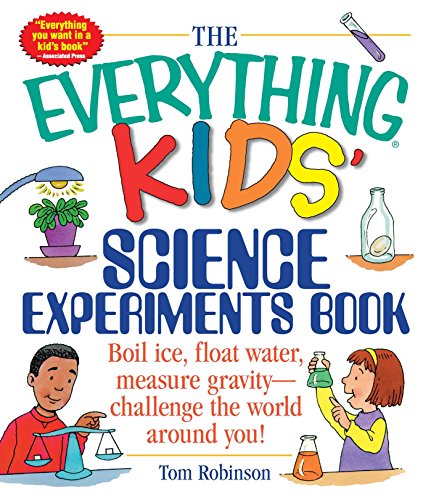
This book offers a broad range of science experiments, including chemistry-related activities, designed to engage kids with practical investigations. It is well-suited for beginners who want to explore various scientific concepts in a friendly, approachable format.
Content is organized to encourage curiosity, with simple setups, clear explanations, and safety tips. The experiments cover topics like chemical reactions, density, buoyancy, and measurement, helping readers build confidence as they expand their scientific vocabulary.
The book’s accessible style supports independent learning, but it also serves as a great companion for parents and teachers seeking ready-to-use activities. It encourages kids to record observations, draw conclusions, and think critically about the results.
NATIONAL GEOGRAPHIC Science Magic Kit

This kit blends science with the wonder of magic tricks to captivate young learners. The 100+ experiments mix chemistry and physics concepts, offering hands-on demonstrations that feel magical while teaching real scientific principles.
With a magic wand and white gloves included, kids can perform tricks that illustrate scientific ideas such as chemical reactions, states of matter, and surface tension. The kit provides a structured pathway to present experiments as magic tricks, which can boost engagement and retention.
All necessary materials for 20 science magic tricks are included, making it convenient for both solo exploration and guided activities. The combination of visual demonstrations and explanations supports varied learning styles and helps build foundational inquiry skills.
Physical Science Grade 5: 5-Book Set

This five-book set provides structured, curriculum-aligned content designed for fifth-grade learners. It covers key physical science concepts, including matter, energy, and basic chemistry principles, through clear explanations and relevant activities.
Intended for classroom use, the set offers a cohesive progression that supports mastery of core topics. Readers gain exposure to scientific vocabulary, reading comprehension, and practical application of concepts through aligned activities and assessments.
Educators and parents can leverage the set to build a solid science foundation, while students benefit from a consistent, reader-friendly presentation that reinforces critical thinking and problem-solving skills.
Buying Guide: Key Purchase Considerations
- Age appropriateness: Ensure the kit or book matches the child’s developmental level and safety needs. Look for age ranges specified by the publisher or seller.
- Hands-on balance: Favor products that combine experiments with clear explanations. A mix of activities helps sustain engagement and reinforces learning.
- Safety and supervision: Identify items that use common household materials and include safety guidance. Some kits require adult oversight for younger children.
- Learning progression: Look for materials that build concepts gradually, from basic observations to more complex reactions and measurements.
- Material quality: durable tools and safe, non-toxic components support repeated use and long-term value.
- Instruction clarity: Visual steps and simple language minimize frustration and encourage independent exploration.
- Curriculum alignment: For school-age kids, consider resources that align with science standards or grade-level objectives to complement formal learning.
- Versatility: Kits that can be used for multiple experiments extend value and enable varied learning experiences.
- Supplemental resources: Books or guides that encourage recording observations, drawing conclusions, and asking questions help develop scientific thinking.
- Return and safety policies: Check warranties and safety assurances, particularly for kits with reusable components.
When choosing, consider your child’s curiosity pattern—whether they prefer step-by-step instructions, exploring freely, or a blend of both. For a broader science journey, combine a hands-on chemistry kit with a kid-friendly science book to reinforce concepts through different formats and activities.