Whether you are just starting a medical coding career or aiming to refine advanced terminology and coding navigation, the right reference books can streamline learning and accuracy. This guide highlights five highly relevant titles that support foundational terms, official code systems, and practical study aids for professional coding tasks. Each pick is chosen for clarity, utility, and alignment with common coding workflows in U.S. healthcare settings.
Use the table below to compare core features at a glance, including focus areas, format benefits, and durability considerations. This quick reference helps you select titles that best fit your study style and work environment.
| Product | Focus | Format & durability | Ideal for |
|---|---|---|---|
| Medical Terminology: The Basics QuickStudy Laminated Reference Guide | Foundations of medical words, body systems, glossary | Laminated, compact, portable | New coders needing quick word-building references |
| Index Tabs for AMA CPT/ ICD-10 / HCPCS (3-Set Bundle) | Color-coded navigation for code books | Laminated, durable, tabs and alignment aids | Coders who rely on quick section access |
| Merriam-Webster’s Medical Dictionary | Comprehensive medical vocabulary and drug info | Mass-market paperback, portable | Terminology reference with up-to-date drug names |
| Two-Sided Medical Coding Rotating Book Stand | Hands-free reading and discussion support | Bamboo, two-sided, rotatable | Students and professionals working with thick code books |
Medical Terminology: The Basics QuickStudy Laminated Guide

The QuickStudy laminated guide offers a compact, portable resource for foundational medical language. Its laminated surface supports frequent handling in busy clinical or classroom environments, guarding against wear while enabling quick notes with a dry-erase marker. Core topics include the base of medical words, human anatomy, common terminology sets, the five senses, synonyms, and a glossary. For new coders, this reference supports accurate word-building when interpreting patient records and preparing documentation for coding systems.
Index Tabs for AMA CPT Book, ICD-10 Code Book, HCPCS Level II Book (3-Set Bundle)
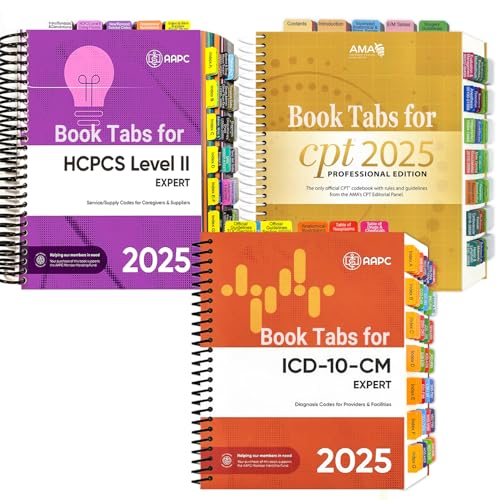
This 3-set bundle provides color-coded tabs for CPT, ICD-10-CM, and HCPCS Level II code books, with top section tabs and detailed side tabs to navigate quickly between chapters. The professional design helps coders locate diagnoses, procedure codes, and modifiers with minimal interruptions. The laminated PVC materials offer water resistance and durability while preserving a smooth writing surface for notes. It is particularly useful in fast-paced coding environments where speed and accuracy are essential.
Merriam-Webster’s Medical Dictionary, Newest Edition
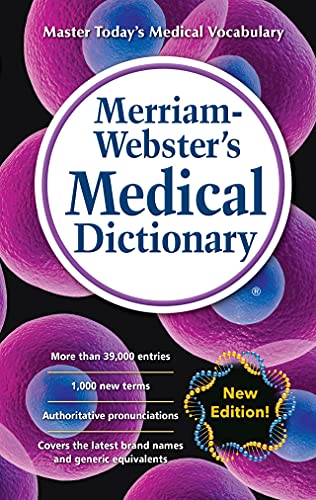
The Merriam-Webster Medical Dictionary is an essential vocabulary resource for coders, clinicians, and students. It provides clear definitions, current terminology, and drug brand names alongside generic equivalents. The newest edition adds thousands of words and senses to keep readers aligned with evolving medical language. While a paperback format favors portability, it remains a robust desk reference for interpreting chart notes, medication lists, and procedural descriptions encountered during coding audits or educational study.
Two-Sided Medical Coding Rotating Book Stand

This rotating bamboo stand is designed for thick medical coding books and multiple reference materials. Its wide 13.7-by-11.6-inch footprint accommodates large volumes, while a solid base keeps books stable during reading. The two-sided functionality and 360-degree rotation enable effortless sharing in team sessions, meetings, or classroom settings. Crafted from durable bamboo, it offers a lightweight and sustainable solution suitable for desks, libraries, or office spaces where long study sessions or collaborative coding discussions occur.
Buying Guide: Key Purchase Considerations
Choosing the right medical coding books involves balancing content depth, accessibility, and format. Consider these perspectives:
- Content scope: For beginners, start with terminology and basic anatomy references to build a solid vocabulary before diving into code manuals. Experienced coders benefit from organized tabs and quick-navigation tools to speed up chart reviews.
- Format durability: Laminated guides and tab sets are ideal for daily use in clinics or hospitals, while paperback dictionaries are convenient for travel and study beyond the office.
- Reference integration: A mix of term dictionaries, code tab systems, and ready-to-use rotating stands supports different learning styles and work environments, from desk-based audits to classroom settings.
- Drug terminology updates: Regularly updated medical dictionaries help coders stay current with evolving brand and generic drug names, which is important for accurate documentation and queries.
- Accessibility and speed: Color-coded tabs and clearly labeled sections reduce search time, supporting higher accuracy and improved productivity during coding and auditing tasks.
- Practical considerations: Compatibility with your existing code books, desk space, and the need for portable references should guide selections. Rotating stands particularly help with collaborative sessions, while tabs improve solo workflow.
In practice, coders may combine a compact terminology guide with a durable tab bundle and a reliable medical dictionary to cover foundational language, quick-reference navigation, and precise terminology. The rotating stand adds ergonomic value for long study or in-office use with large code volumes. Each product here complements typical medical coding workflows in American healthcare settings, enhancing accuracy and efficiency without relying on price or promotional details.