The following selections highlight engaging body-themed books and activity books designed for children ages 4–8. Each option combines colorful illustration, hands-on activities, and kid-friendly explanations to help young learners explore anatomy, biology, and self-care concepts. The list includes versatile busy books and traditional guides that fit both homeschooling and classroom environments. Below is a quick overview of the chosen products.
| Product | Brand |
|---|---|
| QUOKKA Human Body Busy Books for Kids | QUOKKA |
| Freebear Montessori Busy Book for Kids | Freebear |
| The Care and Keeping of You: The Body Book for Younger Girls | American Girl |
| Human Body Anatomy Busy Book for Kids | BEMAXYE |
| The Body Book: For Younger Girls | American Girl |
QUOKKA Human Body Busy Books

QUOKKA’s fully assembled busy book introduces young learners to human anatomy with nearly 200 pre-attached elements, enabling immediate hands-on exploration. The curriculum-style pages cover key topics such as the brain, organs, senses, skin, teeth, and bones through 15 engaging themes. Designed to spark curiosity, the book is built to withstand repeated play with hook-and-loop fastener elements, making it ideal for home learning or classroom centers. Each page emphasizes clear visuals and simple explanations to support early literacy and cognitive development, encouraging kids to repeat activities and build foundational anatomy knowledge.
Freebear Montessori Busy Book: Human Body
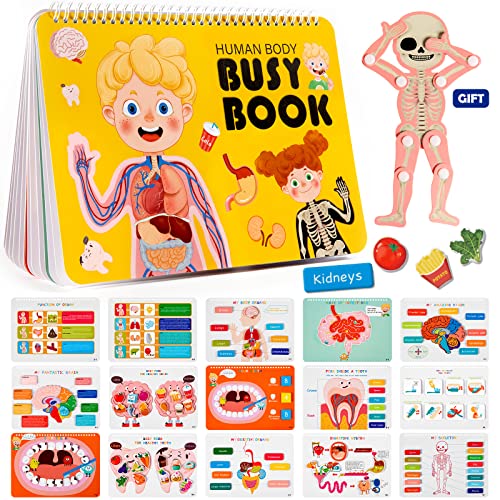
Freebear presents a human body activity book aimed at preschoolers and early elementary students. It integrates 15 pages across five major themes about the body, and includes a skeleton toy for collaborative play. The design supports cognitive growth by combining recognition of anatomy with practical interaction, helping children understand body structure through exploration. The book emphasizes social learning and communication within homeschool or group settings, promoting discussion, question-asking, and hands-on memory building. It’s positioned as a versatile tool for both solo play and guided learning.
The Care and Keeping of You: The Body Book for Younger Girls

This revised edition from American Girl offers an accessible guide for girls aged 8 and up. The book blends age-appropriate illustrations with practical tips, how-tos, and factual information about body changes, health, hygiene, and self-care. It serves as a trusted reference that can support conversations about puberty, body image, and personal safety. The tone is informative rather than sensational, making it a suitable reference resource for classrooms and families looking for a respectful introductory guide to the growing body.
Human Body Anatomy Busy Book for Kids

From BEMAXYE, this 63-page Montessori-inspired busy book offers an interactive approach to learning about the human body. The guided activities include 15 interactive pages with removable activity cards, designed to support memory, coordination, and cognitive skills through hands-on exercises. The materials are described as thickened waterproof paper for durability, enabling reuse in busy learning environments. The book emphasizes visual literacy, fine motor development, and critical thinking as children match labels to body parts and complete simple, repeatable tasks.
Buying Guide
Key purchase considerations for body-themed kids books and busy books include age appropriateness, durability, and engagement level. For younger readers and beginning anatomists, look for books with clear illustrations, short explanations, and hands-on components like flaps, cards, or removable pieces. Durability matters for frequent handling—waterproof or reinforced pages can extend the life of a busy book in homes, classrooms, or travel settings.
- Learning style compatibility: Choose materials that align with hands-on, visual, or collaborative learning preferences. Busy books are ideal for tactile learners, while traditional guides support verbal or reading-focused students.
- Theme depth: Some products cover broad anatomy basics (bones, organs, senses), while others connect health and hygiene topics. Consider your child’s interests and the intended educational goals.
- Age range and progression: Ensure the book’s content matches the child’s current development stage and can scale with growing skills.
- Durability and storage: Check whether pages are sturdy, materials are washable, and whether the design allows easy storage in a backpack or classroom bin.
- Versatility: Some books include companion tools (skeleton toys, flashcards) that support collaborative learning or family reading sessions.
When comparing options, consider how each product integrates with your broader learning plan. Busy books excel for independent play and quiet time, while narrative or guidebooks help structure conversations about anatomy and health. For families focusing on early literacy and memory work, look for removable cards and clearly labeled diagrams. If you value classroom-ready durability, select products with reinforced pages or waterproof stock and modular components that can be reorganized for different lessons.