Augmented reality (AR) and virtual reality (VR) learning kits offer engaging ways for kids to explore science, history, geography, and more. The following selections combine illustrated books, interactive AR experiences, and hands-on activities to spark curiosity while building STEM confidence. Each option below blends reading with immersive visuals, turning pages into portals to other worlds. This guide highlights five standout AR/VR products that are well-suited for home learning, classroom use, or thoughtful gifts for young explorers aged 8 and up.
| Product | Brand | Note |
|---|---|---|
| Bill Nye’s VR Science Kit | Abacus Brands | Science lab in VR with step-by-step videos |
| VR History! | Abacus Brands | Illustrated DK book included with VR experiences |
| VR Dinosaurs Gift Box | Abacus Brands | 80+ pages of content plus fossils and goggles |
| VR Atlas | Abacus Brands | World travel atlas with AR/VR pages |
| Oceans Gift Box | Abacus Brands | Ocean exploration with VR experiences |
Bill Nye’s VR Science Kit
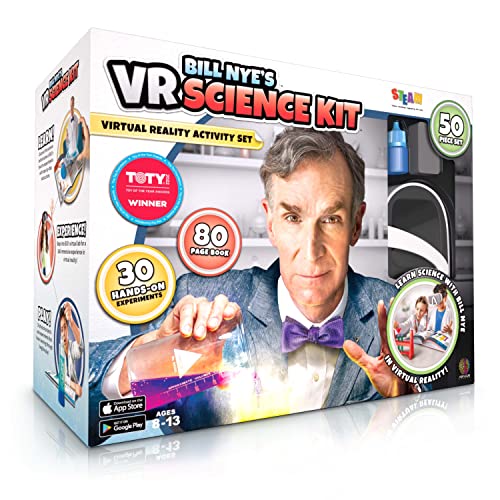
This VR science kit brings the Bill Nye experience into a child-friendly format. The set includes goggles and a full virtual lab that animates core chemistry and physics concepts. Step-by-step videos help guide experiments, making abstract ideas more concrete. The kit emphasizes hands-on learning through augmented reality, bridging reading with visual demonstrations that can boost curiosity and confidence in scientific exploration.
Key features enable learners to transform printed pages into video demonstrations, enabling immediate observation of scientific processes. The immersive approach aligns with inquiry-based learning, encouraging kids to hypothesize, test, and reflect on outcomes. As a premier STEAM toy, it is positioned to engage curious minds and foster foundational scientific literacy.
VR History!

This package merges a richly illustrated DK history book with immersive VR experiences. The 96-page DK book adds depth to the historical journeys, while VR experiences let learners momentarily step into pivotal moments and civilizations. The hands-on 3D wooden HMS Victory puzzle widens the educational mix, offering a tangible, tactile counterpoint to digital exploration. This combination supports multi-modal learning and helps students connect reading with immersive contexts.
Educators and parents can appreciate the balance of narrative with interactive content, which can boost retention and engagement. As history unfolds in both pages and screens, kids gain a broader perspective on how past events shape present-day culture. The kit’s variety supports cross-curricular learning, integrating literacy, social studies, and design-thinking activities.
VR Dinosaurs Gift Box

The dinosaur-focused AR kit invites kids into a virtual museum with dozens of dinosaurs and interactive experiences. With an 80-page DK book, a dig-out rock, and a 10″ T-Rex fossil, the package blends reading, reconstruction play, and AR exploration. The immersive visuals and motion cues help young learners retain details about dinosaur biology, ecosystems, and paleontology concepts while keeping the experience entertaining and age-appropriate.
Designed as a giftable set, it combines curiosity-driven content with a hands-on discovery kit. The AR features allow learners to observe animated explanations and chase scenes, creating memorable narratives around prehistoric life. This kit is well-suited for independent play or guided learning in a small group setting, reinforcing scientific literacy in a fun format.
VR Atlas

The VR Atlas blends a 144-page illustrated world atlas with AR/VR experiences. Learners can explore landmarks, cultures, currency, and cuisine while watching pages come alive through augmented reality, then dive deeper in virtual reality to explore destinations as if they were there. This product emphasizes geography and world cultures, while also touching on history and science through associated hotspots and activities.
As a comprehensive travel-and-learning companion, it supports inquiry-based exploration and project ideas, such as currency comparisons or cultural reports. The immersive format can help students visualize spatial relationships—deserts, mountains, coastlines—and understand how geography intersects with history and science. It is a strong option for classroom use or family study sessions that aim to broaden global awareness.
Oceans Gift Box

This oceans-themed kit takes kids on a submarine journey to explore deep-sea life through AR/VR experiences. The 96-page interactive book comes with VR goggles and a scratch-art set for ocean-inspired creativity. Learners encounter marine creatures, coral reefs, and oceanic ecosystems, while AR visuals provide close-ups of anatomy and behavior. The combination of reading, art, and immersive media supports a holistic understanding of marine science and environmental stewardship.
The Oceans Gift Box is especially suitable for curious readers who enjoy nature writing and science, offering a rich multisensory learning path. It can complement classroom topics on ecosystems, climate, and biodiversity, and encourages kids to think critically about how human activity affects ocean life.
Buying Guide
Key considerations when selecting AR/VR books for kids include age appropriateness, hardware requirements, and the learning objectives you want to support. Here are multiple perspectives to help you choose:
- Learning goals: Are you prioritizing science experiments, geography, or history? Choose kits that align with your child’s interests and your curriculum goals.
- Readability and engagement: Look for well-illustrated books with clear explanations paired with interactive AR/VR prompts. A strong narrative helps with retention.
- Hardware and setup: Some sets include built-in goggles; others may require a smartphone or tablet. Consider comfort, safety, and screen time guidelines.
- Hands-on balance: Kits with tactile components (fossils, puzzles, or models) complement digital experiences and reinforce learning through multiple modalities.
- Durability and age range: Check materials for durability and intended age range to ensure the product can withstand repeated use and aligns with your child’s developmental stage.
- classroom applicability: For teachers, evaluate whether the content supports group activities, assessment opportunities, and cross-curricular links.
- Expansion potential: Some sets offer additional books or digital apps. Consider future purchases if you want to broaden topics over time.
In summary, these AR/VR books blend illustrated reading with immersive technology to foster curiosity, critical thinking, and foundational STEM understanding. When selecting, balance digital immersion with hands-on activities and ensure content aligns with your child’s interests and schooling context. The five options presented here provide varied entry points—from science labs and oceans to dinosaurs and world travel—so families can curate a learning path that stays engaging over time.