When preserving fragile books, documents, and photos, choosing the right archival tape is essential. The following five products are designed for conservation, repair, and long-term protection without introducing acids or yellowing. Each option is chosen for clarity, adhesion, and ease of use, making it suitable for librarians, collectors, students, and hobbyists alike.
| Product | Brand | Best For |
|---|---|---|
| Lineco Archival Document Repair Tape, 1″ x 35′ (Acid-Free, Translucent) | Lineco | Minor rips in documents, photos, and artwork; near-invisible repairs |
| YINTTIAN Archival Safe Acid-Free Book Repair Tape, 2″ x 16.5′ | YINTTIAN | Transparent, strong, waterproof repairs; archival sealing |
| BookGuard 3″ Vinyl Archival Book Repair Tape, 10 Yards | BookGuard | Long-term, sturdy book repairs; extensive binding projects |
| Scotch Book Tape, 2″ x 540″ | Scotch | Reinforcing covers, spines, and pages; broad repair coverage |
| BookGuard 2″ Vinyl Archival Bookbinding Tape | BookGuard | Dense, durable repairs with a clear finish |
Lineco Archival Document Repair Tape

Lineco offers nearly invisible repairs with a non-yellowing, pH-neutral adhesive. Designed for conservation, it’s suitable for paper documents, maps, photos, and prints. The translucent tape is easy to apply and burnishes well with a bone folder, helping to preserve family heirlooms and archival materials.
YINTTIAN Archival Safe Book Repair Tape
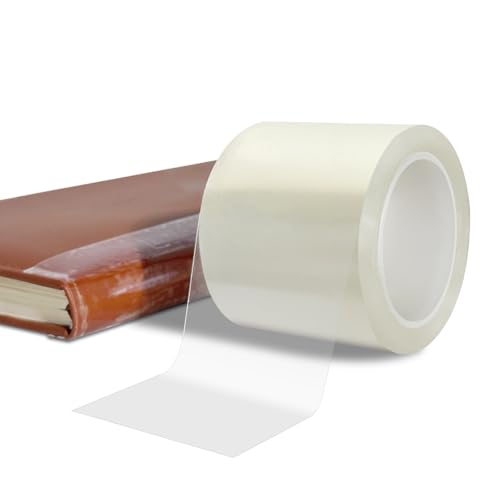
This clear, acid-free tape is designed for libraries and book repair projects. It features a waterproof adhesive and a durable acrylic composition that minimizes color distortion while offering strong adhesion. It’s well-suited for sealing pages, bindings, and even file bags or archival items where preservation matters.
BookGuard 3″ Vinyl Archival Tape
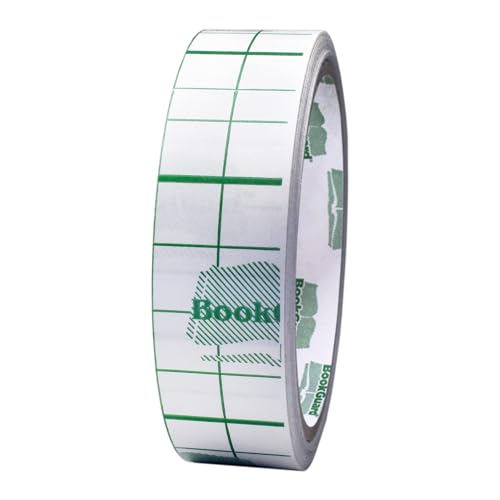
BookGuard’s 3″ vinyl tape comes on a long core and offers ultrafine clarity with a non-glare matte finish. Its archival-grade vinyl stock is designed for heavy-duty book repair, with a grid liner to support precise cutting and application—ideal for librarians and archivists performing frequent repairs.
Scotch Book Tape, 2″ x 540″

Scotch Book Tape provides a proven method to repair and reinforce book edges, spines, and covers. The transparent finish keeps content visible while extending the life of bound materials. It’s a reliable option for general repair projects that require strong adhesion and flexibility.
BookGuard 2″ Vinyl Archival Bookbinding Tape

This 2″ vinyl tape uses an ultra-aggressive adhesive to secure repairs on clean surfaces. It’s long-wrapped around a 3-inch core and offers a clear, archival-safe finish. The grid liner supports precise cutting for consistent applications, making it suitable for frequent, precise repairs.
Buying Guide
Key factors to consider when selecting archival tape for books and paper repairs include material composition, adhesive type, finish, and permanence. Here are multiple perspectives to help guide your choice:
- Acidity and pH: Choose acid-free, pH-neutral adhesives to prevent yellowing and chemical interaction with paper over time.
- Transparency and color: Clear or translucent tapes minimize visual impact on text, photos, and artwork.
- Adhesive strength: For fragile bindings, a strong yet residue-free adhesive reduces the risk of further damage when removing or reworking repairs.
- Durability and water resistance: Waterproof or water-resistant options protect repairs in damp environments and accidental spills.
- Roll length and width: Larger rolls are cost-effective for librarians and institutions but consider tape width to match typical repair needs.
- Removal and reversibility: Some tapes are designed to be removable with minimal residue, important for archival materials and future conservation efforts.
- Physical finish: Matte or non-glare finishes reduce glare on photos or printed material and may aid legibility during handling.
- Compatibility with conservation practices: Museum-grade and library-approved tapes are preferable for sensitive collections.
In practice, your selection should align with the specific repair scenario—minor page tears, spine reinforcement, or fragile maps and photographs. For light-to-moderate repairs, a clear, acid-free tape with near-invisibility is often sufficient. For heavy-duty binding work, a vinyl-based archival tape with a durable core offers longer-lasting performance. If you handle a wide variety of materials (maps, prints, ephemera), a combination approach using a near-invisible document repair tape for delicate items and a sturdy vinyl tape for bindings can be most effective.
Always test a small, inconspicuous area before wide application. Store tapes away from heat and direct sunlight to preserve adhesives and ensure optimum performance over time.