Beginner flute players need method books that build tone, posture, breathing, and musical understanding in a structured, engaging way. The right set of books can provide steady progression from first notes to confident performances. Below is a curated list of five solid starter resources, followed by a buying guide to help you compare options and pick the best fit for your goals.
| Product | Brand | Notes |
|---|---|---|
| W21FL – Standard of Excellence Book 1 – Flute | Kjos Music Company | Classic band method, solid foundational book |
| Trevor Wye: Beginners Book for the Flute – Part One | Novello | Step-by-step tone, breathing, and posture |
| Sound Innovations for Concert Band, Book 1 | Alfred Music | Innovative approach with online media |
| Beginner’s Book for the Flute – Part Two | Novello | Continuation of Part One, 48 pages |
| Method Flute Elementary | Rubank Publications | Classic elementary method |
Note: The table above provides a quick reference to each option’s focus and publisher. Each book listed supports beginner players with progressive challenges, clear explanations, and practical exercises designed for steady improvement.
W21FL Standard of Excellence Flute Book 1

The W21FL edition from Kjos Music Company is a staple in many school music programs. It introduces essential tone development, flute technique, and music reading through a graded sequence that begins with fundamentals and gradually increases in complexity. The book is designed for use in ensembles and independent practice, supporting teachers with consistent progression and review sections. Its focus on fundamentals aligns with beginner needs, making it a practical starting point for students transitioning to more advanced repertoire.
Trevor Wye: Beginners Book Part One

Trevor Wye’s Beginners Book for the Flute Part One is widely recommended for tone, breathing, and posture development. It emphasizes long tones, posture awareness, and careful breathing techniques, which are foundational for producing a clear, centered flute sound. The method is well-suited for individual practice and early studio work, helping students build a robust embouchure and a relaxed approach to air control. Illustrations aid understanding, making it accessible for both students and teachers.
G-10161 Habits Of A Successful Beginner Flute Player

Habits Of A Successful Beginner Band Musician – Flute offers practical guidance on daily practice habits, goal setting, and performance readiness. While categorized for beginners, the book emphasizes consistent routines, self-assessment, and ensemble awareness, which are beneficial for developing players aiming to join bands or orchestras. It serves as a complementary resource to method books by reinforcing discipline, organization, and a professional mindset from the outset.
Sound Innovations for Concert Band Book 1

Sound Innovations for Concert Band Book 1 combines a modern pedagogical approach with structured practice. This edition includes a Book & Online Media format, focusing on flute instrumentation and ensemble integration. The online resources extend lessons with audio demonstrations and interactive components, supporting varied learning styles. It’s particularly useful for classrooms needing a progressive framework that blends traditional technique with contemporary teaching tools.
Beginner’s Book for the Flute Part Two

Beginner’s Book for the Flute Part Two continues the instructional sequence started in Part One. With 48 pages of material, this book expands on technique development while reinforcing rhythm, intonation, and musical phrasing. It complements Part One well, providing a natural progression for students who need concise, focused exercises and new repertoire suitable for early intermediate practice.
Method Flute Elementary
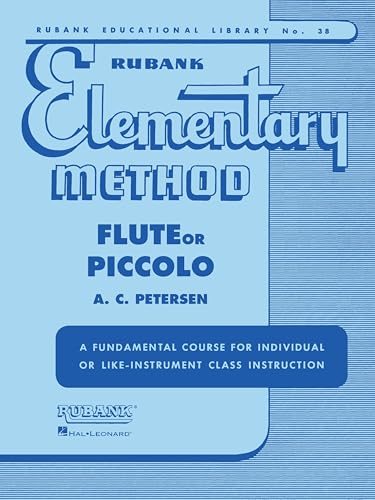
Method Flute Elementary by Rubank Publications is a time-tested entry-level method known for its clarity and systematic approach. It covers fundamental technique, scales, articulation, and reading, making it a reliable backbone for a beginner’s library. The format is straightforward and traditional, offering predictable progression that many teachers rely on for curriculum planning and consistent practice at home.
Buying Guide: Key Purchase Considerations
- Skill progression: Look for books that start with basic techniques and gradually increase in difficulty to sustain motivation and prevent plateaus.
- Supplemental materials: Books offering online components, audio examples, or teacher guides can enhance practice and classroom use.
- Focus areas: Some books emphasize tone and posture, while others prioritize reading, rhythm, or ensemble readiness. Choose based on the student’s immediate needs.
- Ensemble compatibility: If the student plans to join bands or orchestras, select method books commonly used in ensemble settings to ease auditions and rehearsals.
- Illustrations and clarity: Visual guidance helps beginners establish proper embouchure, hand position, and breathing. Clear explanations reduce initial confusion.
- Length and pacing: Short, focused lessons are often better for younger students. Longer volumes may be more suitable for serious, long-term study.
- Format and accessibility: Book with optional online media or audio tracks can support different learning styles and reinforce practice outside lessons.
Choosing the right combination of beginner flute books involves aligning the student’s goals with each resource’s strengths. A typical starter set might combine a foundational method (for technique and reading), a tone/posture-focused book, and an ensemble-friendly guide to ensure well-rounded development. Consider pairing a Part One and Part Two sequence with a supplementary volume that emphasizes daily practice habits to establish consistent routines from the start.