Starting with JavaScript can be easier with the right beginner-friendly books. This guide highlights five accessible titles that cover core concepts, practical examples, and clear explanations to help new coders gain confidence. Each selection emphasizes hands-on learning, web foundations, and gradual skill-building so readers can apply what they learn right away.
| Product | Brand | Focus | Format |
|---|---|---|---|
| Web Design With HTML, CSS, JavaScript And jQuery Set | Wiley | Front-end basics | Two-volume set |
| JavaScript And jQuery: Interactive Front-End Web Development | Wiley | Core JS concepts | Single book |
| Learning Web Design: A Beginner’s Guide to HTML, CSS, JavaScript, and Web Graphics | O’Reilly | Practical web design | Paperback |
| Javascript Flashcards – 130-Cards | Developer Decks | Key concepts & syntax | Flashcards |
| JavaScript Concepts: Interactive Front-End Fundamentals | Various | Foundational JS topics | Study aid |
Overview: The chosen titles balance foundational programming ideas with web-specific practices. They range from comprehensive introductions to quick-reference aids, helping readers build a solid base in JavaScript while also understanding how it fits into websites and user interfaces. Whether you prefer visual explanations, hands-on projects, or concise flashcards, these books offer accessible entry points for beginners in American educational contexts.
Web Design With HTML, CSS, JavaScript And jQuery Set
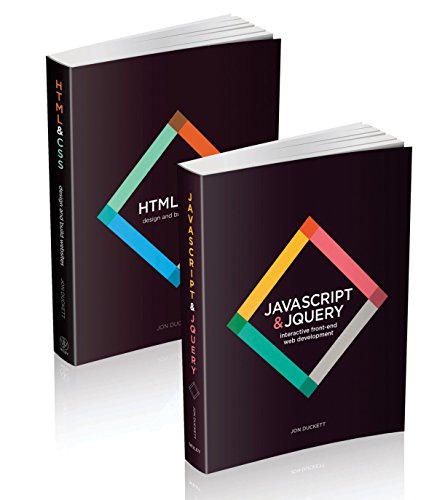
The Wiley two-volume set blends HTML, CSS, JavaScript, and jQuery to provide a broad foundation for front-end development. Visual guidance and approachable language make this an effective entry point for readers new to web design. The two-book format supports a structured progression from basic web concepts to interactive scripting and dynamic page behavior. Readers can expect step-by-step explanations, example projects, and practical tips that translate into real-world skills for building modern websites.
JavaScript and jQuery: Interactive Front-End Web Development

This Wiley title focuses on JavaScript and jQuery to illustrate core programming concepts through interactive front-end development. It uses clear descriptions, practical examples, and diagrams to explain how JavaScript drives behavior on websites. The book is suitable for beginners seeking to understand syntax, control structures, and event-driven programming while learning how jQuery can simplify DOM manipulation and animation tasks for user-friendly interfaces.
Learning Web Design: A Beginner’s Guide to HTML, CSS, JavaScript, and Web Graphics

From O’Reilly, this beginner-friendly guide blends HTML, CSS, JavaScript, and graphics into a cohesive introduction to web design. It emphasizes practical projects and visual learning, helping readers grasp how code translates into accessible, attractive pages. The book’s approachable tone and structured chapters support steady progress, with clear explanations that demystify web technologies for newcomers who want to build functional, polished sites without getting overwhelmed.
Javascript Flashcards – 130-Cards | Learn Javascript Concepts & Syntax
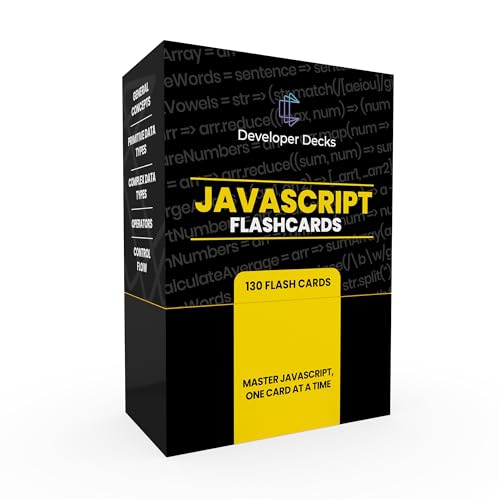
Developer Decks offers a set of 130 flashcards across 11 sections, designed to reinforce essential JavaScript concepts and syntax. This study aid supports spaced repetition and quick reviews, which can be particularly helpful for beginners who want to memorize functions, operators, callbacks, and event handling. Each card contains practical examples to bridge theory and real-world coding tasks, making it a portable resource for on-the-go practice.
Buying Guide
Key considerations when choosing a beginner JavaScript book include learning style, goals, and pace. Visual learners may benefit from books with diagrams, code samples, and project-based chapters, while those who prefer hands-on practice may opt for titles that emphasize interactive examples and exercises. Accessibility and clarity of explanations are crucial for reducing friction when grasping concepts like variables, functions, objects, and the Document Object Model (DOM).
- Learning style compatibility: Do you prefer step-by-step tutorials, visual explanations, or quick-reference formats like flashcards?
- Scope and progression: Does the book cover typography, layout, and accessibility along with core JavaScript concepts?
- Practical projects: Are there real-world examples you can build to reinforce skills?
- Supplementary materials: Do you gain access to online resources, code samples, or exercises?
- Longevity: Is the content aligned with current JavaScript features and browser behaviors?
Comparative Perspectives
For absolute beginners, a two-volume set that gradually introduces HTML, CSS, and JavaScript provides a solid foundation and clear progression. If your focus is on interactivity and front-end behavior, books that pair JavaScript with jQuery can illustrate practical DOM manipulation before moving to modern JavaScript features. Reference-style flashcards offer quick review; they complement broader texts rather than replace them. Finally, a design-oriented guide can help learners connect code with visuals, which is beneficial for aspiring web designers as well as developers.
Additional Topics To Explore
As you advance, consider expanding into modern JavaScript practices, including ES modules, asynchronous programming, and modern frameworks. Reading materials that introduce debugging techniques, performance considerations, and accessibility can further enhance your toolkit. Many beginners benefit from pairing a solid introductory book with hands-on coding in an editor or online playground to reinforce learning through experimentation.