Finding decodable books that align with the Science of Reading helps students in 2nd grade strengthen decoding skills while enjoying engaging stories. The following selections offer structured phonics progressions, accessible vocabulary, and supportive illustrations to boost confidence and independent reading. This guide highlights five top picks, summarizing why they work well at this literacy stage and how they can fit into a classroom or home library.
| Product | Key Benefit | Ideal For |
|---|---|---|
| Junior Learning Cricket The Kid Decodable Chapter Books Boxed Set | Decodable stories focusing on blends, aligned with Science of Reading | Grade 2–4 readers needing decoding support |
| School Zone Big Second Grade Workbook | Comprehensive practice across reading, math, and more | 2nd graders building fluency and problem-solving |
| Decodable Readers Book Set: Diphthongs and Complex Vowels | Targeted decodable practice with complex vowel patterns | Young readers ages 5–8, Grade 2 |
| Decodable Readers Book Set: Short Vowels, Consonant Blends, and Digraphs | Foundational phonics with high-frequency word work | Beginning readers in Grade 1–2 |
| Spectrum Spelling Workbook Grade 2 | Spelling patterns tied to phonics and meaning | 2nd grade students expanding spelling and reading connections |
These selections cover a range of formats—from boxed sets and decodable readers to comprehensive workbooks—allowing educators and families to tailor practice to individual needs. By prioritizing decodability and controlled vocabulary, these titles support steady progress in phonics while maintaining reader engagement through age-appropriate stories and activities.
Junior Learning Cricket The Kid Decodable Chapter Books Boxed Set

The Cricket The Kid boxed set contains six decodable chapter books designed to reinforce blending and decoding while introducing young readers to durable narrative structure. The set aligns with the Science of Reading, emphasizing phonics patterns and guided reading strategies. It is positioned for Grades 2–4 but remains suitable for older students who need additional decoding support. Each title follows a consistent decodable framework, helping students transfer phonics skills to longer texts with confidence.
School Zone Big Second Grade Workbook

This 320-page workbook offers a broad spectrum of activities—reading comprehension, word problems, phonics, and math—within a single resource. The book’s design supports structured practice and review, making it a practical choice for enhancing fluency and consistency in 2nd grade. While the product emphasizes multiple subject areas, its reading-focused sections provide steady decodable practice and reinforcement of phonemic awareness in context.
Decodable Readers: Diphthongs and Complex Vowels

This 24-title decodable set focuses on diphthongs and complex vowel patterns, providing meaningful practice in decoding with phrases and connected text. Designed for Reading Age 5–8 and Grade Level 2, the books support explicit phonics instruction while offering engaging content to sustain motivation. The set functions as a practical teaching tool for reinforcing decoding rules and phonemic proficiency in a classroom or home environment.
Decodable Readers: Short Vowels, Consonant Blends, and Digraphs

This decodable set emphasizes short vowels, blends, and digraphs, offering foundational practice for beginning readers. Aimed at ages 5–8 and Grade 1–2, the titles present controlled vocabulary and high-frequency words in context, helping students apply phonics knowledge to meaningful reading. It serves well as a core decodable library or as supplementation to a classroom program focused on the Science of Reading approach.
Spectrum Spelling Workbook Grade 2
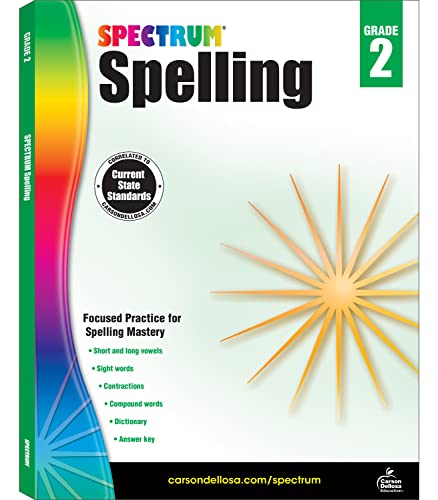
The Spectrum Spelling Workbook reinforces spelling patterns aligned with state standards and reading development. It features focused practice in spelling patterns, strategies, and meaning-related spelling skills, with visible connections to decoding and reading fluency. This resource complements decodable texts by strengthening students’ encoding abilities—and it includes activities that reinforce phonics in word construction and vocabulary growth.
Buying Guide
- Phonics progression: Choose sets that clearly progress from simple to more complex phonics (short vowels, blends, digraphs, diphthongs) to support incremental growth in decoding skills.
- Product format: Mix of decodable readers, workbooks, and boxed sets can address different learning contexts—guided practice, independent reading, and at-home reinforcement.
- Alignment to Science of Reading: Look for resources that emphasize phonemic awareness, controlled vocabulary, and decodability to aid transfer from decoding to comprehension.
- Age and grade appropriateness: Ensure reading level matches the student’s current stage, with options clearly labeled for Grades 1–3 or 2nd grade specifically.
- Engagement and illustration: Choose titles with age-appropriate illustrations and engaging narratives to maintain motivation while practicing decoding skills.
- Support for teachers and caregivers: Some sets include guidance, activities, or progression charts that help adults administer effective decodable practice.
- Durability and value: Boxed sets and multi-title bundles can offer longer-term use and cost efficiency for classrooms and families alike.
- Supplemental practice: Consider pairing decodable readers with a separate spelling or handwriting resource to reinforce orthographic patterns and writing skills.
Considerations for different learning needs
For students needing extra decoding support, decodable chapter books and high-structure readers provide predictable patterns and frequent reinforcement. For faster readers who still benefit from explicit phonics instruction, combining decodable texts with targeted spelling practice helps solidify decoding and encoding connections. A mixed approach—decodable readers for guided practice plus workbook activities for independent work—tends to yield balanced growth in both fluency and comprehension.
How to implement in practice
Begin with a diagnostic or quick screening to identify current decoding strengths and gaps. Introduce one decodable title at a time, mapping phonics targets to specific sections (e.g., short vowels, blends). Schedule short, consistent daily sessions (15–20 minutes) and alternate between decoding-focused reading and comprehension tasks. Encourage reading aloud to monitor accuracy, then discuss the story to build meaning-making, inference, and vocabulary development. Track progress with simple checklists or running records to adjust choices as needed.