Parents and educators increasingly rely on digital dictionaries to build vocabulary, reading comprehension, and spelling skills. This guide highlights five child-friendly electronic or print dictionaries that adapt to classroom and home use. Each option includes robust word banks, age-appropriate definitions, and helpful learning tools. The selections cover English-only devices and bilingual resources, offering a spectrum of learning supports from spelling and grammar to word games and test prep.
Product Snapshot
| Product | Brand | Key Features |
|---|---|---|
| Franklin MDE-1200 Electronic Dictionary | Franklin | 80,000 headwords, 250,000 definitions, 15,000 synonyms, 12,000 antonyms; grammar tools; TOEFL/SAT/GMAT prep; crossword and anagram solvers |
| Merriam-Webster’s Dictionary for Children | Merriam-Webster | Child-friendly definitions; classroom-friendly reference |
| Franklin DBE-1200 Bilingual Dictionary | Franklin | English-Spanish/Spanish-English dictionaries; 150,000 words; 1,000,000 translations; phrasebook; test prep |
| Merriam-Webster’s Elementary Dictionary | Merriam-Webster | 36,000+ updated entries; quotes from children’s literature; vocabulary-building features |
| Houghton Mifflin American Heritage Children’s Dictionary | HOUGHTON MIFFLIN HARCOURT | 13,000+ entries; color photos; word histories; language detective; thesaurus and phonics notes |
Franklin MDE-1200 Electronic Dictionary

Franklin MDE-1200 combines an English dictionary and thesaurus in a single handheld device. It features 80,000 headwords and 250,000 definitions, plus 15,000 synonyms and 12,000 antonyms to expand vocabulary and fluency. Built-in grammar tools cover irregular verbs, conjugation, inflection, and confusables, with vocabulary banks for standardized test prep (TOEFL, GRE, SAT, GMAT, TOEIC). Crossword and anagram solvers plus a Word Builder function support both learning and word games, offering engaging practice for readers of varying levels.
Merriam-Webster’s Dictionary for Children

This child-friendly dictionary from Merriam-Webster provides approachable definitions and examples tailored to younger readers. It supports classroom use with clear entries, aiding vocabulary growth and reading comprehension. The resource serves as a dependable reference for homework, spelling practice, and early language exploration, helping kids build confidence as they learn new words in context.
Franklin DBE-1200 Bilingual Dictionary

The DBE-1200 is designed for bilingual learners, offering English-Spanish and Spanish-English dictionaries with a broad vocabulary (over 150,000 words) and a massive 1,000,000 translations. It pairs a full English dictionary with 250,000 definitions to support multilingual study. Its built-in phrasebook covers everyday conversations in multiple contexts. English grammar tools, including verb conjugation and inflection, accompany resources for test prep, making it a practical tool for bilingual households and classrooms.
Merriam-Webster’s Elementary Dictionary
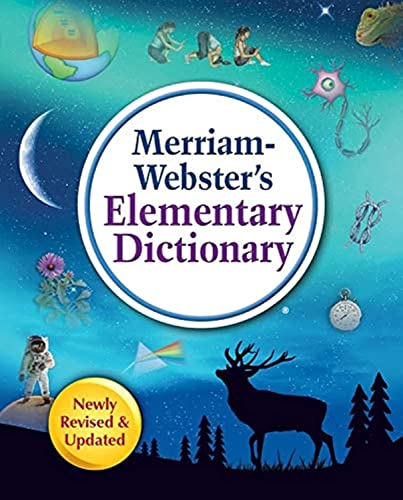
Designed for elementary learners, this Merriam-Webster dictionary expands vocabulary with 36,000+ updated entries and quotes from children’s literature. The resource functions as a solid study aid for building reading skills and word knowledge, suitable for classroom centers, homework help, and home study routines.
Houghton Mifflin American Heritage Children’s Dictionary

With over 13,000 main entries and more than 1,000 full-color photos and drawings, this American Heritage dictionary blends word histories, a language detective feature, and a vocabulary builder. It also includes the thesaurus, phonics and spelling guidance, and supplementary sections on measurement and geography, supporting a well-rounded approach to language learning for young readers.
Buying Guide
- Intended use: Choose a dictionary that aligns with your child’s learning stage—early readers benefit from simpler definitions and ample visuals, while older kids may need more comprehensive word banks and test-prep content.
- Language needs: For bilingual households, a bilingual or translation-enabled dictionary (English-Spanish) can support language development and cross-language comprehension.
- Learning tools: Look for built-in grammar aids, verb conjugation, and spelling notes. Word games and solvers can boost engagement and reinforce learning through play.
- Content breadth: Consider the number of headwords, definitions, synonyms, and examples. Larger dictionaries suit advanced readers; smaller ones work well for steady practice and quick references.
- Format and accessibility: Handheld electronic dictionaries offer portability and immediate accessibility; print dictionaries remain reliable without screens. Some resources integrate both formats in a classroom ecosystem.
- Durability and age appropriateness: For younger children, durable builds and age-appropriate definitions reduce frustration. For aging learners, ensure content scales to middle school and beyond.
- Teacher and parent resources: Classroom-friendly editions with glossaries, index aids, and teacher guides can streamline lesson planning and independent practice.
- Cost considerations: Evaluate long-term value, including potential access to digital updates or bundled learning tools, rather than just upfront price.
Across these options, the best choice depends on a child’s reading level, bilingual needs, and the role of the dictionary in daily practice. The selections emphasize clear definitions, supportive examples, and interactive features that encourage independent word exploration while providing a solid reference backbone for homework and study sessions.